


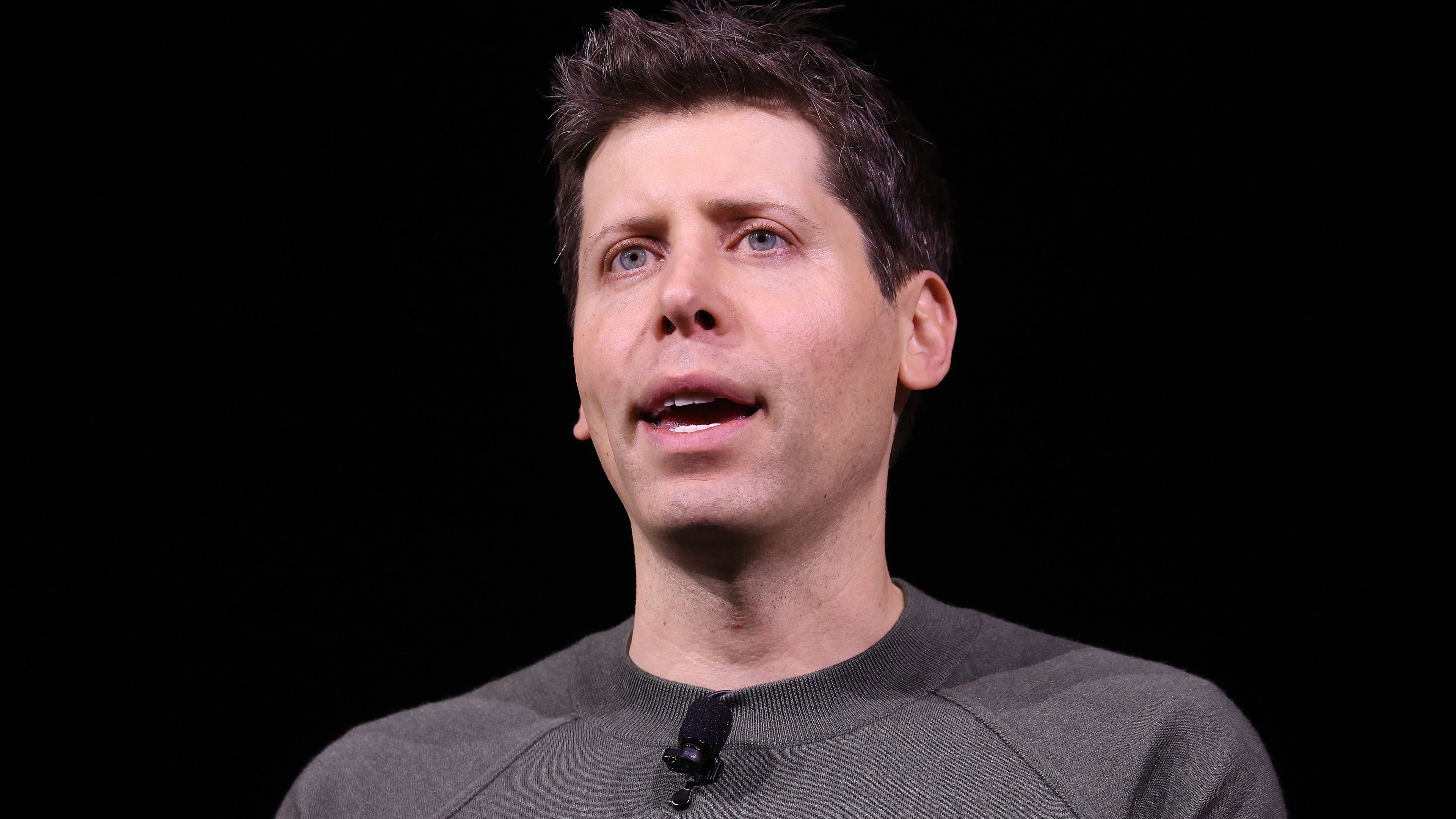
In the world of artificial intelligence, progress is measured in processing power. Now, OpenAI CEO Sam Altman is raising the stakes to a level previously unimaginable, with reports of a plan to secure between $5 and $7 trillion to fundamentally overhaul the global semiconductor industry.
This staggering sum aims to solve what Altman sees as the single biggest constraint to OpenAI’s growth and the future of AI: a profound scarcity of the specialized computer chips required to train and run increasingly sophisticated models.
The ambition behind this number reflects a dramatic escalation in the resources required to push the boundaries of AI. The cost of training each successive generation of OpenAI’s models has grown exponentially, a trend that highlights the insatiable demand for more powerful computational infrastructure.
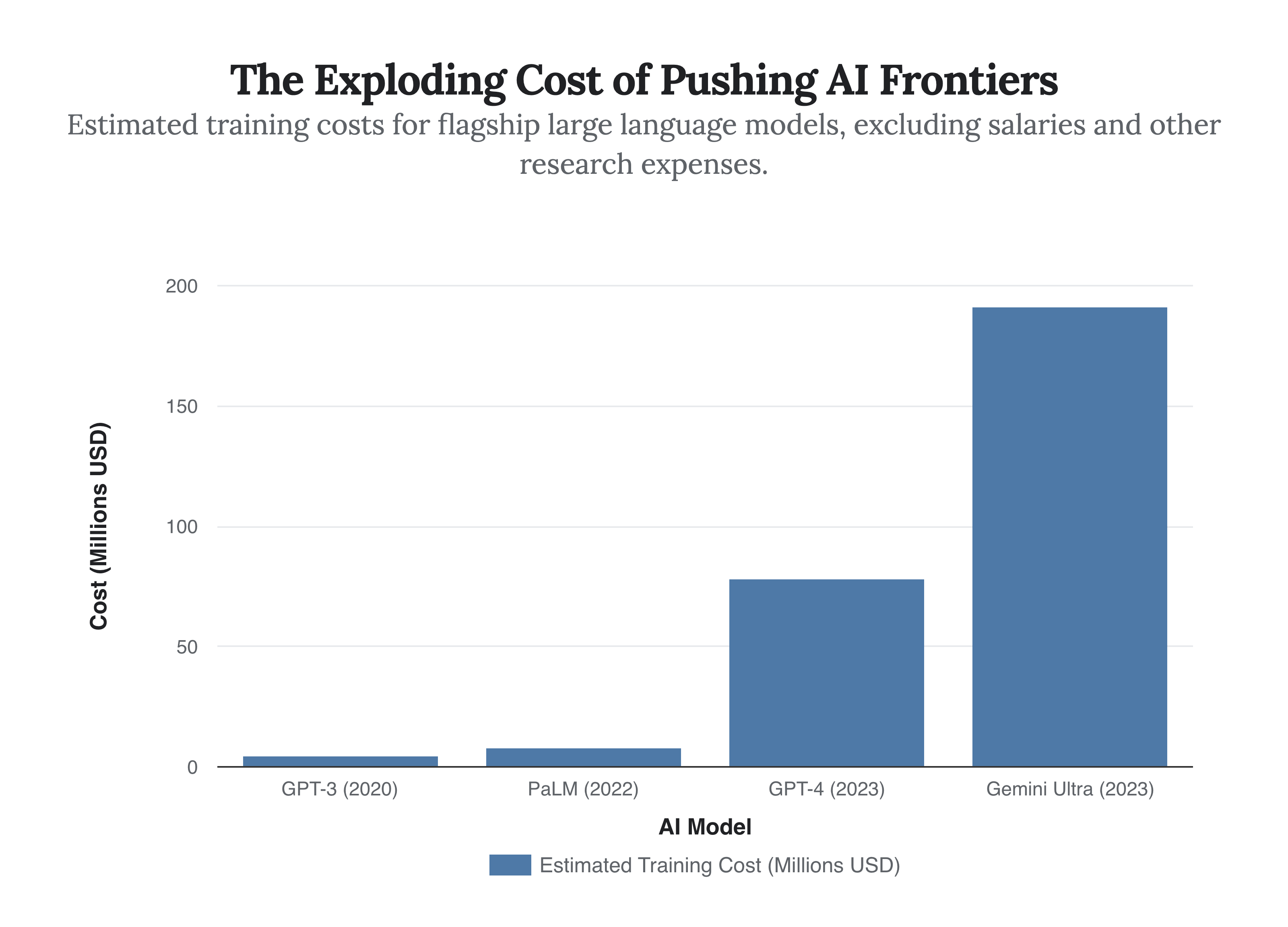
This chart illustrates the rapidly inflating price tag of innovation in the AI space. The cost to train GPT-4, at an estimated $78 million, was more than 15 times that of its predecessor, GPT-3. Google’s Gemini Ultra pushed the upper boundary even further, with estimates reaching as high as $191 million. These figures, which primarily account for cloud computing resources, signal a future where only the most well-capitalized players can afford to compete at the frontier of AI development.
“We believe the world needs more AI infrastructure--fab capacity, energy, datacenters, etc--than people are currently planning to build,” Altman stated. “Building massive-scale AI infrastructure, and a resilient supply chain, is crucial to economic competitiveness.”
To put the $7 trillion figure into perspective is to grasp the sheer scale of Altman’s vision. It dwarfs the market capitalization of the world’s largest technology companies and exceeds the annual revenue of the entire global semiconductor industry by more than a factor of ten. The global semiconductor market, a critical engine of the modern economy, reached revenues of over $600 billion in 2024. Altman’s proposed investment would not just participate in this market; it would seek to create a new one entirely, tailored to the specific and massive needs of artificial general intelligence (AGI).
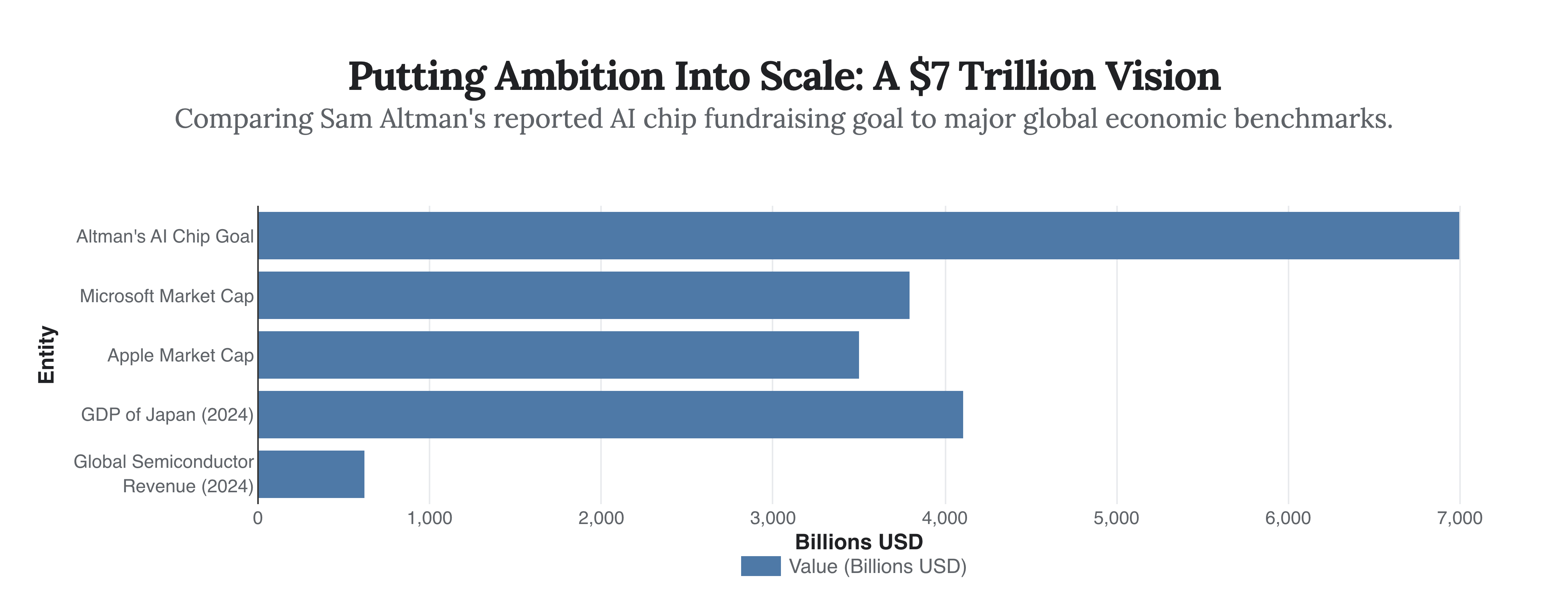
This comparison highlights the monumental scope of the fundraising effort. It’s a sum that could, in theory, acquire the world’s most valuable tech giants outright or rival the economic output of a G7 nation. The goal isn’t just to buy more chips but to vertically integrate the supply chain, from the construction of new fabrication plants (fabs) to securing the vast energy resources required to power them.
“I think compute is going to be the currency of the future,” Altman explained in an interview. “I think it will be maybe the most precious commodity in the world. And I think we should be investing heavily to make a lot more compute.”
The strategy is not without precedent, albeit on a smaller scale. OpenAI’s deep partnership with Microsoft, which includes a commitment for OpenAI to purchase $250 billion in Azure cloud services, has provided the critical compute power that has fueled its recent breakthroughs. This symbiotic relationship—where Microsoft provides the capital and infrastructure in exchange for access to OpenAI’s cutting-edge models—has become a blueprint for the industry. However, Altman’s latest ambitions suggest that even this massive partnership is insufficient for the long-term vision of AGI.
Ultimately, this isn’t just about ensuring OpenAI has enough processing power for its next model. It’s a strategic move to address a fundamental bottleneck that threatens to slow the pace of AI advancement for everyone. The world’s capacity to produce high-end AI accelerators is currently dominated by a few key players, leading to shortages and intense competition. By seeking to build a new, parallel infrastructure, Altman is betting that the demand for AI compute will be so profound and transformative that it will be more like a utility such as energy—where abundance unlocks unforeseen applications. The $7 trillion question is therefore not just a fundraising target; it’s a declaration that the future of intelligence itself requires a complete rewiring of our global industrial and energy infrastructure.