



A seismic shift is underway in the U.S. auto market, and the tremors are emanating from the most vulnerable segment of borrowers. The 60+ day delinquency rate for subprime auto loans has surged to a record 6.6%, the highest level since tracking began in 1994, signaling a profound level of consumer distress.
This is not an isolated statistic; it is the leading edge of a broader crisis that saw 1.73 million vehicles repossessed in 2024—the most since the 2009 financial crisis—with forecasts for 2025 predicting even higher volumes. This intelligence briefing deconstructs the anatomy of this surge, revealing a dangerous cocktail of post-pandemic economic realities: stubbornly high vehicle prices, punishing interest rates, and the erosion of consumer balance sheets. For industry leaders, investors, and policymakers, understanding the depth and breadth of this trend is critical, as its shockwaves will extend far beyond the auto industry, impacting consumer credit, retail spending, and the broader economic landscape.
The Anatomy of a Crisis: Visualizing the Repossession Surge
The scale of the current auto debt crisis becomes starkly clear when visualized. After a period of relative calm during the pandemic—buoyed by government stimulus and lender accommodations—the market has snapped back with a vengeance. Repossession volumes are not just returning to pre-pandemic norms; they are approaching levels synonymous with systemic economic distress.
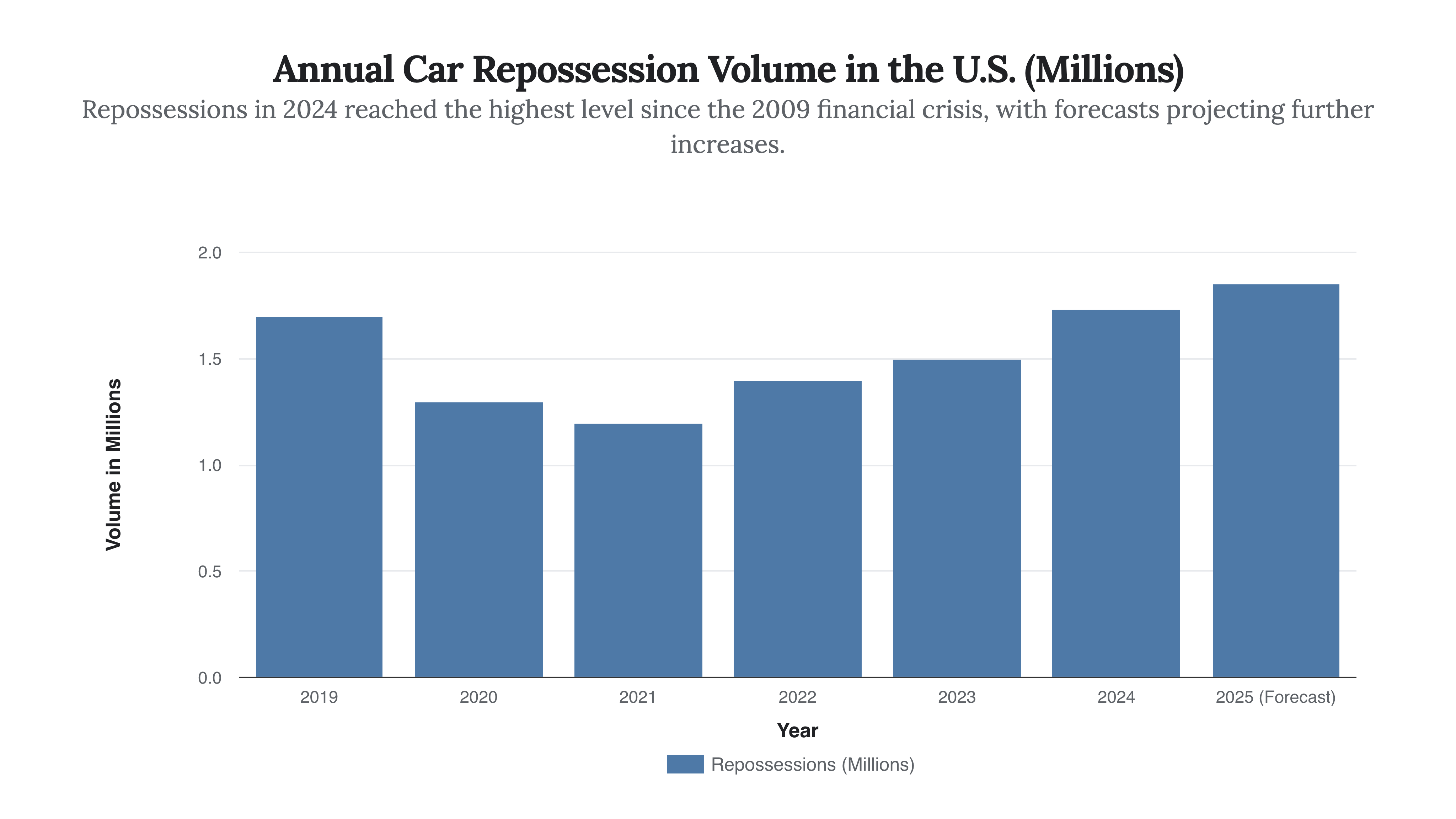
Caption: Data from 2020-2021 shows a dip in repossessions, largely due to pandemic-era stimulus and loan forbearance programs that temporarily shielded consumers. The sharp uptick in 2024 to 1.73 million units marks a definitive end to that grace period.
The Subprime Engine Seizes
While delinquencies are rising across all credit tiers, the most acute stress is concentrated in the subprime segment (borrowers with credit scores typically below 620). These borrowers, often with the least financial cushion, are bearing the brunt of macroeconomic pressures. The delinquency rate for this group has not only surpassed pre-pandemic levels but has set an all-time record, serving as the canary in the coal mine for the broader consumer credit market.
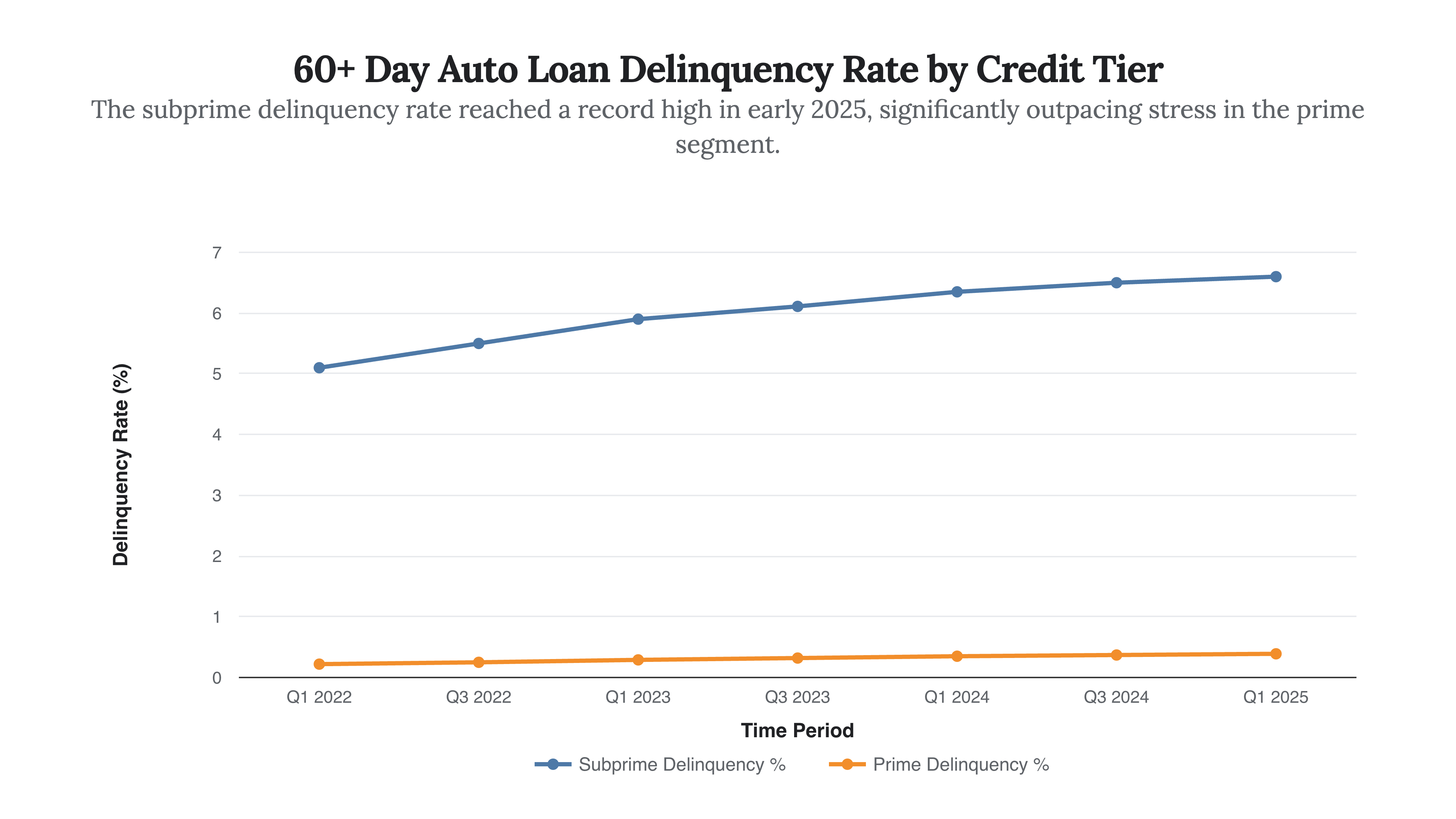
Caption: The divergence between prime and subprime delinquency is stark. While prime rates have ticked up modestly, the subprime rate’s historic 6.6% peak in early 2025 indicates a systemic failure of affordability for a significant market segment.
Macroeconomic Headwinds: The Perfect Storm for Borrowers
The current repossession surge is not a random event but the predictable outcome of several powerful macroeconomic forces converging simultaneously. The pandemic-era trifecta of soaring vehicle prices, followed by the Federal Reserve’s aggressive rate-hiking cycle to combat inflation, has created an affordability crisis unparalleled in recent history.
“A lot of car buyers ended up underwater — the car was worth less than the actual value of the loan. So financially, it might have made sense for them then to default on the loan, as opposed to trying to pay it off.”
The Affordability Squeeze and the ‘Underwater’ Dilemma
During the pandemic, supply chain disruptions sent used car prices soaring. Many consumers, armed with stimulus checks, purchased vehicles at these inflated prices. Now, as the used car market normalizes and values decline, those same borrowers are finding themselves “underwater”—owing more on their loan than the vehicle is worth. This is compounded by monthly payments that remain stubbornly high due to elevated interest rates.
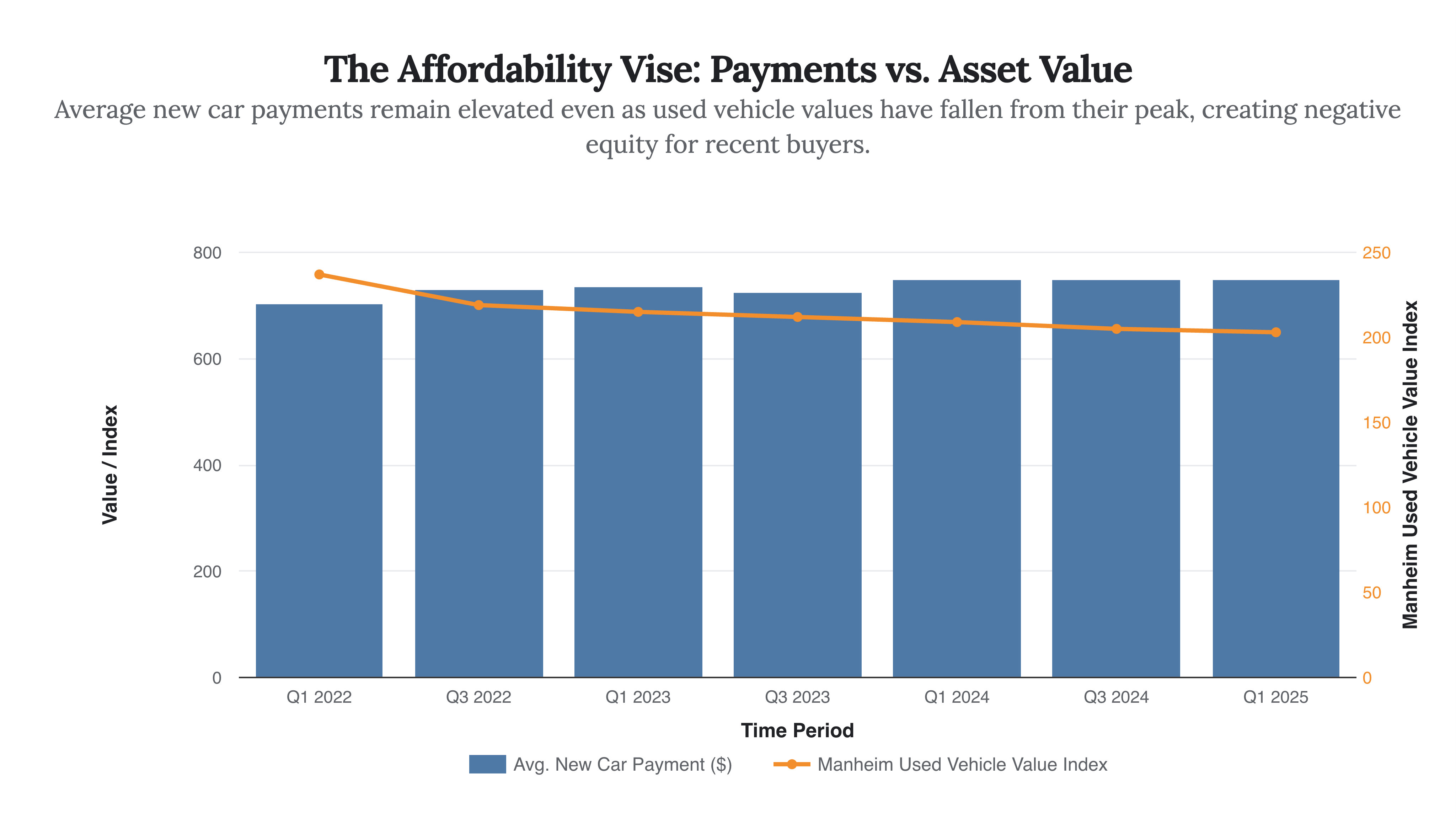
Caption: This chart illustrates the core financial pressure. While the Manheim Used Vehicle Value Index shows a clear decline from its peak, the average new car payment has plateaued near a record high of $749. This divergence is a primary driver of loan defaults.
A Nationwide Problem with Regional Hotspots
The rise in financial distress is a national phenomenon, with all 50 states experiencing an increase in auto loan delinquency between the third and fourth quarters of 2024. However, the severity is not uniform. States in the South, in particular, are showing the highest overall rates of delinquency, indicating deeper pockets of economic strain.
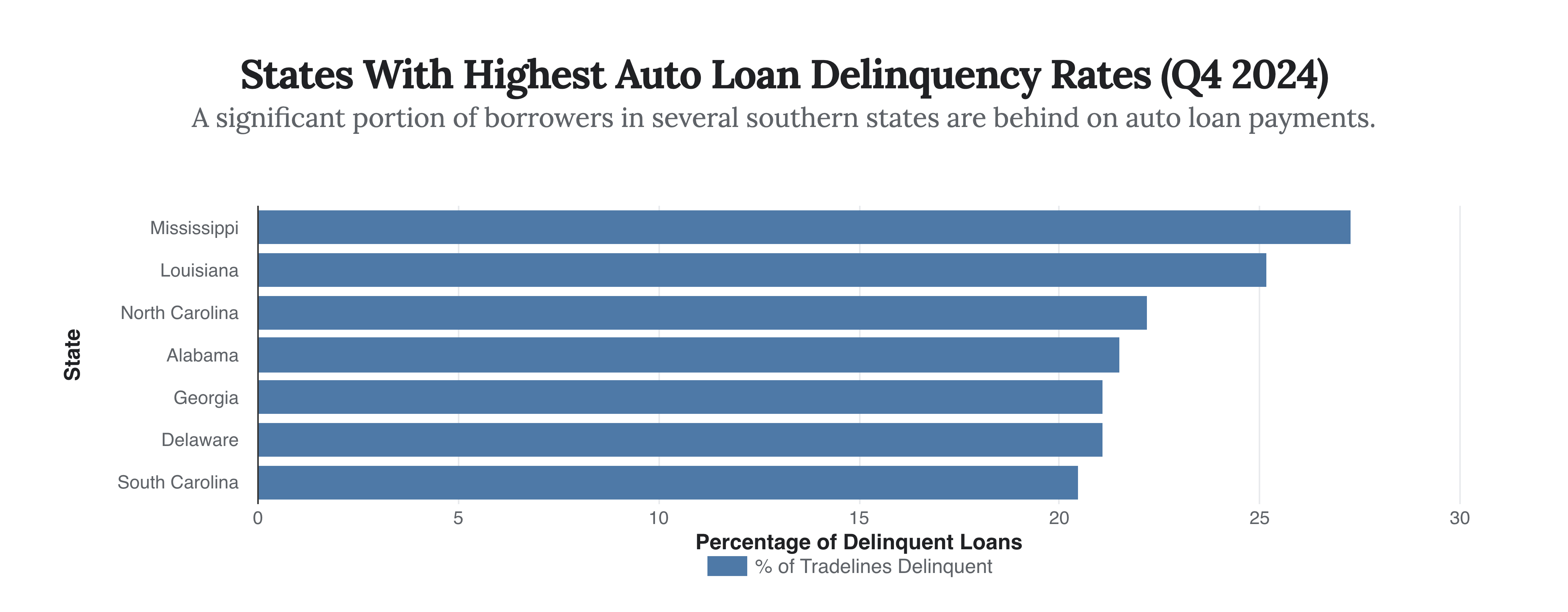
Caption: Mississippi leads the nation with over a quarter of all auto loan tradelines being delinquent, followed closely by several neighboring states. This regional concentration points to localized economic factors exacerbating the national trend.
Strategic Implications and Second-Order Effects
The surge in repossessions is more than a consumer credit story; it is a leading indicator of broader economic trouble with significant strategic implications for multiple sectors.
For Lenders and the Auto Finance Industry
The immediate impact is on lenders’ balance sheets. Rising defaults translate directly to increased losses. While prime loans are still performing relatively well, the crisis in the subprime market is forcing a reassessment of risk. We are already seeing evidence of tightening credit standards, with the perceived probability of an auto loan rejection hitting 33.5% in early 2025, the highest level on record. This credit crunch will inevitably slow vehicle sales, particularly for consumers on the margin.
“As stimulus wanes later in the year and as we see things like enhanced unemployment benefits start to reach expiration dates... we’re going to see more pressure and a more normal flow of repossessions.”
For the Automotive and Used Car Market
A flood of repossessed vehicles into the wholesale market will put further downward pressure on used car prices. This benefits future buyers but harms the balance sheets of rental car companies, fleet operators, and dealerships holding large inventories. It also further exacerbates the “underwater” problem for existing borrowers, potentially triggering another wave of strategic defaults. For new car sales, the combination of tightening credit and negative equity for trade-ins presents a formidable headwind to demand.
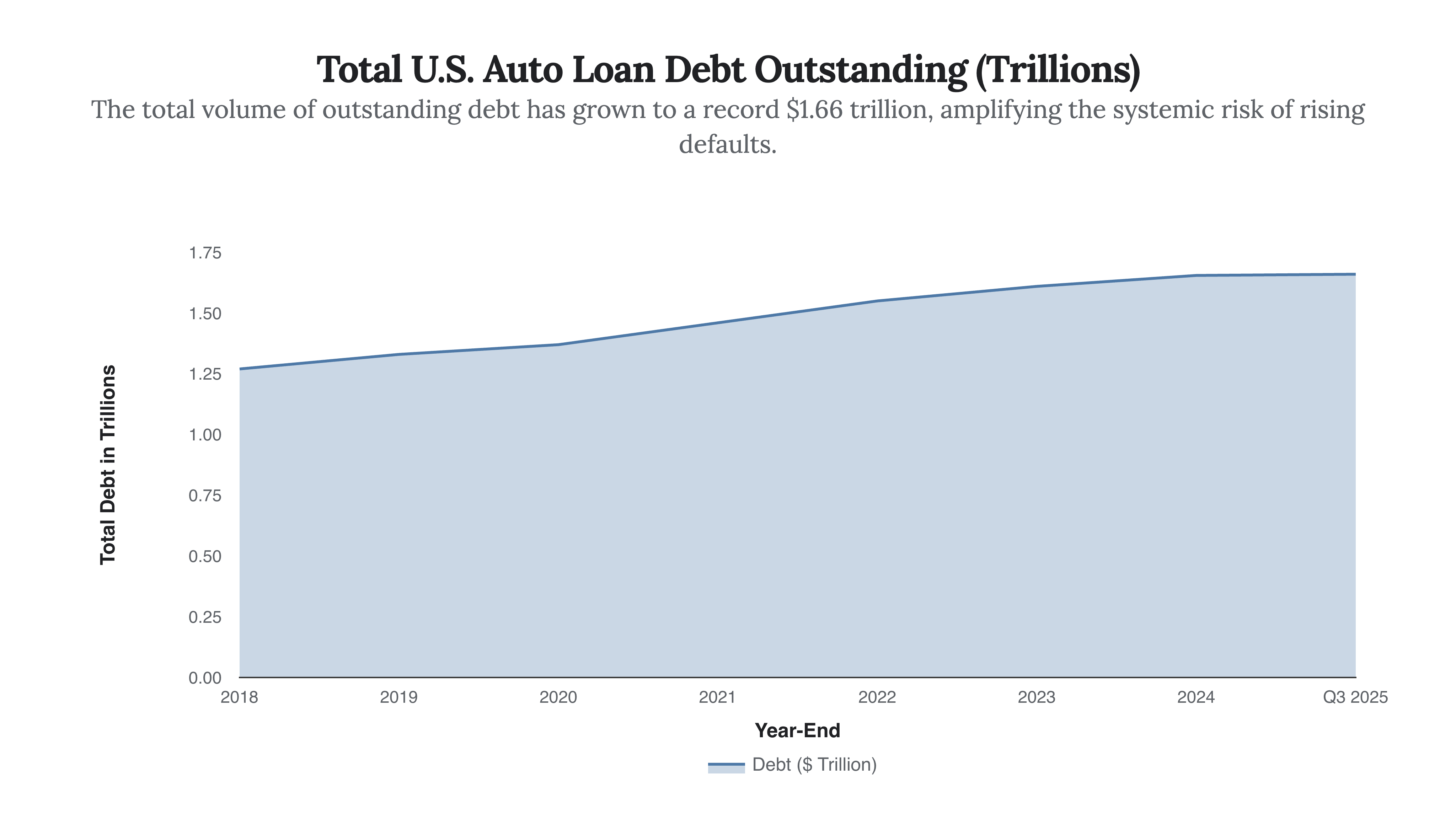
Caption: The backdrop to the current crisis is the sheer scale of the market. With total auto debt now at a record $1.66 trillion, even a modest increase in the overall default rate represents billions of dollars in potential losses.
Forward Outlook: Key Signposts to Monitor
As we move into 2026, the trajectory of the auto repossession crisis will be dictated by the interplay of several key economic variables. Stakeholders must monitor these signposts closely to anticipate market shifts.
The Labor Market: The current stability in the unemployment rate has been a crucial backstop against an even more severe crisis. Any significant weakening in the labor market would accelerate defaults across all credit tiers, turning the current surge into a deluge.
Federal Reserve Policy: The path of interest rates is paramount. While the Fed has signaled a pause, any renewed hikes would further tighten consumer budgets. Conversely, a pivot to rate cuts could provide some relief, though it may not be enough to help the most distressed subprime borrowers.
Wholesale Vehicle Prices: Continued moderation in the Manheim Used Vehicle Value Index is expected. A gradual decline is healthy for market normalization, but a sharp crash would dramatically increase the number of underwater loans and could trigger a panic among lenders.
Lending Standards: Watch for further tightening of credit from auto lenders. A significant pullback in lending, particularly in the near-prime and subprime space, would be a strong signal that the industry is bracing for a protracted downturn.
The data paints a clear and concerning picture. The U.S. auto market is flashing multiple warning signs, driven by a foundational crisis in affordability that has pushed the subprime segment past its breaking point. The normalization of the post-pandemic economy is proving to be a painful process for millions of households who took on expensive debt at the peak of the market. The effects of this reckoning are just beginning to be felt.
The record 6.6% subprime delinquency rate is not merely a statistic; it is a barometer of deep and widespread financial stress that signals a fundamental and painful repricing of risk in the American consumer economy.