


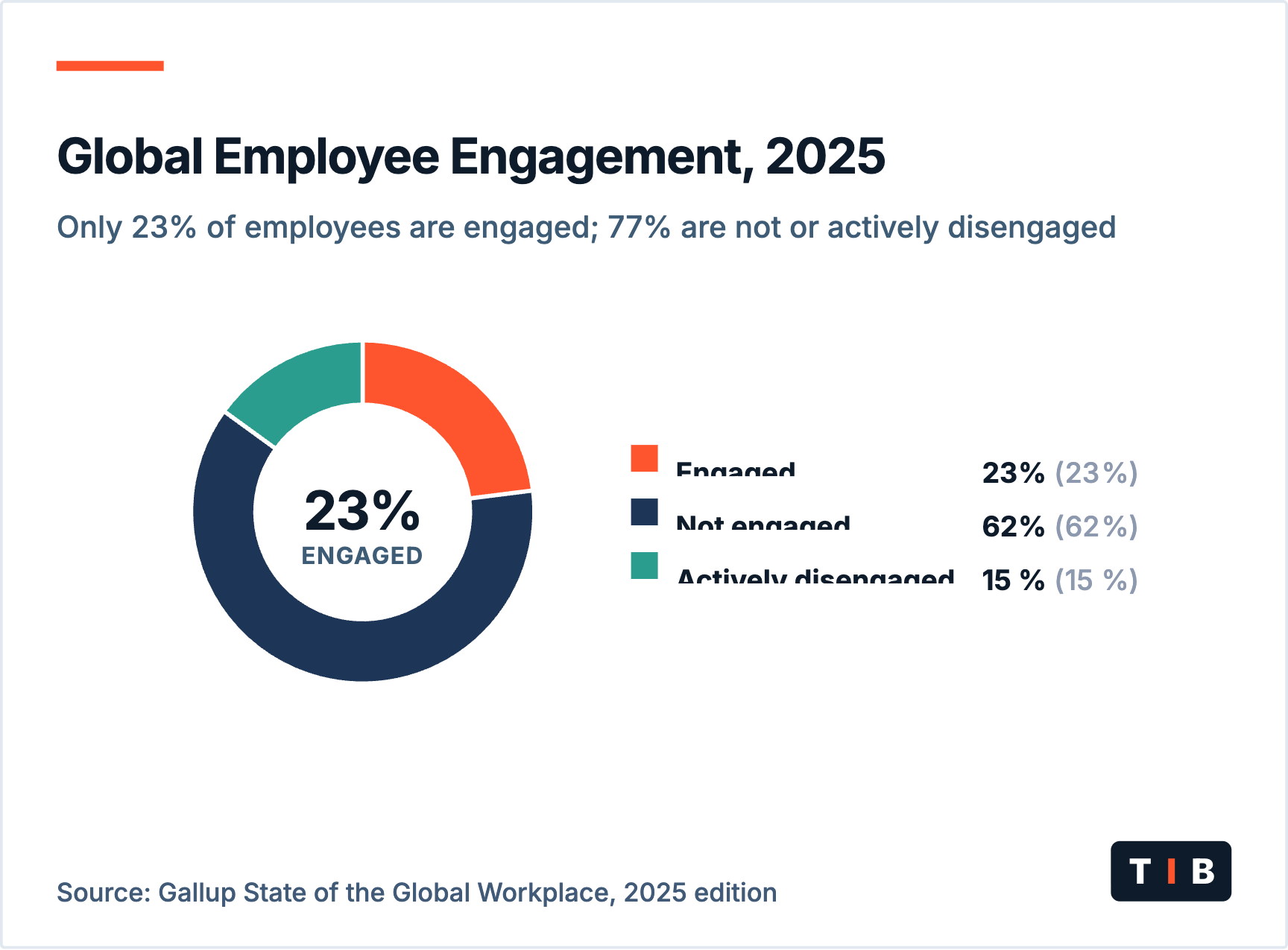
Sixty-one percent of professionals now admit to doing only essential tasks on Mondays, according to Gallup’s 2025 Monday Work Behavior Survey. That figure is not a mood but a measurable shift in how workers ration their effort—a deliberate, repeatable disinvestment that has a historical name: alienated labour. The same Gallup dataset shows the 61% holds across industries and seniority levels, from entry-level associates to mid-level managers. It is not a Gen Z fad; it is a spread of the minimum across the workforce. Bare Minimum Mondays are not a wellness trend; they are a quiet strike against the old bargain that presence equals performance. Gallup’s companion 2025 State of the Global Workplace report places 62% of employees globally in the not-engaged category and 15% actively disengaged, meaning only 23% bring full energy. When 61% of workers deliberately lower output on a single day, the disengagement has become a practice, not a symptom.
Gallup’s 61% is a symptom, not a conclusion—a paid subscription gives you the full synthesis of what this quiet rebellion means for the architecture of ambition, meaning, and work itself.
Alienation as a Rational Response
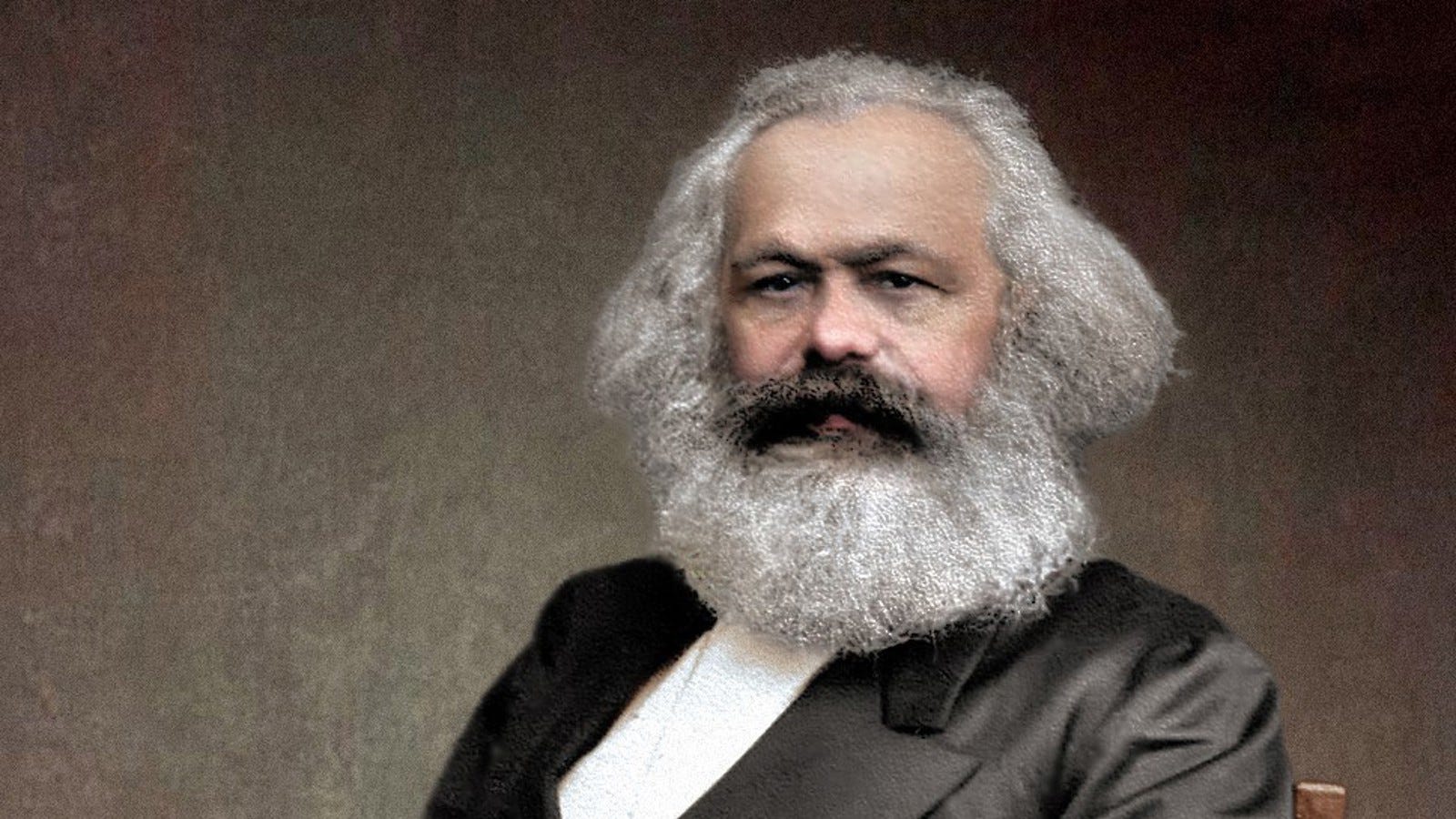
Karl Marx described the condition exactly. In the Economic and Philosophic Manuscripts of 1844, he wrote: ‘The worker therefore only feels himself outside his work, and in his work feels outside himself’ (trans. Martin Milligan, 1959). That sentence explains why a worker doing only essential tasks is not being lazy. The worker who performs the bare minimum has simply withdrawn the additional energy he once lent to a process that does not recognise him. In a service economy where output is often intangible and feedback loops are broken, the worker sees no return on extra effort. Gallup’s data supports this: the 61% who ration Monday effort report the same work-life conflict and manager indifference as the actively disengaged. The difference is that these workers have not quit; they have adjusted their input to match the output they receive. This is not a moral failing. It is the rational allocation of a scarce resource—attention—under conditions of weak ownership and weak recognition.
What the 61% Now Forces
The 61% changes management’s options. If the majority of the workforce has already learned to meter effort, the old tools—engagement surveys, wellness webinars, return-to-office mandates—cannot reverse it. The 61% is a leading indicator that the performance-review era has run out of moral authority. Managers must either redesign roles so work has visible meaning and ownership, or accept a workforce that gives the minimum because the minimum is now the market price of a job. Gallup’s own research connects engagement to wellbeing and productivity, but the causal arrow runs from meaningful work to effort, not from effort to meaning. The spread of bare minimum Mondays predicts that firms which do not restructure tasks around autonomy and mastery will see a permanent 15–20% reduction in discretionary effort on any given day. The worker is not asking for permission to slack; he is stating the terms of his continued presence.