


=
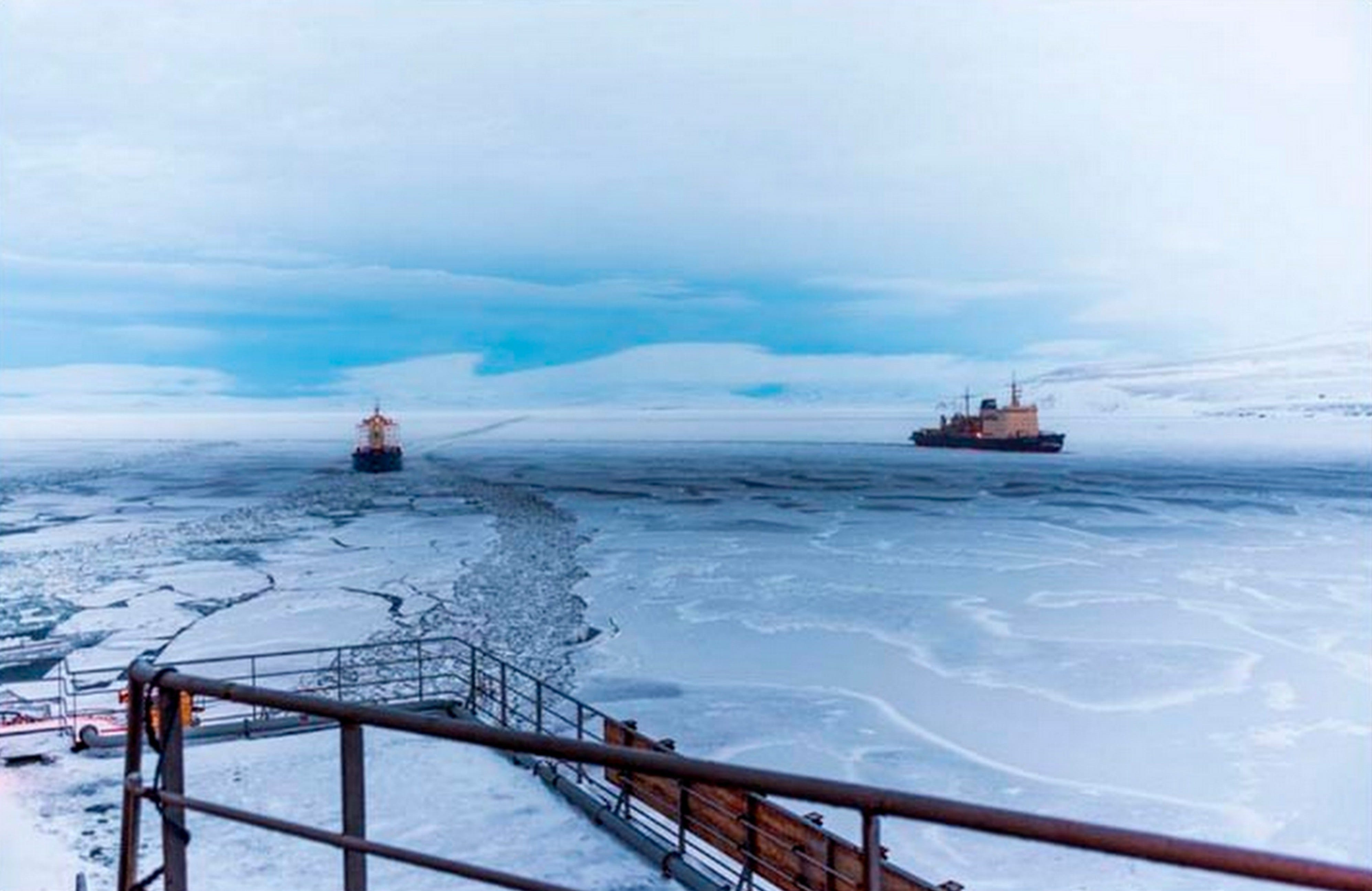
The math of the North is not complex, but it is devastating. It is a simple ledger of steel, nuclear propulsion, and presence. On one side of the ledger, the Russian Federation operates a fleet of over 55 ice-capable vessels, including the world’s only nuclear-powered behemoths capable of smashing through three meters of multi-year ice indefinitely. On the other side, the United States of America—an Arctic nation with vast sovereign territory in Alaska—clings to two aging hulls: the Healy, a medium scientific vessel recently crippled by engine fires, and the Polar Star, a 48-year-old heavy icebreaker that is cannibalizing parts from its decommissioned sister ship just to keep its propellers turning.
This is not a “gap.” A gap implies a distance that can be closed with a sprint. This is a structural chasm that has already determined the geopolitical reality of the next decade. While Washington debates budget allocations and procurement reforms, Moscow has effectively operationalized the Northern Sea Route (NSR), turning the melting Arctic into a sovereign toll road that cuts the distance between Europe and Asia by 40%. The “Icebreaker Gap” is no longer a warning about future readiness; it is a current accounting of strategic insolvency.
In this intelligence briefing, we deconstruct the brutal arithmetic of the Arctic. We look beyond the headline numbers to analyze the industrial paralysis that has left American shipyards unable to deliver a single new polar security cutter before 2030. We examine the economic gravity of the NSR, where Russia is not merely participating in trade but dictating its terms. And we explore the late-breaking “ICE Pact” strategy—a desperate, necessary attempt to outsource survival to Finland and Canada because the U.S. industrial base has failed.
The Raw Tonnage of Sovereignty
To understand the magnitude of the U.S. failure, one must look at the hardware. In the Arctic, sovereignty is not drawn on a map; it is enforced by the ability to physically traverse and patrol the domain. Without icebreakers, an Arctic nation is a littoral state, confined to the coastline, watching others operate in its exclusive economic zone (EEZ) with impunity.
Russia’s fleet is not just numerically superior; it is qualitatively untouchable. Their fleet is anchored by the Arktika-class nuclear icebreakers (Project 22220), vessels that generate 60 megawatts of power and can remain at sea for years without refueling. These ships are not mere escorts; they are instruments of area denial and economic enablement. They ensure that the Northern Sea Route stays open for LNG carriers from the Yamal Peninsula, regardless of winter severity.
By contrast, the U.S. fleet is a rounding error. The Polar Star is years past its intended service life. Every deployment is a roll of the dice, with the crew fighting fires and mechanical failures as often as they fight the ice. The lack of redundancy means that if the Polar Star suffers a catastrophic failure in the deep Arctic, the U.S. has zero capacity to rescue its own crew. We would be forced to call Russia or China for help.
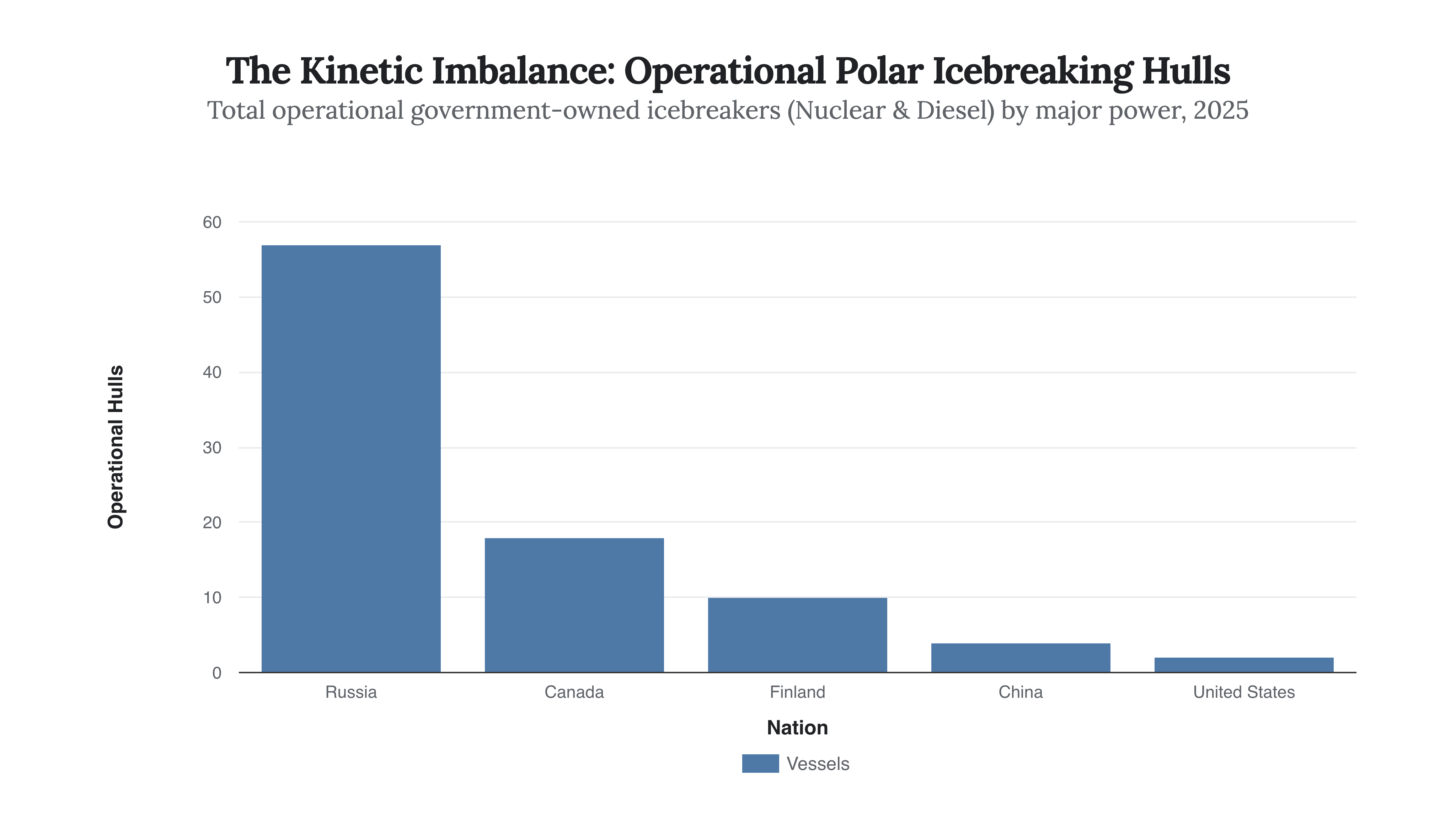
The chart above illustrates the gross disparity in hull count. However, the “Canada” figure is somewhat deceptive; while Canada possesses a capable coast guard, its fleet consists largely of medium icebreakers designed for the St. Lawrence Seaway and the archipelago, lacking the sheer brute force of Russia’s nuclear heavyweights. The true strategic signal here is the presence of China—a “Near-Arctic State” with no territorial claim—fielding a fleet double the size of the United States. With the Xuelong 2 and the newly commissioned Jidi, Beijing has achieved a permanent rotational presence in the high north that Washington cannot match.
The $30 Trillion Toll Road: Monetizing the Melt
The strategic purpose of Russia’s icebreaker fleet is not military conquest, but economic monopolization. The Northern Sea Route (NSR) is the prize. As the polar ice cap recedes, a shipping lane has opened that slashes the transit time from Yokohama to Rotterdam by up to 15 days compared to the Suez Canal route. In a world of supply chain fragility, that efficiency is worth billions.
Russia views the NSR as its national internal waters. It requires foreign vessels to request permission to enter, pay transit fees, and often, pay for Russian icebreaker escorts. This is the “Math of the North” in practice: Russia has built a toll booth on the most critical emerging maritime artery of the 21st century. The icebreakers are the enforcers of this toll.
Cargo volumes on the NSR have defied sanctions and war. While Western energy majors have pulled out, Russian LNG and crude oil continue to flow east to China and India. The Kremlin’s target of 150 million tons by 2030 is aggressive, but the trajectory is clear. The route is becoming a lifeline for the Russian economy, insulating it from Western chokepoints like the Malacca Strait.
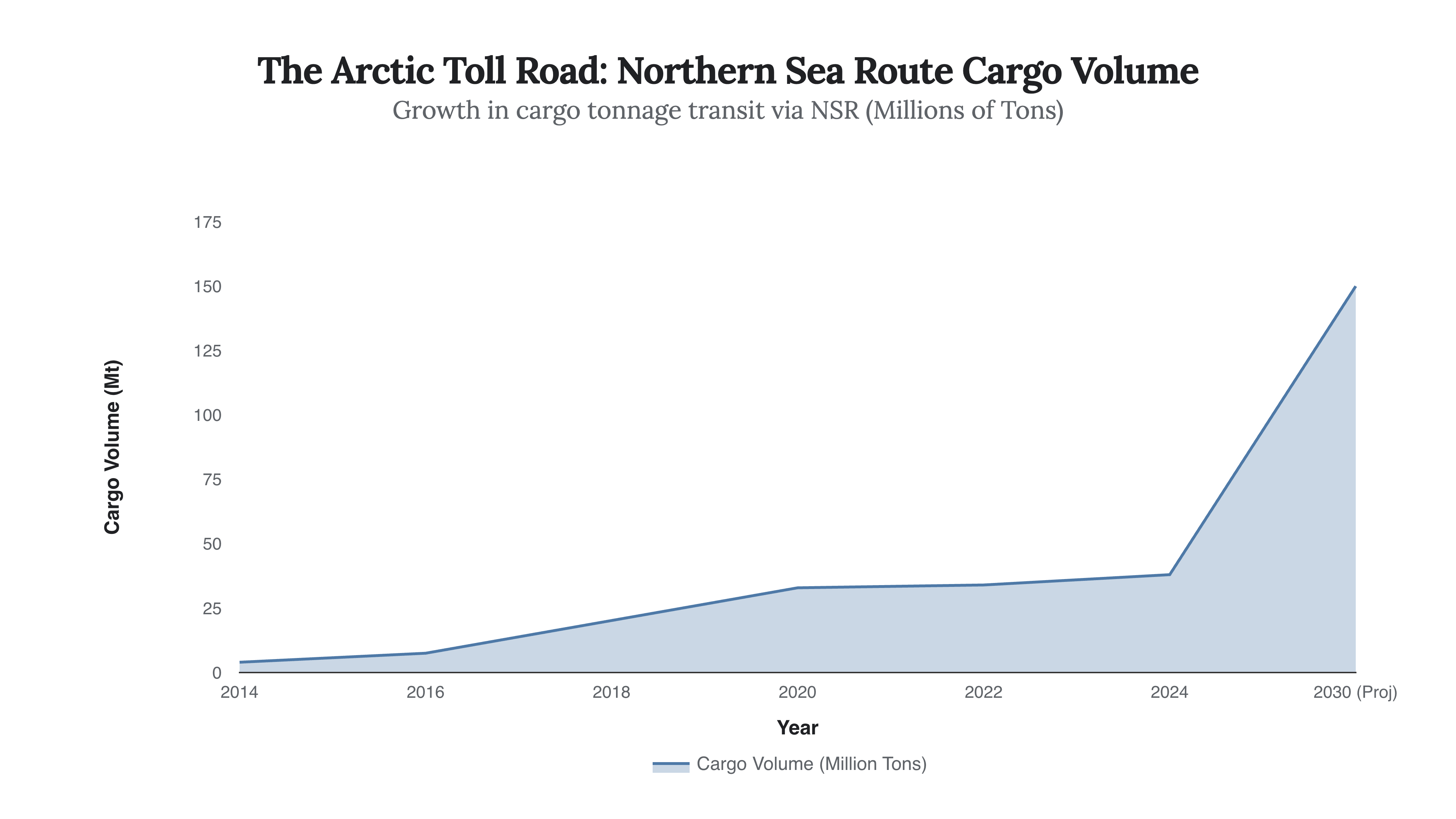
The data clearly shows that despite the geopolitical isolation of Russia following the 2022 invasion of Ukraine, usage of the NSR has not collapsed. Instead, it has pivoted. The route is now the primary artery for the “Shadow Fleet” of tankers moving prohibited Russian crude to Asian markets. By failing to maintain a
