


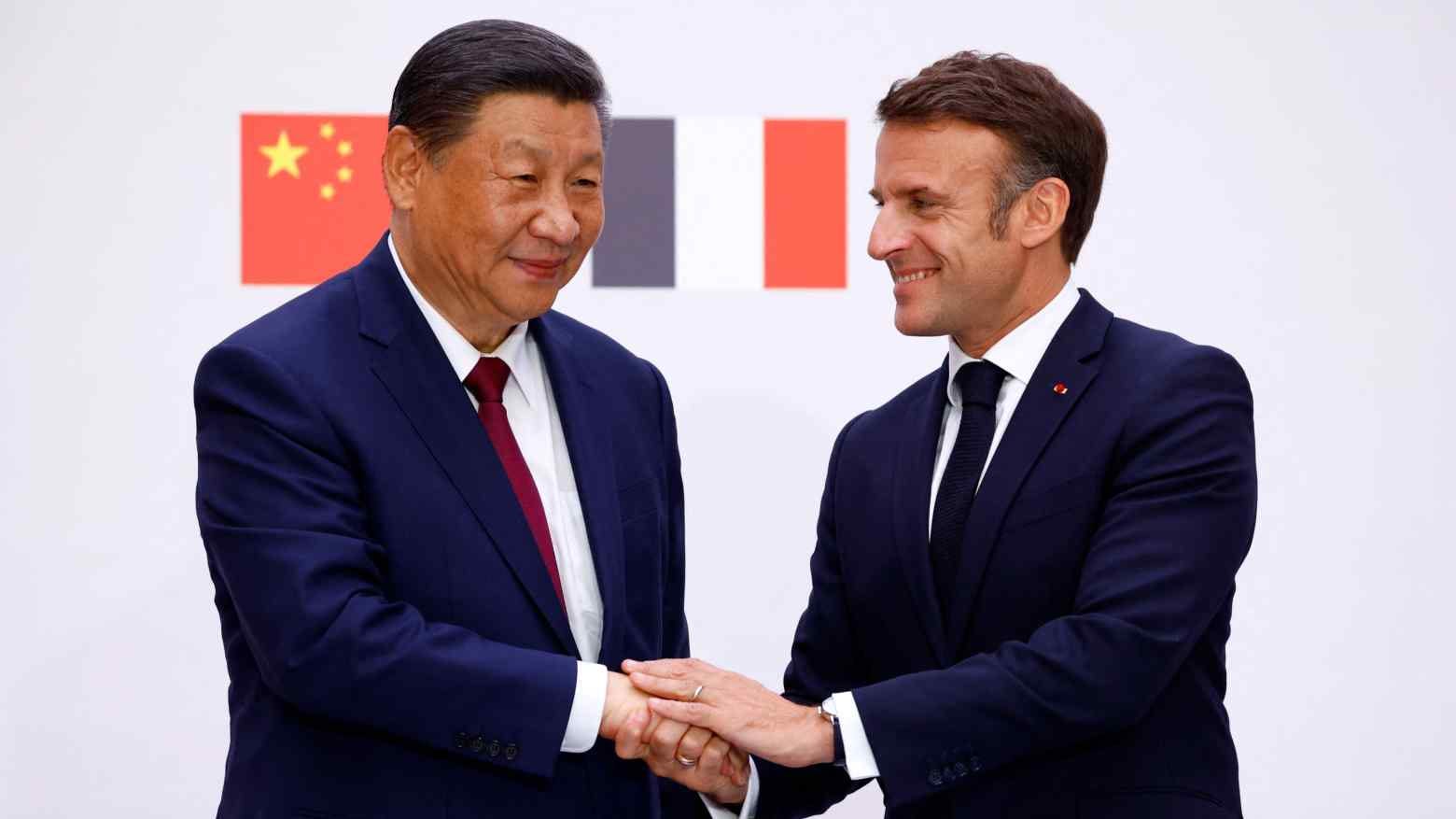
Yesterday, amidst the ceremonial pomp of the Great Hall of the People in Beijing, President Xi Jinping and President Emmanuel Macron engaged in a handshake that was meant to signal the start of a “new 60-year cycle” of cooperation. The date—December 4, 2025—will go down in diplomatic ledgers as a reaffirmation of the “comprehensive strategic partnership.” But strip away the red carpet and the diplomatic pleasantries, and the data tells a radically different, far more volatile story.
While the two leaders spoke of “strategic vision” and “multipolarity,” the economic reality between France and China has shifted from mutual opportunity to defensive trench warfare. The defining number of this visit is not the years of friendship, but the staggering €47 billion trade deficit that now hangs over Paris like a storm cloud. Even more alarming is the velocity of the current trade dispute: while Brussels attempts to wall off Europe from Chinese electric vehicles (EVs), Beijing’s retaliatory strikes have already decapitated key French export sectors.
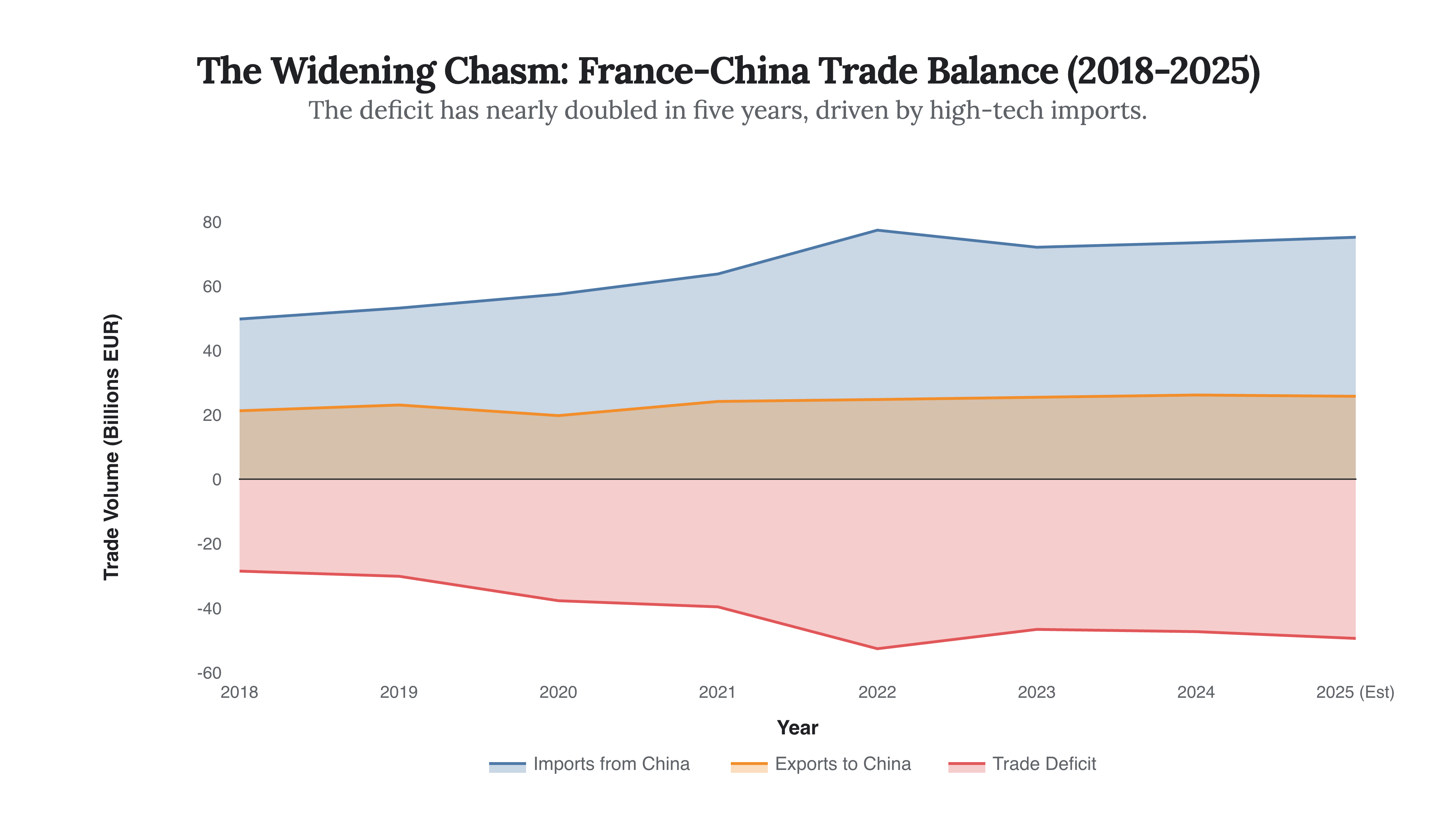
The chart above reveals the structural asymmetry that Macron is desperate to address. For years, the narrative was that France sold luxury goods and Airbuses to China, while buying consumer electronics. That dynamic has fractured. China’s demand for French luxury is cooling, while its industrial overcapacity is flooding Europe with advanced machinery and green technology. The deficit has stabilized at a historically high level, creating a political liability that the Élysée can no longer ignore.
“China is willing to import more high-quality French products... but protectionism cannot solve the problems caused by global industrial restructuring.” — President Xi Jinping, December 4, 2025
Xi’s comment touches the raw nerve of the current crisis: the “Tit-for-Tat” tariff war. Following the EU’s decision to impose tariffs of up to 45.3% on Chinese EVs to protect its domestic auto industry, Beijing retaliated with surgical precision, targeting France’s most symbolic export: Cognac. The impact has been immediate and devastating. The latest data from December shows that while Chinese EVs are weathering the European tariffs with surprising resilience, French brandy exports to China have essentially collapsed.
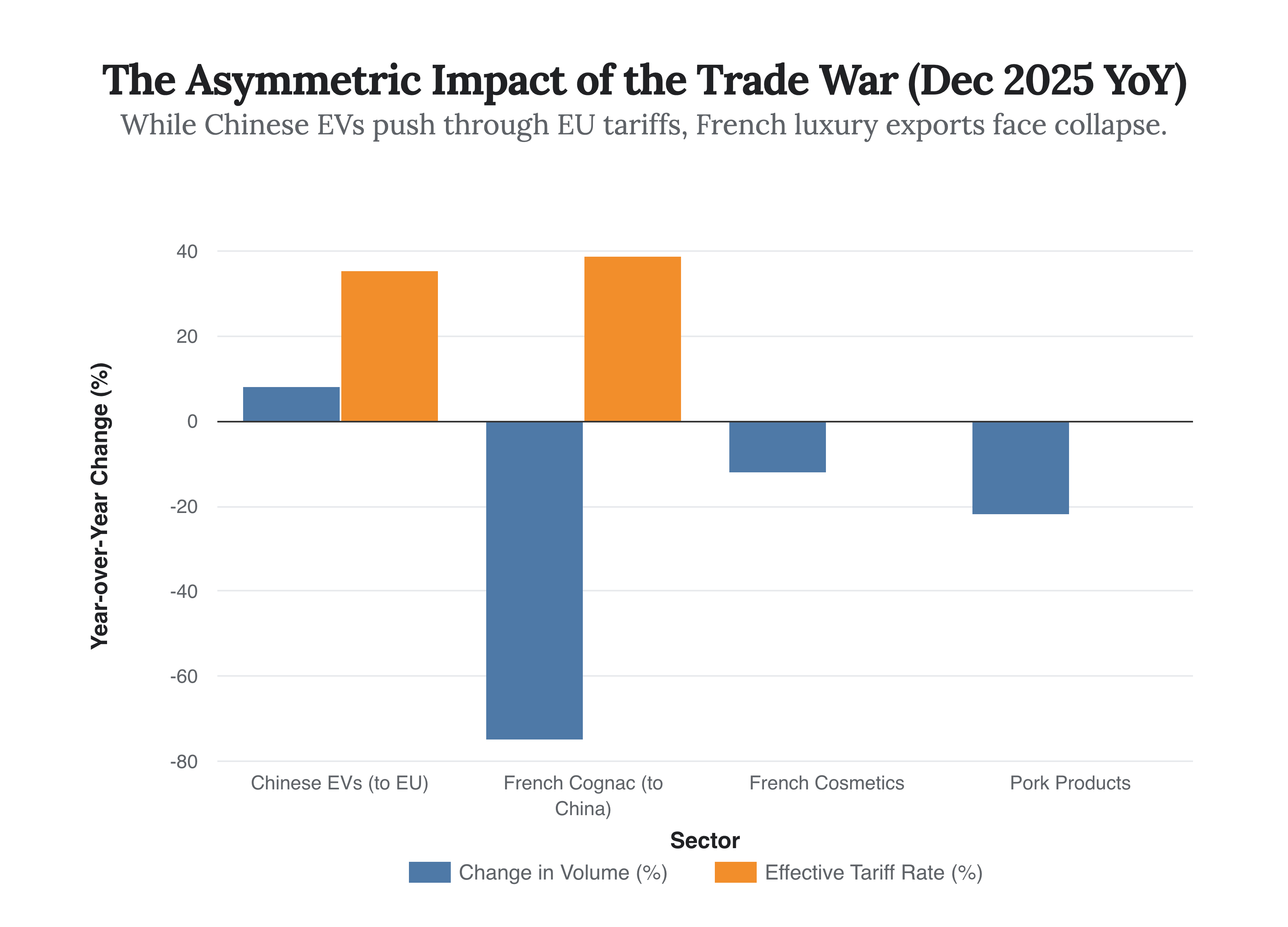
This is the “Brandy-for-EV” arbitrage. The data shows a 75% plunge in Cognac demand in China following the imposition of provisional anti-dumping measures. In contrast, Chinese EV exports to the EU actually rose by 8.3% in December, proving that Chinese manufacturers have enough margin to absorb the new European taxes—or simply undercut them. France is paying a heavy price for leading the EU’s trade defense measures, with its agricultural and luxury heartlands serving as collateral damage.
This vulnerability highlights a deeper issue: the exposure of France’s corporate giants to the Chinese consumer. The “Empathy Recession” in Chinese consumer spending, combined with patriotic purchasing trends, has left French conglomerates exposed. Companies that once viewed China as an infinite growth engine are now seeing it as a source of volatility. The following chart breaks down the revenue exposure of key French players, illustrating why Macron’s negotiating hand is trembling.
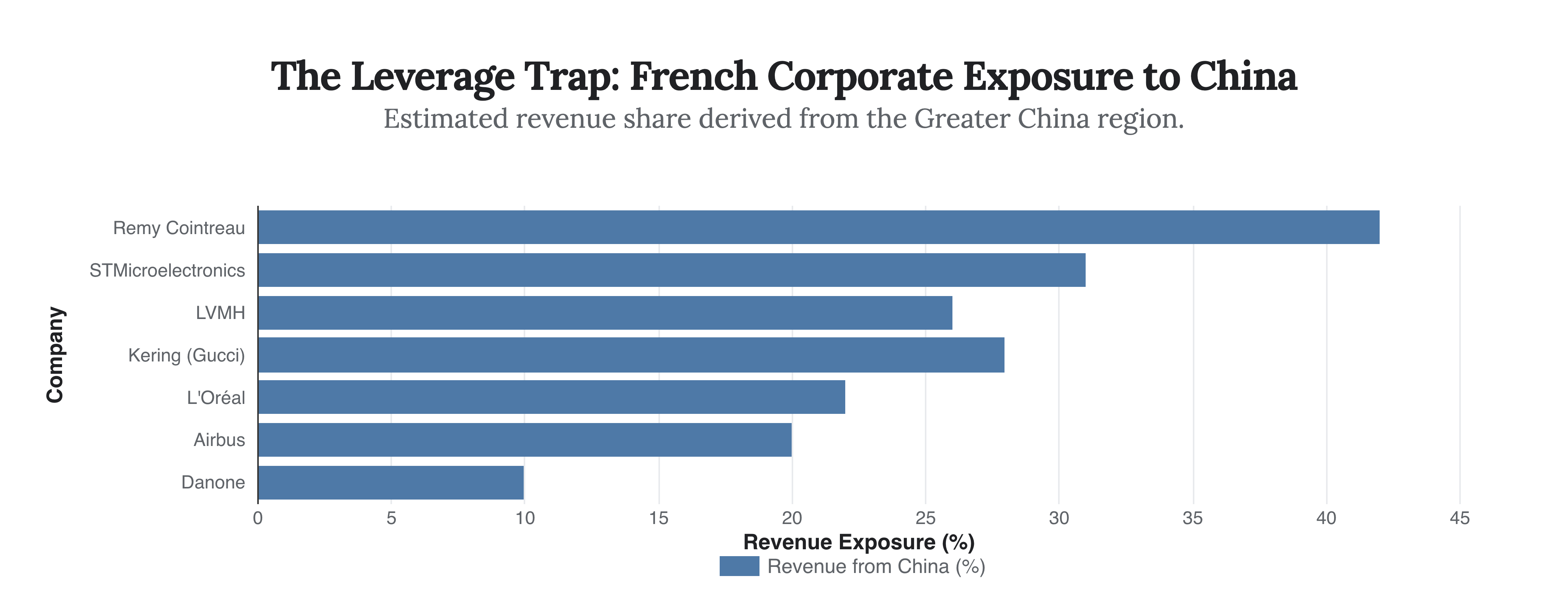
The bottom line: The handshake in Beijing masks a fundamental decoupling of fortunes. France has leveraged its political capital to protect the European auto market, but the economic backlash is being felt in the vineyards of Cognac and the boardrooms of Paris luxury houses. Macron’s challenge is no longer just about “opening markets”—it is about managing a decline in influence while preventing a full-scale trade rout. As the deficit holds near €50 billion, the cost of “strategic autonomy” has never been clearer.