


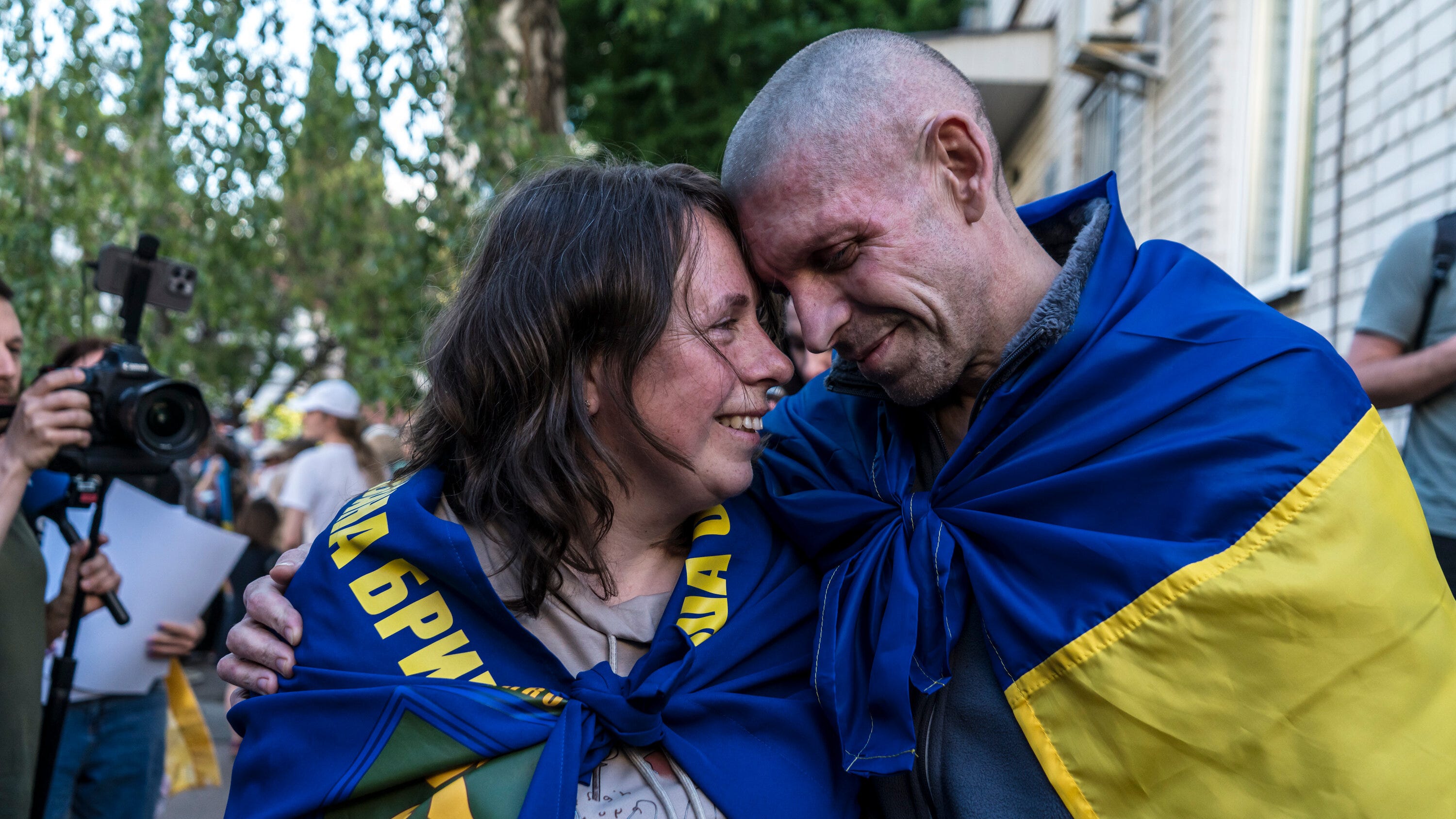
In the grim calculus of war, the return of a single soldier is a victory. But along the frontlines of the Russia-Ukraine conflict, a series of carefully orchestrated prisoner exchanges has achieved something far greater. As of August 2025, a staggering 4,641 prisoners of war have been returned to their respective homelands, a testament to a persistent, often unheralded, diplomatic effort running parallel to the brutal reality of combat. These exchanges, frequently mediated by the United Arab Emirates, offer rare glimmers of humanity and diplomatic progress in a war defined by its intractable nature.
The scale of these operations reached a new peak in May 2025 with a massive “1,000-for-1,000” exchange, the largest since the full-scale invasion began. The swap was executed in several stages over a handful of days, highlighting the immense logistical and political complexity involved. The first phase alone saw 390 individuals from each side cross back over the lines—270 soldiers and 120 civilians, a ratio that underscores the tragic reality of non-combatants caught in the conflict.
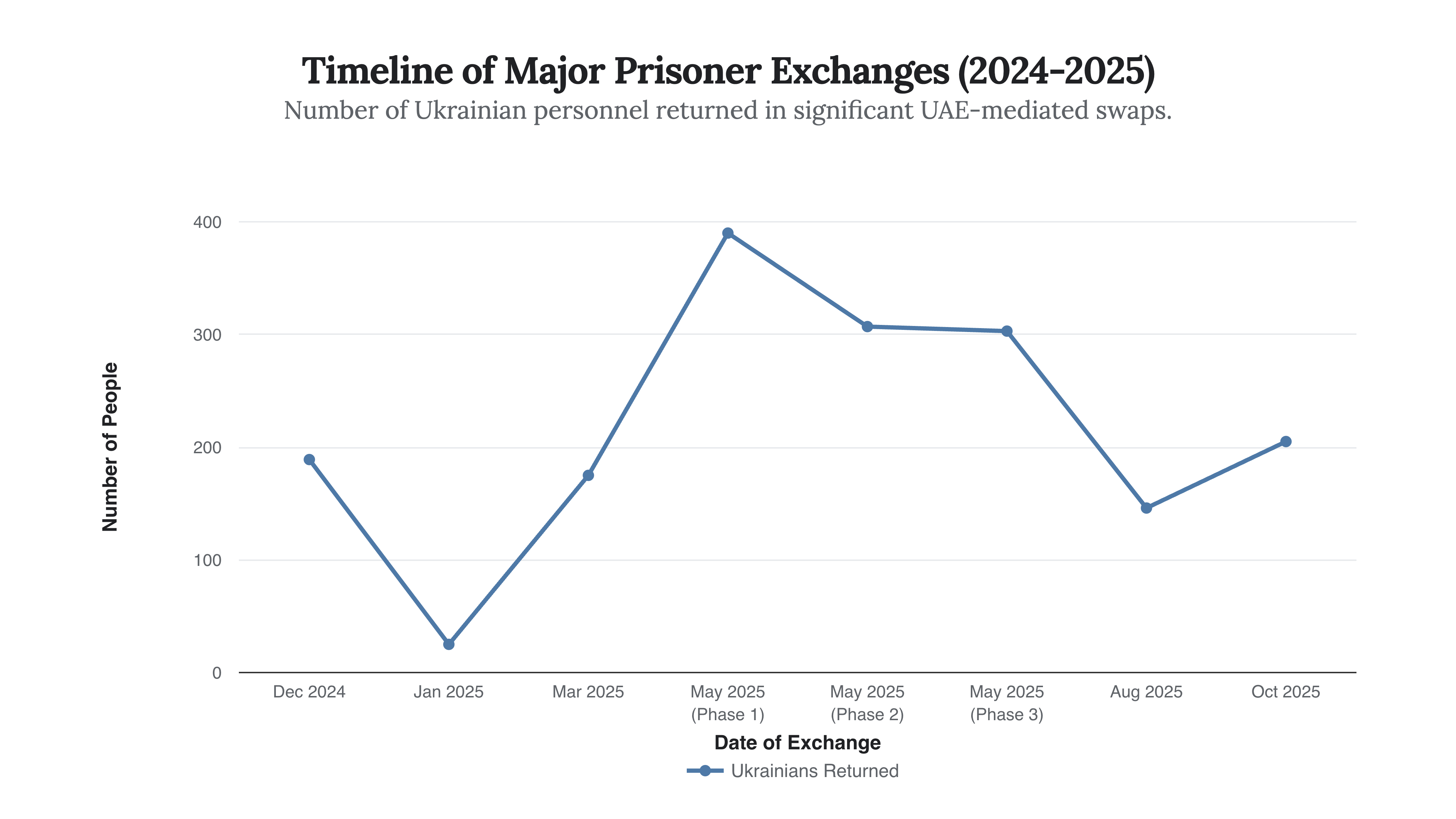
This chart illustrates the fluctuating, yet consistent, effort to return prisoners of war and civilians, with a significant spike during the multi-stage exchange in May 2025.
“We are bringing our people home. For thousands of families, this is a joy to reunite with their loved ones.” - Ukrainian President Volodymyr Zelenskyy
The exchanges are not merely transactions; they are deeply emotional events. For every bus that crosses the border carrying freed captives, there are dozens of families waiting in anxious hope. The returnees, often gaunt and draped in their national flags, step back into a world they fought to defend, while leaving thousands of comrades behind. Ukrainian officials have stated that since the start of the full-scale invasion, they have brought over 7,000 people home in total, though thousands more remain in captivity.
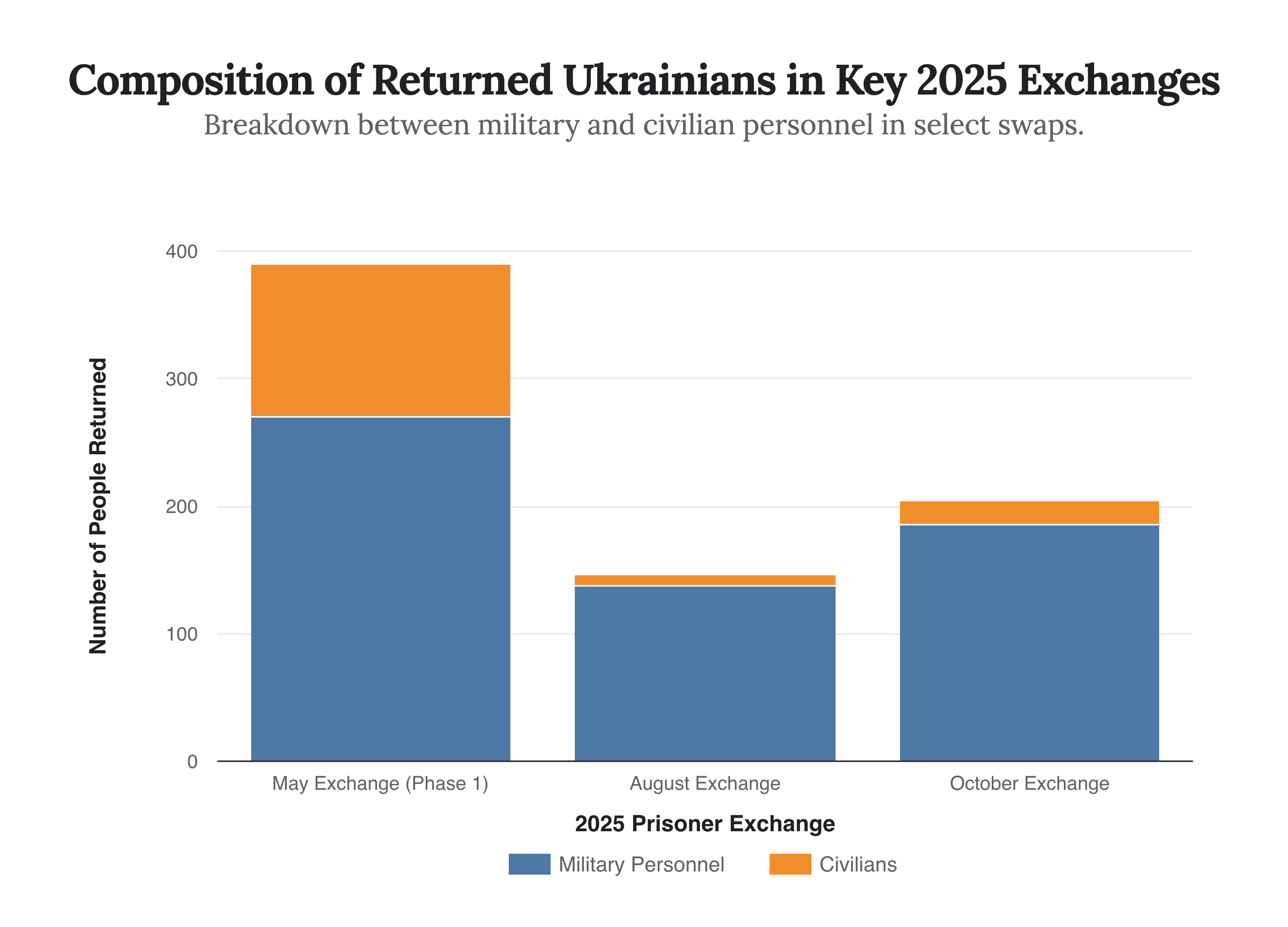
This visualization breaks down the composition of returned Ukrainians in several key exchanges in 2025, showing the significant number of civilians included in these swaps.
The role of the United Arab Emirates has been pivotal. The Gulf nation has successfully positioned itself as a neutral mediator, trusted by both Kyiv and Moscow. Its foreign ministry has confirmed its involvement in at least 17 separate exchanges. This diplomatic track operates far from the battlefield, in quiet negotiations that stand in stark contrast to the war’s daily violence. The success of these mediations underscores a crucial point: even when direct peace talks stall, humanitarian channels can remain open.
“The return of our people from Russian captivity is always very good news for each of us. And today is one of such days.” - Ukrainian President Volodymyr Zelenskyy
While each exchange is a victory for the individuals and families involved, the broader picture remains fraught. The process is fragile and subject to the shifting dynamics of the war. Yet, these swaps represent more than just a return of personnel; they are structured moments of de-escalation and cooperation in an otherwise overwhelmingly hostile environment. For the 4,641 individuals who have returned home through these channels, this quiet diplomacy is nothing short of a lifeline. These efforts serve as a powerful reminder that even in the darkest of conflicts, organized efforts to preserve human life and dignity can, and must, endure.