



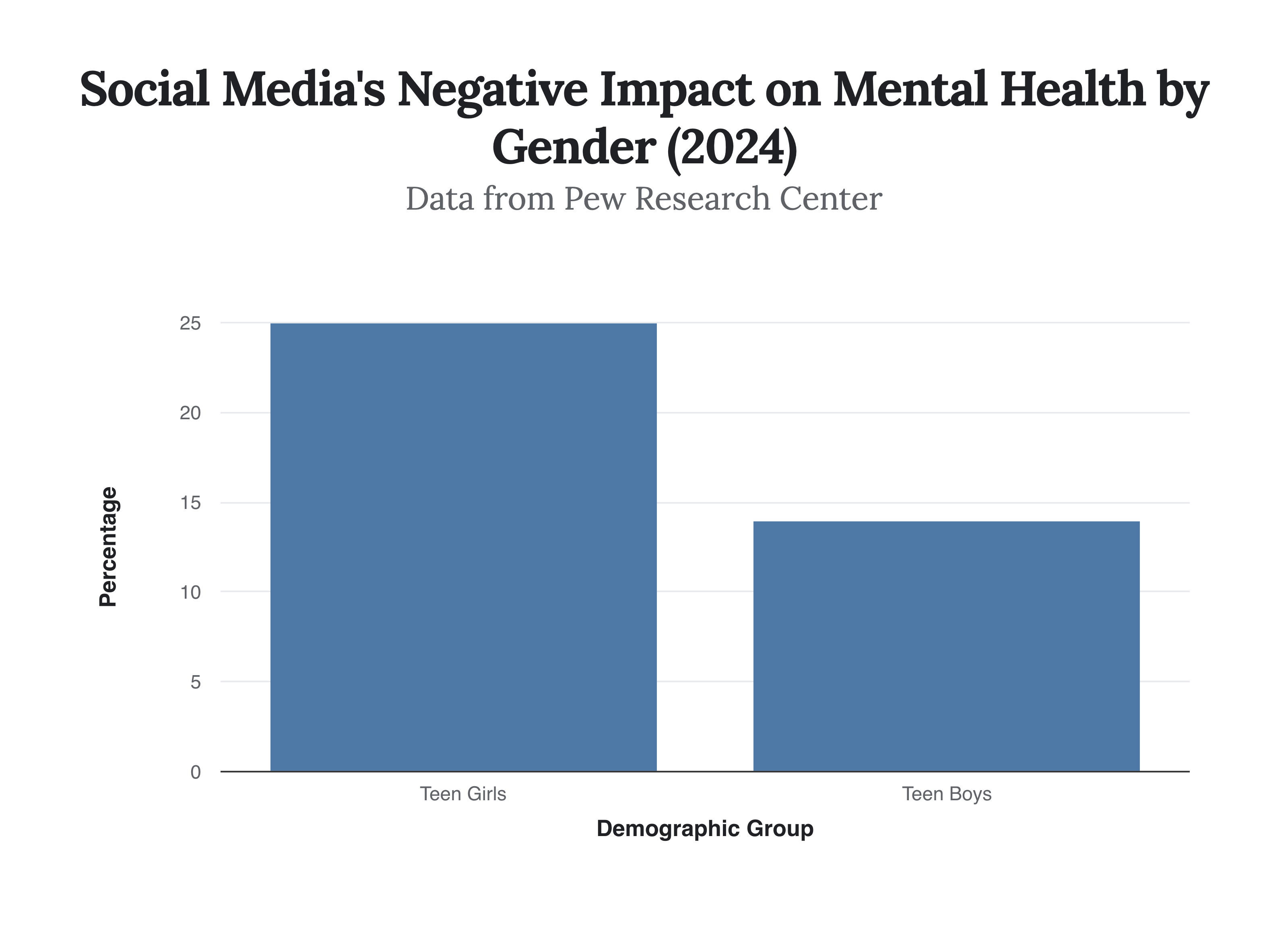
In an environment engineered for perpetual engagement, a significant portion of the adolescent population perceives a tangible detriment to their collective mental well-being. Despite this societal awareness, a persistent disconnect emerges in individual self-assessment. While 48% of teens acknowledge social media’s negative impact on their peers, only 14% apply this assessment to their personal experience, creating a critical gap in self-perception regarding digital harm. This discrepancy reveals a deep-seated vulnerability, particularly among adolescent girls, a quarter of whom explicitly state that social media has harmed their mental health. This initial assessment, derived from Pew Research Center’s September-October 2024 survey, points to a broader structural issue where digital platforms, through their design, cultivate a unique form of societal myopia regarding their own influence. The economic and psychological costs associated with this burgeoning digital distress among youth are becoming increasingly quantifiable, challenging the purported benefits of constant connectivity.The digital environment has cultivated a pervasive sense of overconsumption among adolescents, marked by a notable increase in self-reported excessive social media engagement.
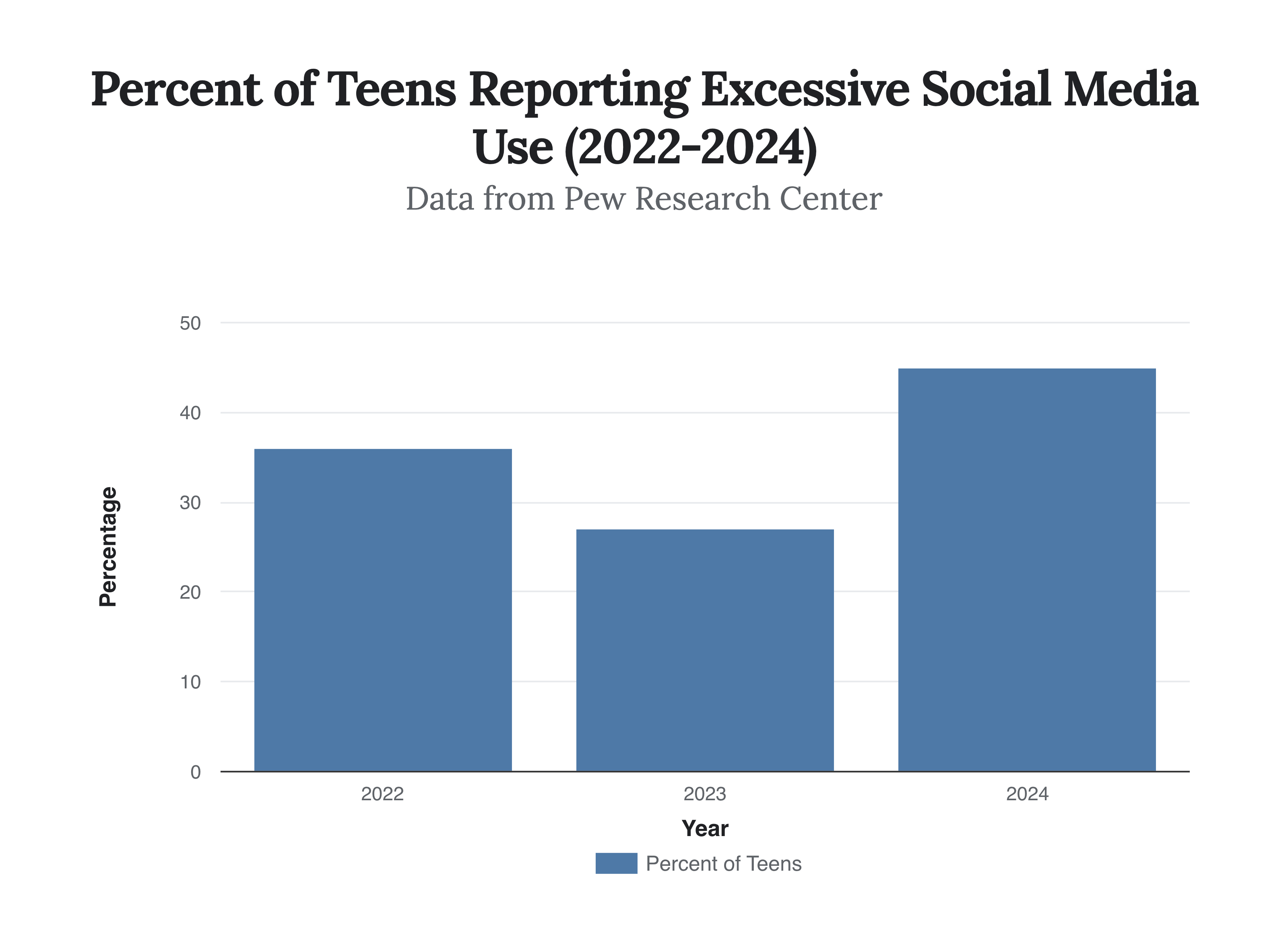
In 2024, 45% of teens reported spending too much time on these platforms, marking a substantial rise from 27% in 2023 and 36% in 2022. This escalating self-perception of overuse indicates that the designed affordances of social platforms, intended to maximize engagement, directly contribute to a felt sense of digital burden. The shift from 64% of teens in 2023 feeling their social media use was ‘about right’ to just 49% in 2024 underscores a significant and rapid change in adolescent sentiment regarding their digital habits. This 66% increase in self-reported excessive social media use between 2023 and 2024 signals a critical inflection point, demonstrating an accelerating awareness of digital entrapment that reflects a growing inability to disengage from platforms engineered for constant attention. Concurrently, while teens spend an average of 8.5 hours daily on digital devices for entertainment, their enjoyment of social media specifically is diminishing, suggesting a compulsion increasingly divorced from genuine satisfaction.
The impact of social media on adolescent mental health manifests with a pronounced gender disparity. In 2024, 25% of teen girls reported that social media had a negative impact on their mental health, a rate significantly higher than the 14% reported by teen boys. This differential is not isolated to overall mental health; girls are also more likely to report that social media negatively affects their confidence (20% for girls vs. 10% for boys) and sleep (50% for girls vs. 40% for boys). Such statistics indicate that the platforms, through their pervasive emphasis on appearance, popularity, and curated realities, exert a disproportionate pressure on female adolescents, exacerbating existing vulnerabilities. This near doubling of negative mental health outcomes for girls compared to boys highlights how algorithmic reinforcement of social comparison and idealized presentation contributes to a gendered burden of digital distress. The structural design of these platforms thus engineers an environment where self-perception is continuously mediated and often diminished by external, idealized digital constructs.
Beyond direct mental health metrics, excessive social media use significantly erodes the foundational pillars of adolescent well-being: sleep and productivity. A substantial 45% of teens report that social media platforms negatively affect the amount of sleep they get, and 40% state that these platforms hurt their productivity. These figures are critical because both sleep and productivity are indispensable for healthy cognitive development, academic performance, and overall mental resilience. Only small percentages (around one-in-ten or fewer) report positive impacts in these areas, indicating a clear net negative effect. The consistent disruption of sleep and focus among nearly half of adolescents signals that the attention economy’s demands directly compromise physiological and cognitive functions essential for thriving.
