

The Geopolitical Catalyst: Asymmetric Warfare and the Chokepoint Risk Premium
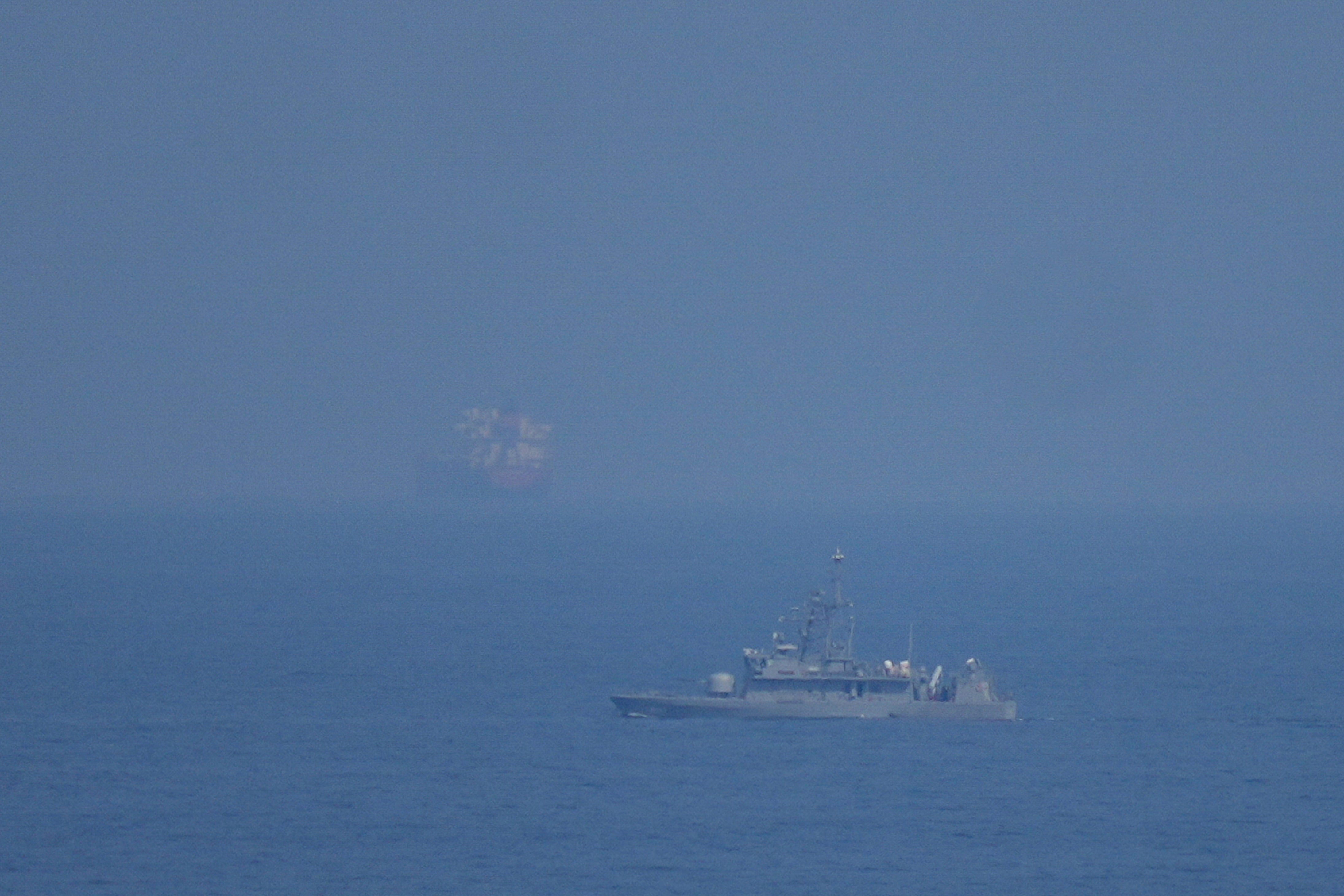
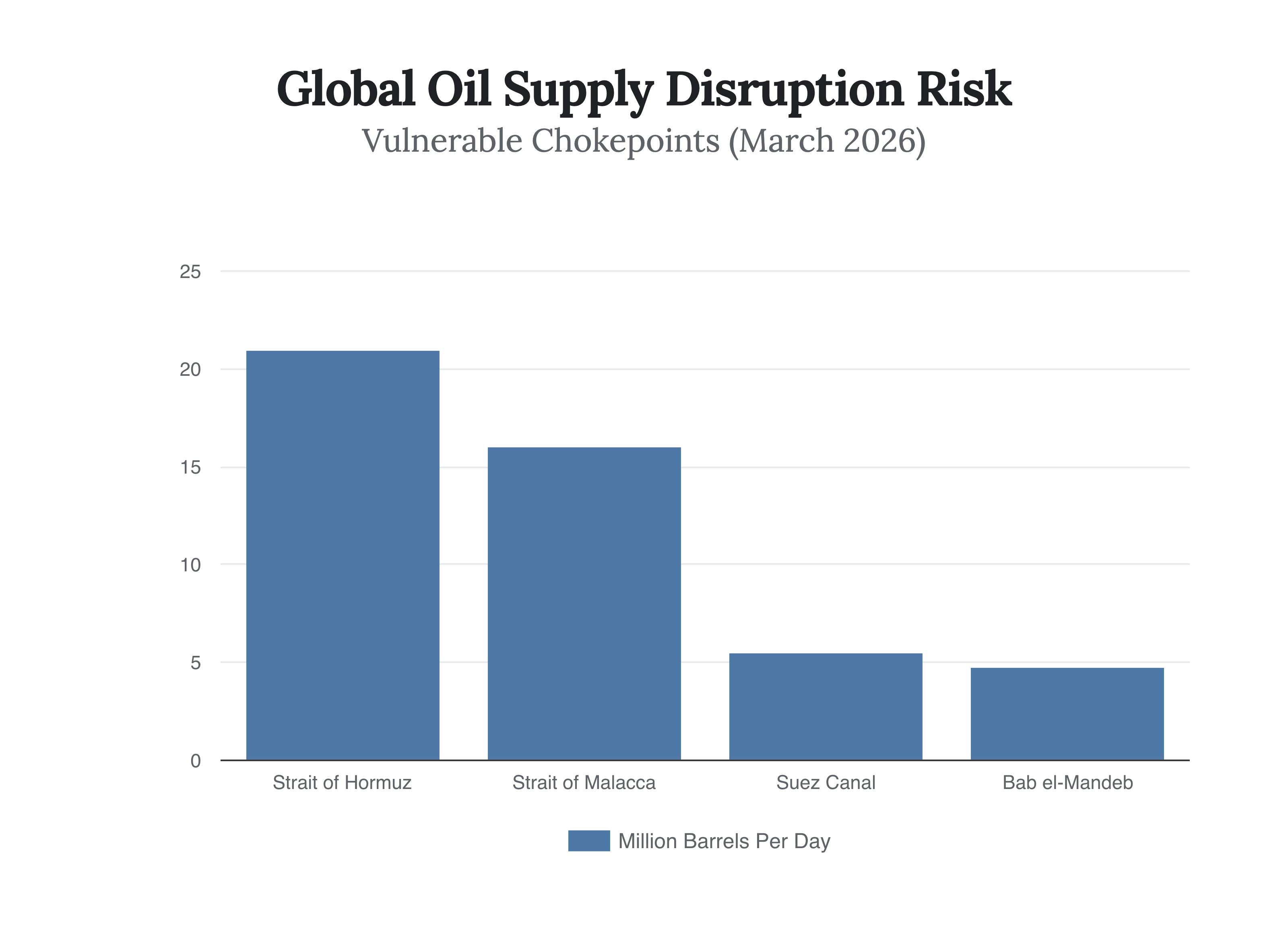
The global macroeconomic architecture experienced a terminal structural shock in early March 2026. The abrupt militarization of the Strait of Hormuz—precipitated by synchronized U.S. and Israeli kinetic strikes against Iranian assets beginning on February 28—shattered the fragile equilibrium of global commodity markets. In direct retaliation, Iran’s Islamic Revolutionary Guard Corps (IRGC) initiated an asymmetric blockade of all Persian Gulf energy shipments. By effectively severing the logistical artery that channels roughly 20% to 25% of global seaborne oil demand, the Iranian regime executed a classic Game Theory maneuver: maximizing Western economic pain while minimizing direct conventional military engagement.
This disruption catalyzed a violent pricing reaction, injecting an unprecedented “War Premium” into the crude markets. Brent crude briefly eclipsed the $119 per barrel threshold, while West Texas Intermediate (WTI) surged synchronously. In this environment, the commodity markets ceased to function as a reflection of physical supply and demand; instead, they became a localized barometer for geopolitical tail risk. By holding the Strait of Hormuz hostage, the Iranian regime has effectively constructed a zero-sum game where Western economic stability is the primary casualty of Middle Eastern kinetic conflict. The incentive structures for Iran are clear: leverage information asymmetry and the credible threat of anti-ship ballistic missiles to extort diplomatic and military concessions from the West via the vector of global inflation.
To fundamentally counter this zero-sum strategy, traditional monetary policy is completely impotent. The Federal Reserve cannot print new oil molecules, nor can it adjust interest rates rapidly enough to suppress the immediate inflationary contagion radiating from a $119 barrel of oil. The only dominant strategy available to the Western coalition is the overwhelming deployment of sovereign liquidity—a direct, brute-force injection of physical inventory designed to break the psychological pricing floor and dismantle the opponent’s leverage.
The Weaponization of the Strategic Petroleum Reserve
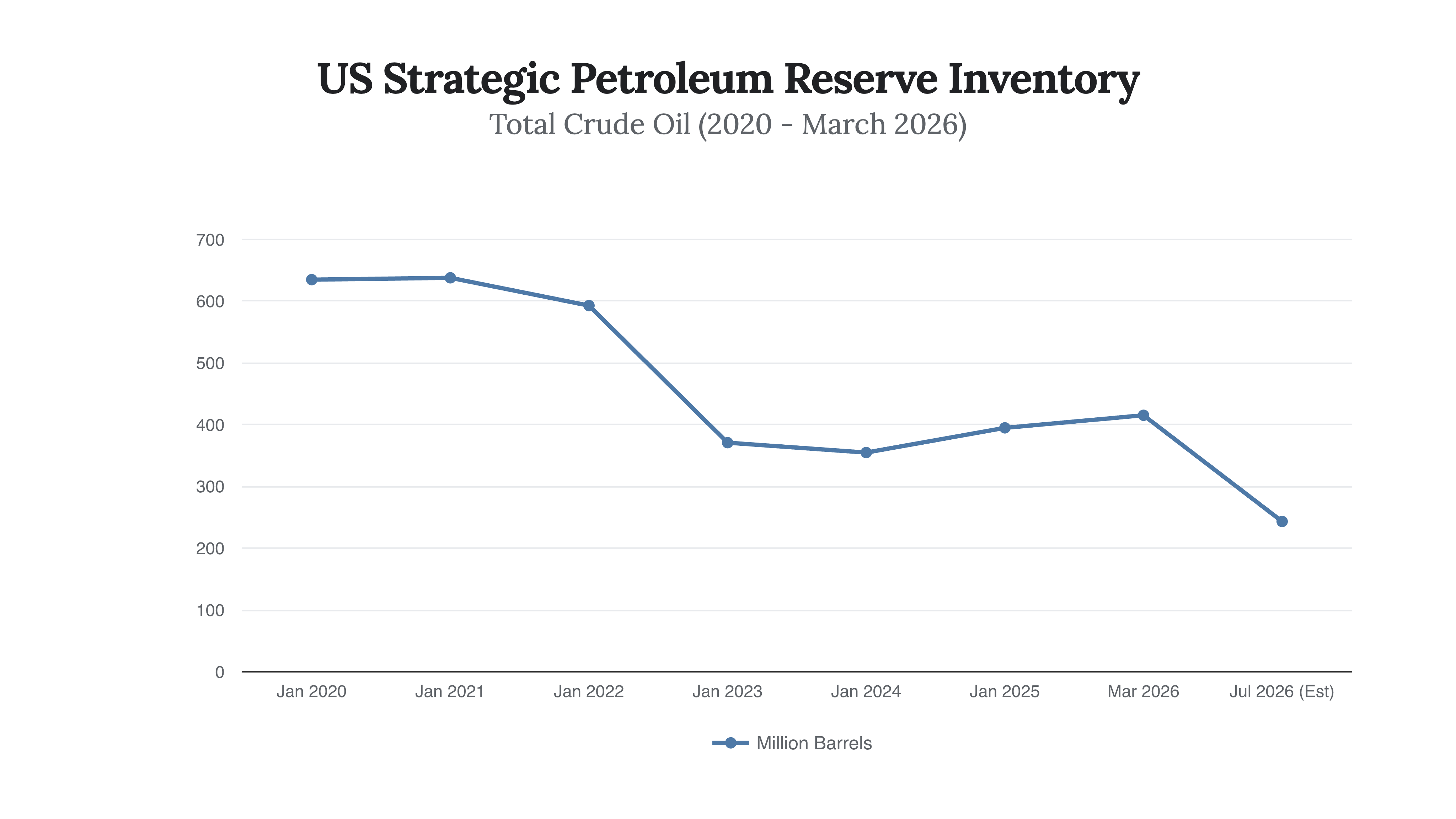
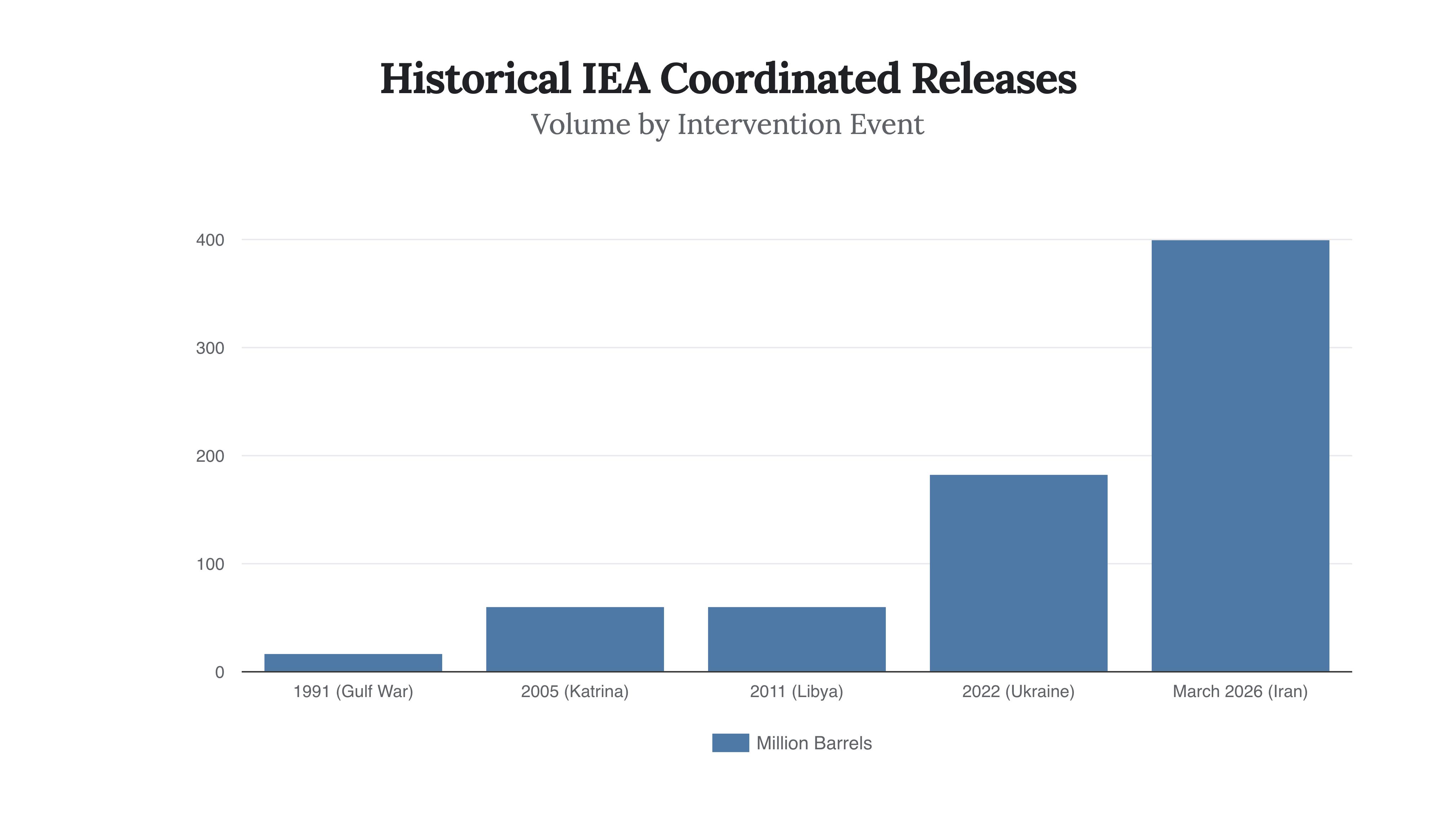
On March 11, 2026, the United States executed the most aggressive energy counter-offensive in its history. In coordination with the 32-nation International Energy Agency (IEA), the U.S. Department of Energy announced a historic release of 172 million barrels of crude oil from the Strategic Petroleum Reserve (SPR). This monumental drawdown is the anchor of a massive 400-million-barrel global deployment—the largest coordinated intervention since the IEA’s inception. To understand the sheer scale of this authorization, one must look at the data reality of the Gulf Coast salt caverns prior to this executive decision.
As of late February 2026, the U.S. SPR held precisely 415.4 million barrels of crude, operating at a heavily depleted 58% of its authorized 714-million-barrel capacity. This operational level was the legacy of the 180-million-barrel drawdown executed in 2022 following the Russian invasion of Ukraine, alongside systemic delays in the refill process throughout 2024 and 2025. Authorizing a 172-million-barrel release from a baseline of 415.4 million is a high-stakes gamble. It effectively halves the nation’s remaining emergency buffer, plummeting the reserve down to an estimated 243.4 million barrels by mid-summer 2026. The weaponization of emergency reserves has evolved from a mechanism of domestic price stabilization into the ultimate economic counter-offensive in modern hybrid warfare.
However, through the strict lens of Game Theory, this drawdown represents a necessary “Credible Threat” against the Iranian disruption strategy. By demonstrating the absolute willingness to completely cannibalize its own strategic insurance policies, the United States removes Iran’s monopoly on energy market manipulation. It signals to the global commodities exchange that the U.S. sovereign retains the physical capacity to unilaterally offset up to 1.4 million barrels per day of lost production across the defined 120-day delivery window. This action rapidly shifts the market psychology from one of acute scarcity panic to calculated supply absorption.
The Command Economy: The IEA’s Dominant Strategy
The U.S. does not operate in a vacuum. The 400-million-barrel IEA package requires total synchronization among 32 distinct national actors. Japan has rapidly committed to a sweeping 80-million-barrel release, while the United Kingdom is providing 13.5 million barrels. The remaining 134.5 million barrels are aggressively pooled from smaller European and allied strategic reserves. By coordinating this massive deployment, the Western alliance fundamentally overrides the invisible hand of the market.
When autonomous nations agree to flood the market synchronously, they avoid the “Tragedy of the Commons” that often plagues unilateral market interventions. If the U.S. had released 172 million barrels alone, the resulting price dip might simply have been absorbed by opportunistic stockpiling from adversaries. In orchestrating a 400-million-barrel synchronized market intervention, the International Energy Agency has temporarily usurped the free market, imposing a command-economy architecture over global energy pricing. This is the manifestation of a Non-Zero-Sum cooperative strategy amongst Western allies: by accepting a localized reduction in their sovereign emergency metrics, they achieve a mutual macroeconomic victory by collectively crushing the geopolitical risk premium that was destroying their aggregate GDP.
The immediate consequence of this announcement on March 11, 2026, was a violent downside correction. Within 24 hours of the U.S. and IEA declarations, prices “hit the floor.” WTI plummeted by over 10% to trade around $83.45 per barrel, while Brent retraced sharply to roughly $87.80. This instantaneous destruction of approximately $30 per barrel in speculative value proves that commodity algorithms react directly to the credible threat of sovereign liquidity, regardless of the underlying kinetic reality in the Persian Gulf.
Information Asymmetry and the 120-Day Drawdown Logistics
To purely understand the second-order effects of this decision, one must dissect the physical logistics of the Strategic Petroleum Reserve. The SPR is not a digital bank account; it is a complex physiological infrastructure composed of massive, subterranean salt caverns deep beneath the Gulf Coast in Texas and Louisiana—specifically the Bryan Mound, Big Hill, West Hackberry, and Bayou Choctaw sites. These geological formations protect the crude but strictly govern the velocity at which it can be extracted and introduced to the refining ecosystem.
The U.S. Department of Energy has explicitly outlined a 120-day timeline to deliver the 172 million barrels based on “planned discharge rates.” Mathematically, this equates to roughly 1.43 million barrels per day. The absolute maximum physical drawdown capability of the SPR infrastructure is heavily debated but historically capped near 4.4 million barrels per day for short bursts. A sustained 120-day operation requires meticulous pressure management of the salt domes to prevent cavern collapse or saline contamination of the sweet and sour crude blends. The physical limitations of subterranean fluid dynamics dictate that a 120-day drawdown is not an instantaneous market flood, but a calculated, sustained suppression strategy designed to bleed out speculative premiums.
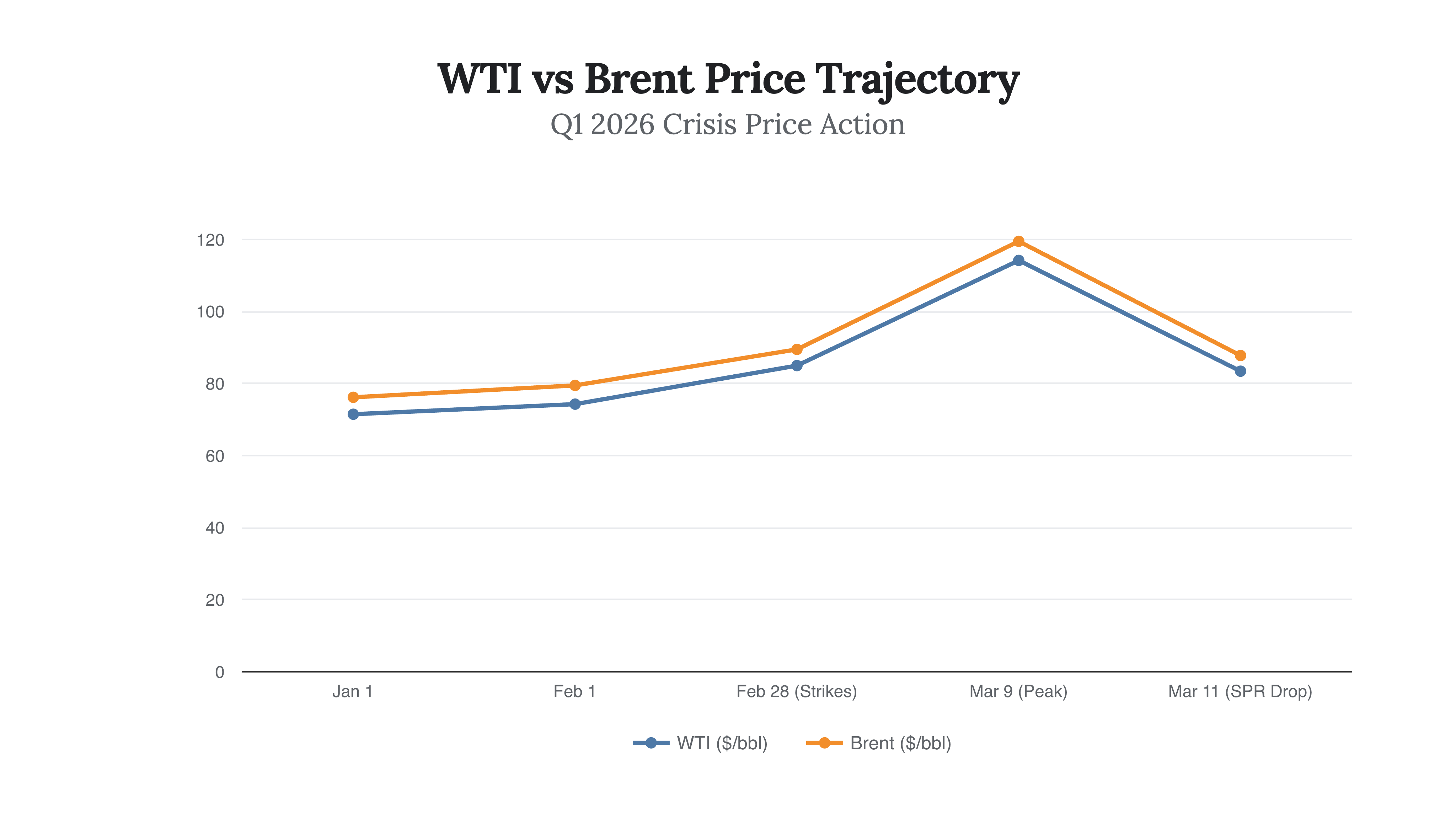
Furthermore, there is a profound information asymmetry between what the market prices in and what the infrastructure can deliver. While algorithms instantly wiped out the $120/bbl premium upon the announcement, the physical oil will not hit the global seaborne market for weeks. The physical disconnect means that while financial derivatives reflect normalized pricing, actual refineries in Europe and Asia may still face acute physical molecule shortages through April and May 2026. This creates a volatile environment for crack spreads and refined product margins, specifically regarding diesel fuel, which already experienced an unprecedented $1 per gallon weekly surge just days prior to the March 11 announcement.
The Free-Rider Problem: China’s Strategic Patience
In the grand payoff matrix of global energy, the United States and the IEA are actively degrading their sovereign security buffers to stabilize the international pricing mechanism. However, the largest net importer of crude oil on the planet—the People’s Republic of China—remains conspicuously absent from the intervention coalition. China maintains its own massive Strategic Petroleum Reserve, estimated to hold well over 300 million barrels of crude, accumulated aggressively during the price collapses of 2020 and the structural gluts of previous years.
In Game Theory, this is the textbook definition of the “Free-Rider Problem.” China heavily relies on Middle Eastern crude flows, making it highly vulnerable to the Strait of Hormuz closure. Yet, Beijing’s optimal strategy is to do absolutely nothing. By allowing Washington, London, and Tokyo to deplete their emergency reserves to crush the price of crude, China secures the macroeconomic benefit of lower energy input costs for its manufacturing base without exposing its own strategic inventory to depletion. Beijing’s strategic patience in this crisis represents the ultimate free-rider exploit, absorbing the economic subsidies of Western reserve depletion without sacrificing a single barrel of its own strategic stockpile.
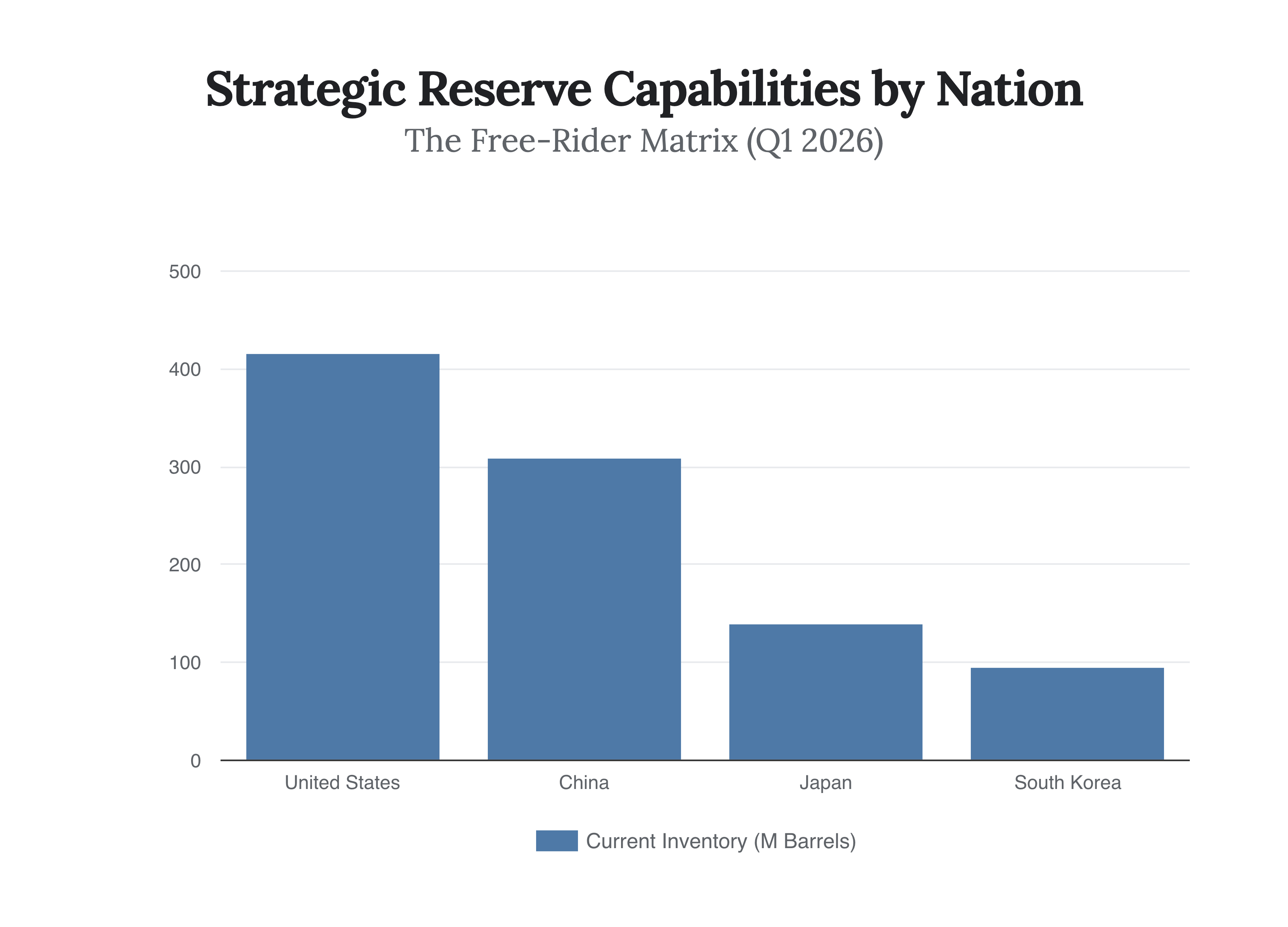
This dynamic permanently alters the future balance of power. If the U.S. draws its SPR down to 243 million barrels by mid-2026, while China retains its reserve at near-maximum capacity, Washington structurally cedes a portion of its geopolitical leverage to Beijing. The next time a kinetic event threatens global supply, the U.S. will lack the ammunition to act unilaterally, whereas China will retain total optionality.
Unlock deeper strategic alpha with a 10% discount on the annual plan.
Support the data-driven foresight required to navigate an era of radical uncertainty and join a community of institutional-grade analysts committed to the truth.
