


Beneath the headlines, a silent exodus of 88 companies reveals the true cost of the City’s valuation crisis
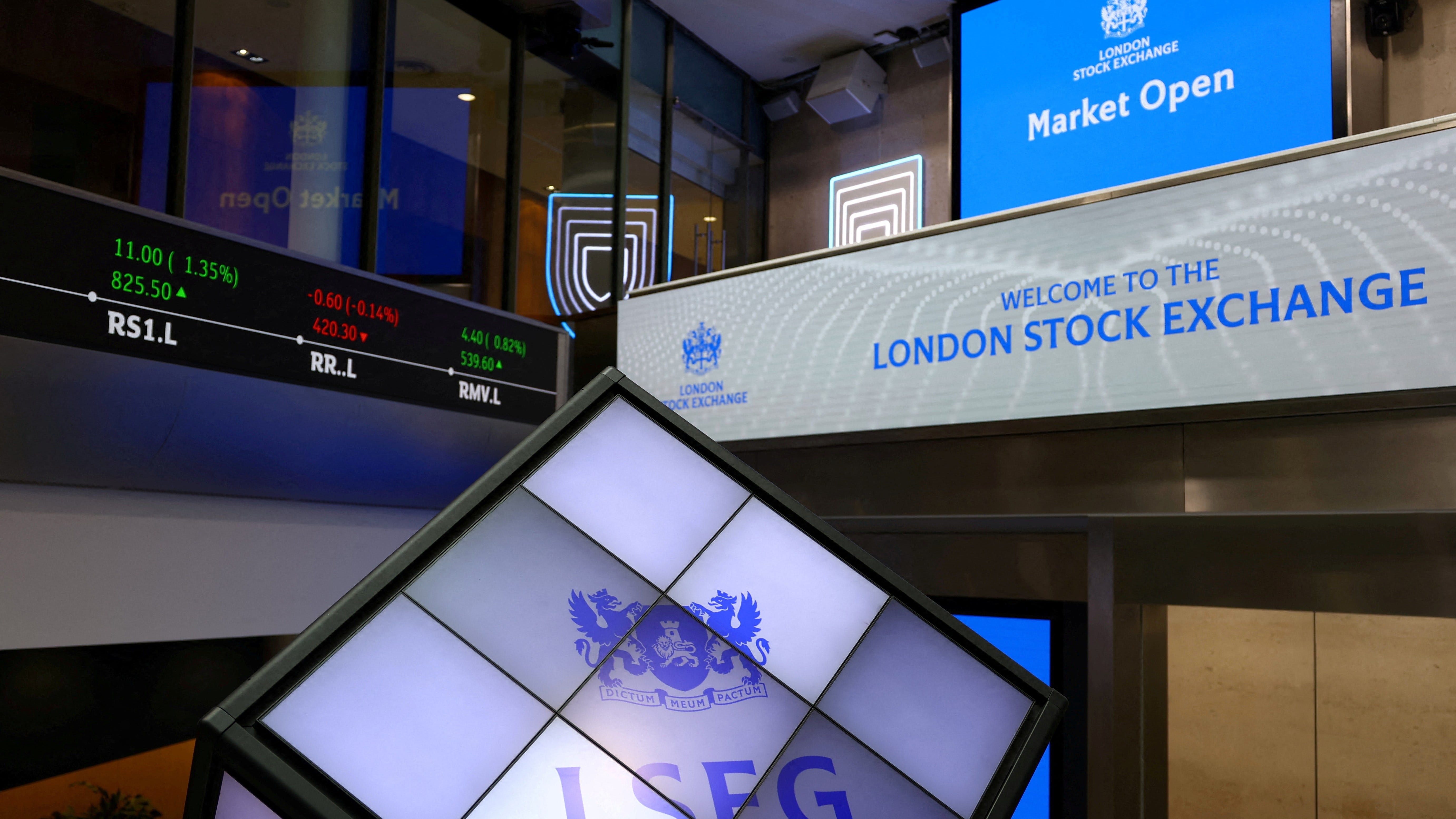
If you only looked at the headline numbers flashing across the screens in Canary Wharf this morning, you would be forgiven for thinking the City of London was enjoying a golden age. The FTSE 100 is closing out 2025 with a staggering 22.8% year-to-date return, its strongest performance since the aftermath of the global financial crisis. It has handily beaten the S&P 500’s 17.2% rise, a feat that few analysts predicted when the year began. Yet, walk the floors of the major brokerages, and the mood is not one of unbridled celebration, but of existential unease. There is a ghost in the machine: the London Stock Exchange is shrinking before our eyes.
The numbers present a jarring contradiction. While stock prices are soaring, the market itself is physically contracting. In 2024 alone, 88 companies exited the London Stock Exchange, fleeing primarily to New York in search of deeper liquidity and higher valuations. By mid-2025, another 70 had followed suit. This phenomenon has created a “scarcity pop”—remaining assets are rising in price partly because capital is chasing fewer opportunities, but largely because the valuation gap between London and New York has become too wide to ignore. The City is effectively on sale, trading at a 40% discount to its American peers.
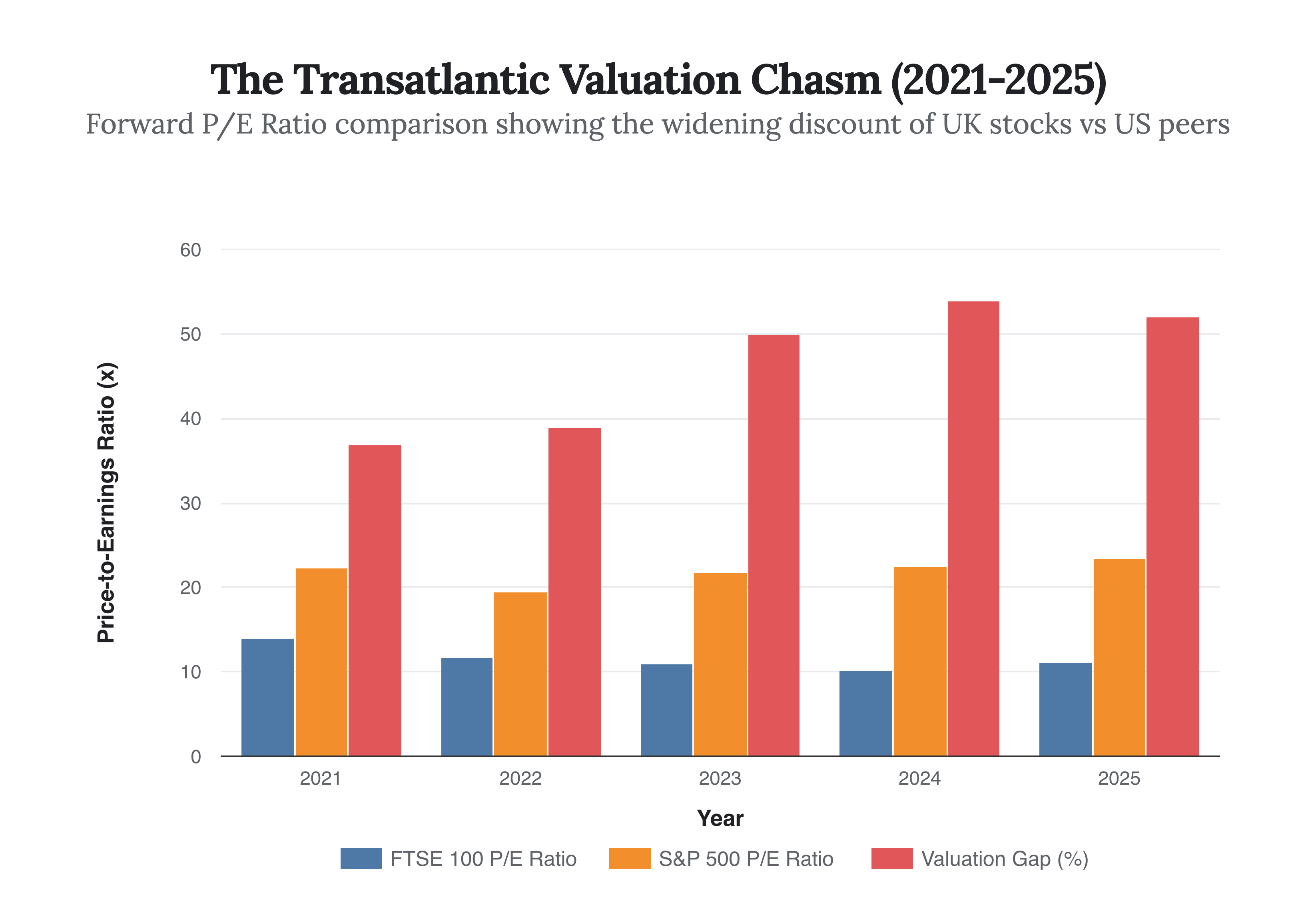
The chart above illustrates the heart of the problem. While US valuations have expanded, driven by the tech sector’s AI boom, London’s valuations have remained stubbornly grounded. For a CEO, the math is brutal: list in London and be valued at 11 times earnings, or move to New York and potentially double that multiple. This “40% discount” is the primary engine driving both the exodus of companies and the flurry of takeover bids from private equity firms, who are snapping up British assets for pennies on the dollar.
“We are seeing a ‘going private’ pandemic in London. When you can buy a solid, cash-generative British business for 10 times earnings, it’s not an investment decision; it’s an arbitrage trade.”
However, for the investor brave enough to stay in London, 2025 has been a windfall, particularly in the financial district itself. The banking sector, long dormant and weighed down by regulatory reform, has roared back to life. With interest rates stabilising and the UK economy avoiding the deep recession many feared, banks have become the engine room of the FTSE’s rally. Lloyds Banking Group, often seen as a bellwether for the domestic economy, has delivered a stunning 80% total return this year, outperforming many of the “Magnificent Seven” tech stocks across the pond.
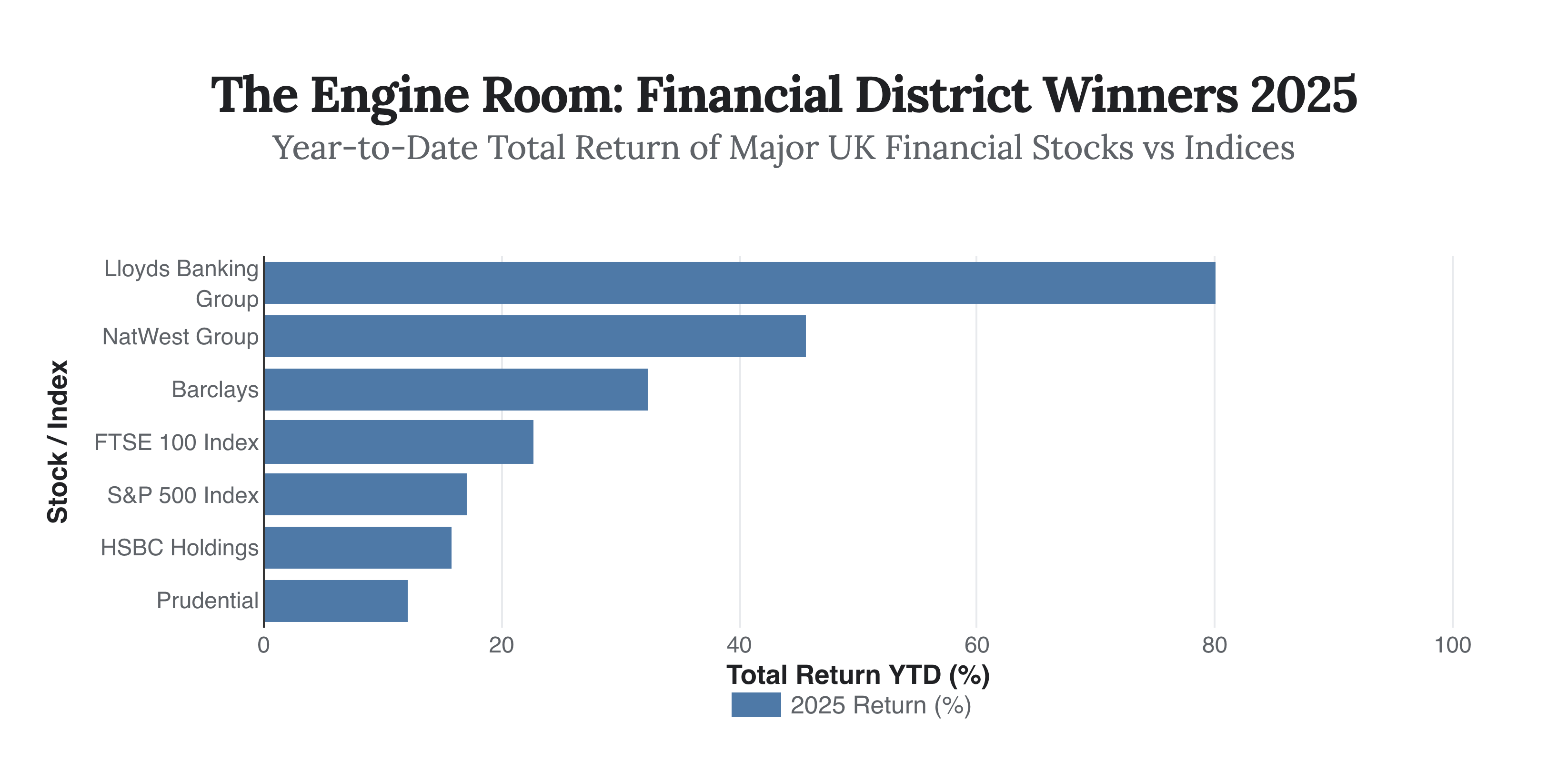
This resurgence in financials is critical. It marks a shift from growth-at-all-costs to a focus on cash flow and yield—areas where London excels. The dividend yields of these banking giants, often exceeding 5-6%, have acted as a magnet for income-starved investors. Yet, this internal success story is happening against a backdrop of structural decline. The sheer number of companies leaving the exchange threatens to turn London into a “museum market”—a place where old, profitable companies pay dividends until they are eventually acquired and taken private.
The “Exodus Trend” is perhaps the most alarming visualization of all. In 2025, the ratio of companies leaving the exchange to those joining hit a record high. For every one company that braved an IPO in London, nearly six packed their bags. This net outflow of equity shrinks the investable universe, concentrating capital into the remaining giants.
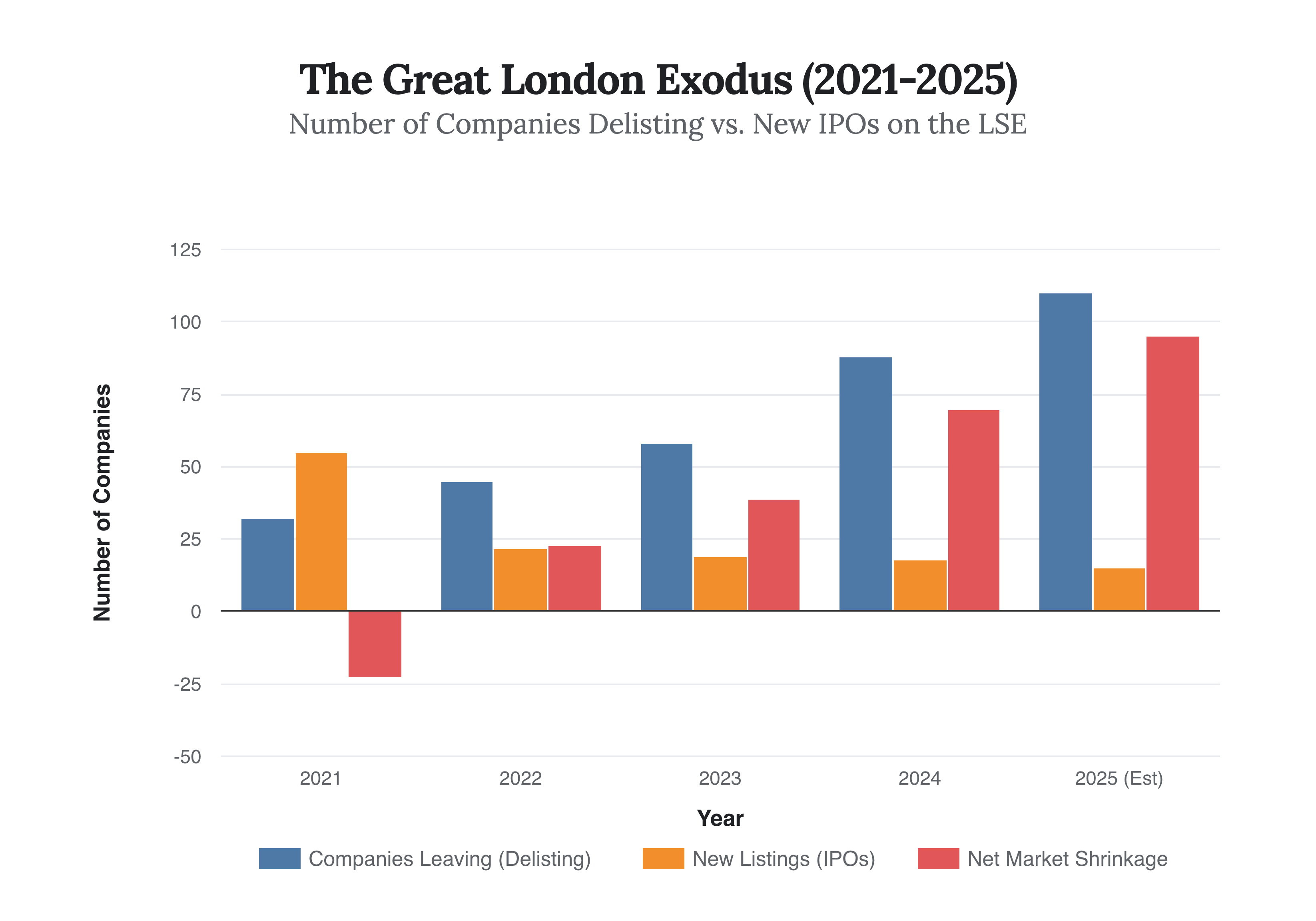
The data from 2025 serves as a stark warning. The 22.8% rally is real, and it has generated significant wealth for those holding UK equities. But it is a rally built on deep value and scarcity, not on growth and expansion. As Dan Coatsworth of AJ Bell noted recently, “More companies have left the UK stock market than have joined it... which means we continue to see a shrinking pot of opportunities for investors.”
“We are witnessing a paradox where the index hits record highs while the ecosystem supporting it slowly dissolves. It is a profitable twilight.”
In conclusion, the London financial district’s stock chart in 2025 tells two stories. One is of a short-term triumph, where unloved banks and undervalued miners have finally had their day in the sun, delivering world-beating returns. The other is of a long-term structural crisis, where the allure of US valuations is hollowing out the market from the inside. The 40% discount is currently a windfall for buyers, but if the exodus continues, there may soon be nothing left to buy.