



On Tuesday, BlackRock—the world’s largest asset manager—issued a warning that should reverberate through every portfolio in America: the firm has officially turned bearish on long-term US Treasuries. In a decisive move, the BlackRock Investment Institute (BII) downgraded US government bonds to “underweight,” signaling to investors that the risks of lending money to the US government for the long haul now outweigh the rewards.
This is not merely a technical adjustment. It is a fundamental verdict on the fiscal health of the United States. The catalyst? A collision between two massive financial forces: a staggering $38 trillion national debt and a new, insatiable demand for capital driven by the artificial intelligence boom.
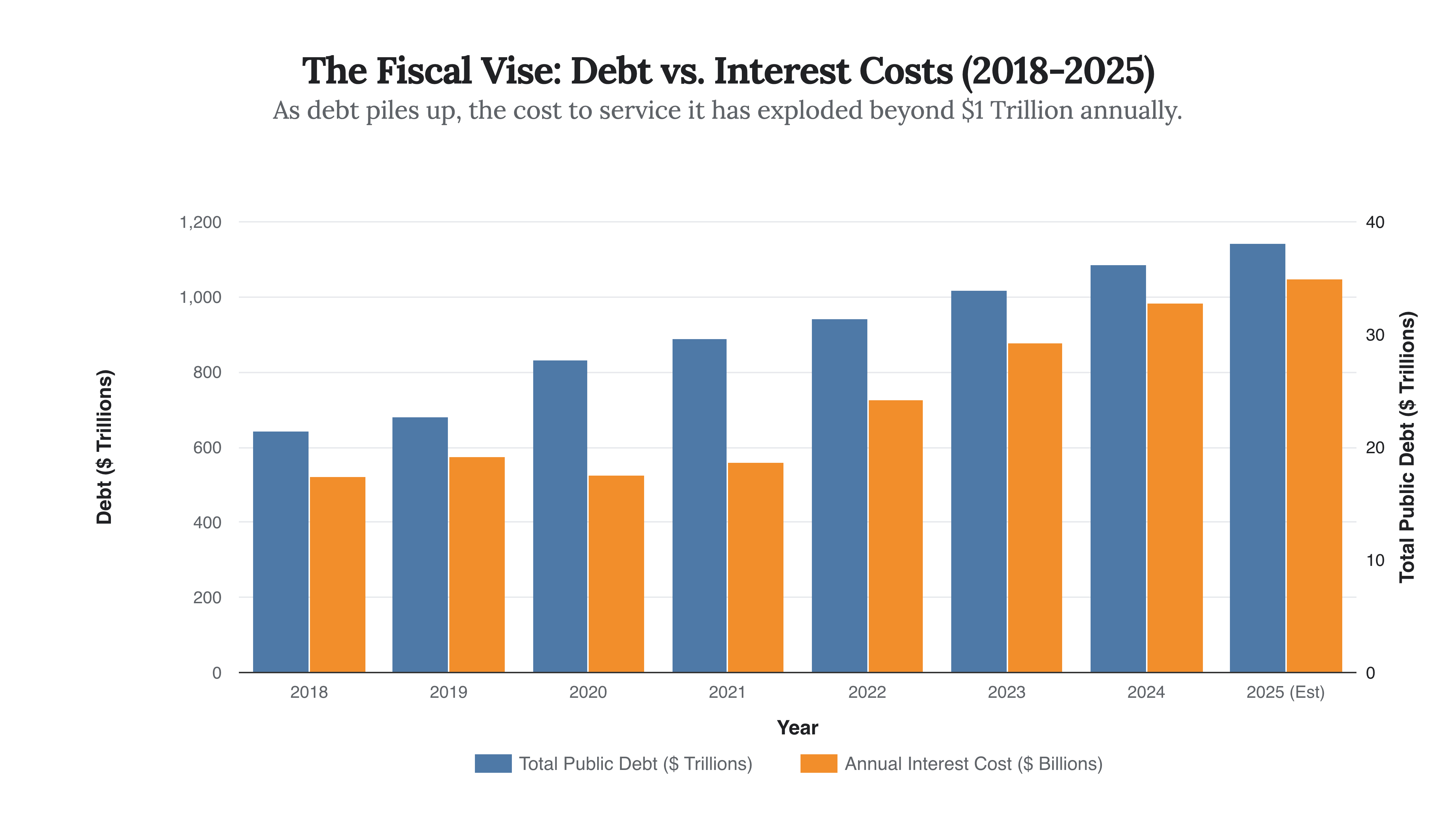
As the chart above illustrates, the United States has entered a precarious fiscal feedback loop. While the total debt load has climbed steadily, the cost to service that debt—the interest payments—has gone parabolic, recently crossing the psychological $1 trillion threshold. This creates a “crowding out” effect that BlackRock argues is being exacerbated by the massive capital needs of the AI revolution.
The “New Conundrum”
For decades, the standard playbook was simple: when the Federal Reserve cuts rates, bond yields fall, and bond prices rise. That correlation is breaking down. BlackRock describes a “new conundrum” where long-term yields are rising even as the Fed attempts to ease monetary policy. Why? Because investors are demanding a higher “term premium”—extra compensation for the risk of holding US debt over a decade or more.
Jean Boivin, Head of the BlackRock Investment Institute, has been vocal about this shift. The market is waking up to the reality that with sticky inflation and unchecked deficit spending, the “neutral” interest rate is structurally higher than it was in the post-2008 era.
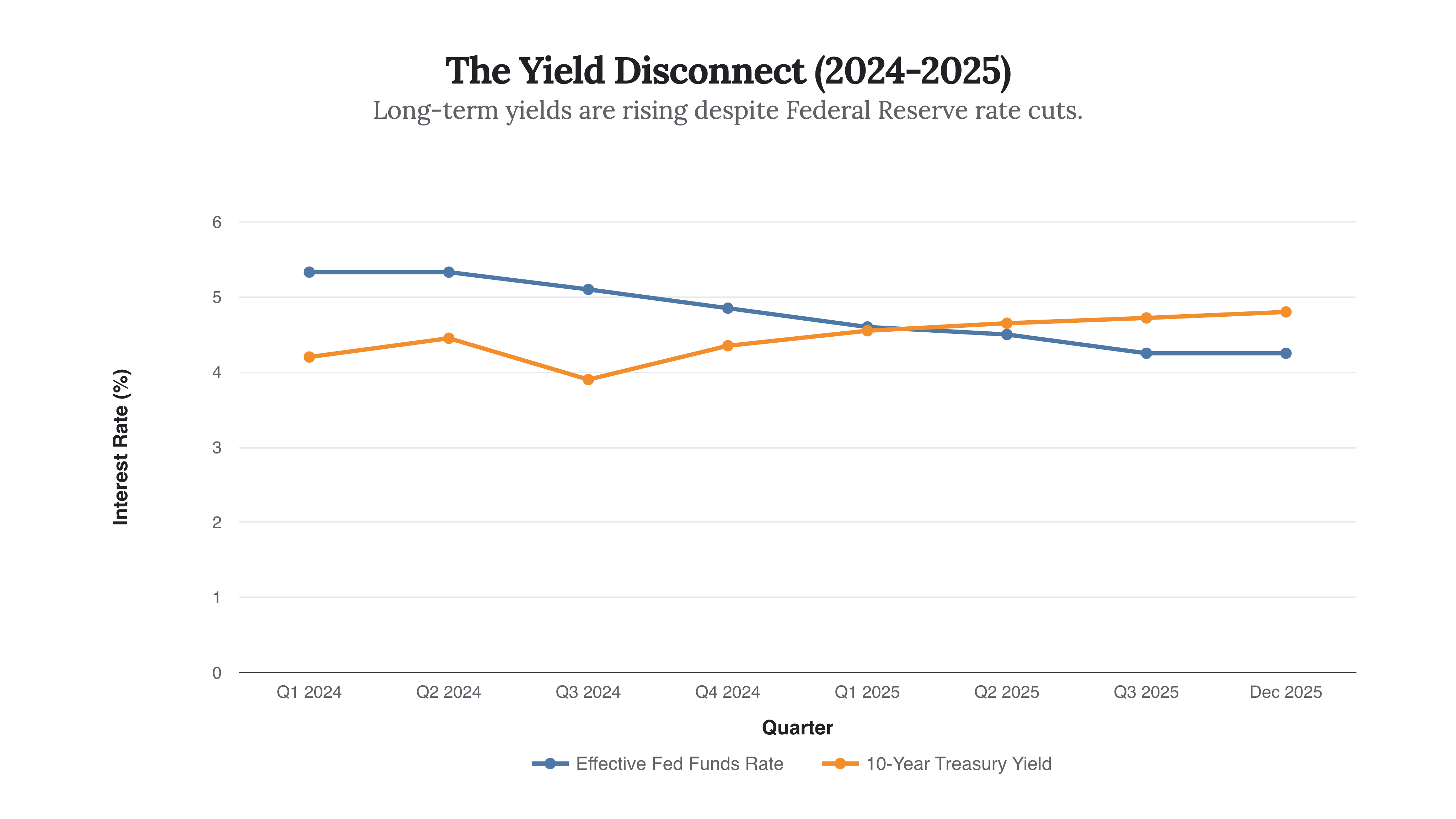
The divergence shown above is the heart of the warning. Even as the Fed lowered the baseline cost of borrowing (the blue line), the market forced the yield on 10-year notes (the green line) higher. This signals that the market is losing faith in the long-term suppression of rates.
“We turn tactically underweight long-term U.S. Treasuries as we see high debt servicing costs and price-sensitive domestic buyers pushing investors to demand more compensation for the risk of holding long-term bonds.” — BlackRock Investment Institute
The firm’s analysts note that the “AI funding wave” acts as a concurrent pressure. Tech companies are preparing to issue hundreds of billions in debt to build data centers and energy infrastructure. In a normal environment, the market could absorb this. But when the US Treasury is simultaneously flooding the market with debt to pay its own bills, supply overwhelms demand, pushing yields higher.
What This Means for Investors
BlackRock’s shift isn’t a call to abandon fixed income entirely, but to rethink where to hold it. The firm has expressed a preference for shorter-term bonds or international debt, specifically favoring UK gilts or European bonds where the fiscal picture is marginally less volatile. For the average investor, this serves as a critical reminder: The “safe haven” status of long-term US Treasuries is no longer guaranteed.
We are entering a period where fiscal discipline—or the lack thereof—will dictate market returns more than central bank policy. As Boivin warns, the deficit issue is currently “sidelined” in political discourse, meaning no immediate rescue is coming from Washington. Until the $38 trillion question is answered, the bond market will likely remain a dangerous place for the complacent.