


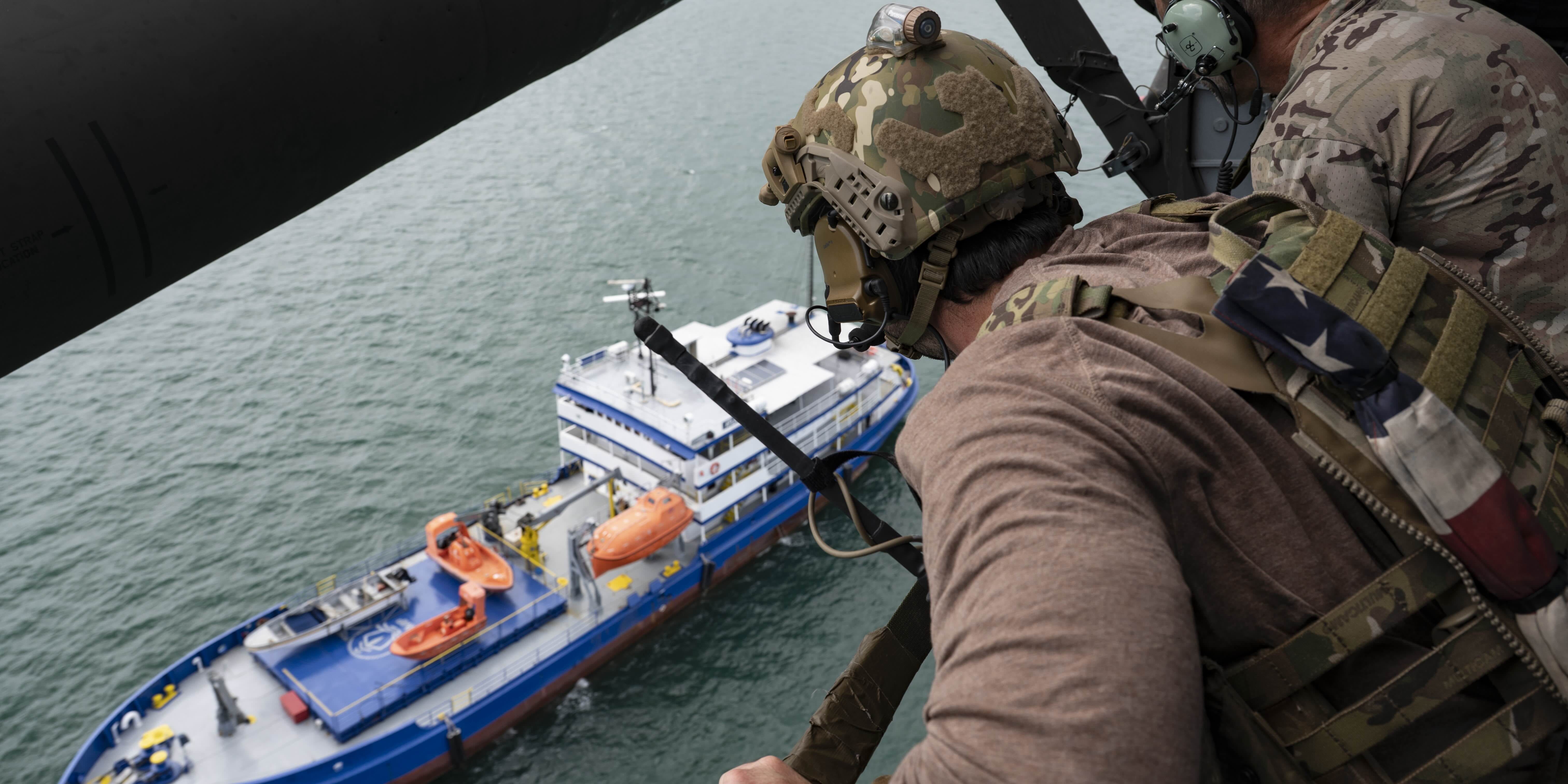
In a thunderous announcement from Mar-a-Lago on Monday, President Donald Trump unveiled the centerpiece of his new “Golden Fleet” initiative: the Trump-class battleship. Flanked by Defense Secretary Pete Hegseth and Navy Secretary John Phelan, the President declared the immediate construction of two massive surface combatants, with plans to expand the class to as many as 25 ships. The lead vessel, to be named the USS Defiant (BBG-1), represents the most significant divergence from American naval doctrine since the end of the Cold War.
While the word “battleship” evokes images of World War II-era behemoths lobbing shells at shorelines, the Trump class is a hybrid beast. It merges the heavy armor of the past with the hyper-advanced weaponry of the future. The data surrounding this announcement reveals a ship that defies the modern trend toward lighter, stealthier vessels. Instead, the administration is pivoting back to sheer mass and survivability, betting that a 35,000-ton titan with “six-inch solid steel sides” can withstand the saturation attacks that would sink a modern destroyer.
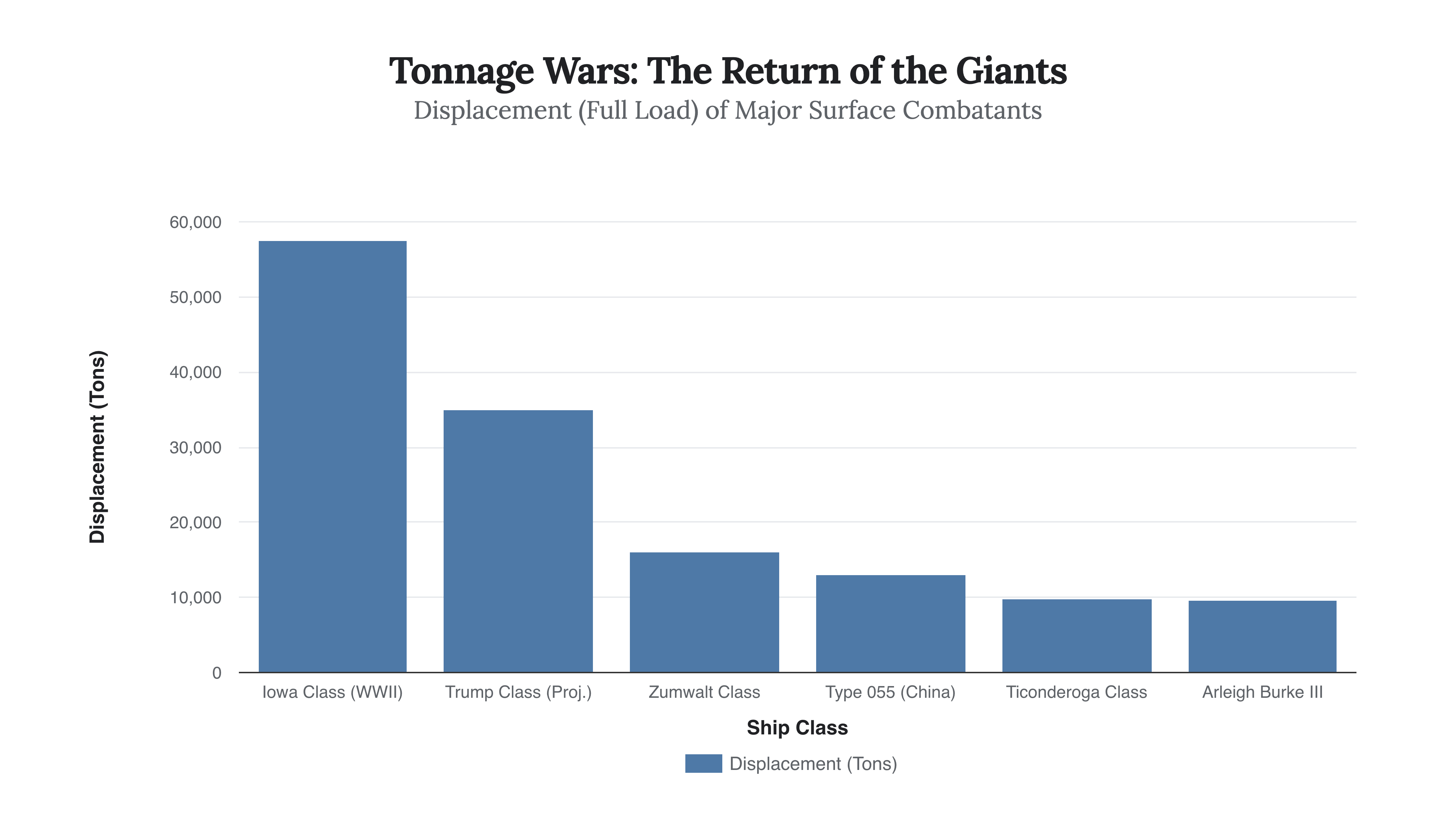
The chart above illustrates the massive scale of the proposed vessel. At 35,000 tons, the Trump class would be more than triple the size of the Navy’s current workhorse, the Arleigh Burke-class destroyer. While it does not quite reach the 57,000-ton displacement of the retired Iowa class, it dwarfs every other surface combatant currently afloat, including China’s formidable Type 055 Renhai-class cruiser. This extra tonnage is dedicated to power generation for directed energy weapons, massive magazines for hypersonic missiles, and the aforementioned armor plating—a feature absent from naval architecture for decades.
“The Iowa was designed to go on the attack with the biggest guns and that’s exactly what will define the Trump-class battleships... This ship isn’t just to swat the arrows. It is going to reach out and kill the archers.” — Secretary of the Navy John Phelan
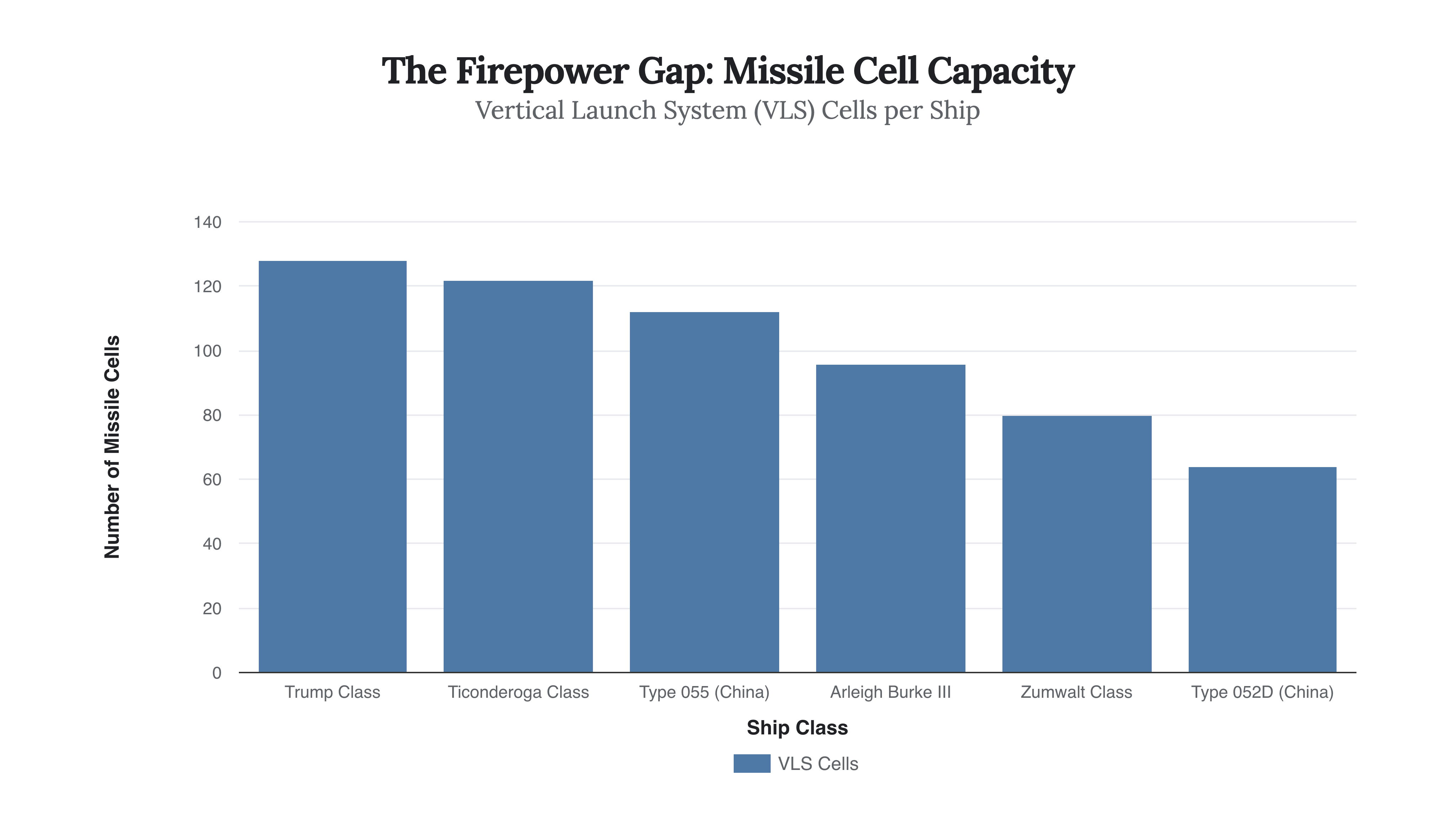
The strategic logic, according to Secretary Phelan, is to create a “decision advantage” through sheer lethality. The USS Defiant is slated to carry 128 Vertical Launch System (VLS) cells, surpassing the capacity of China’s Type 055. More critically, these ships will be equipped with the new nuclear-armed sea-launched cruise missile (SLCM-N), giving the surface fleet a tactical nuclear option that has been controversial among defense planners. The administration argues this provides a necessary deterrent, or “peace through strength,” as the President phrased it.
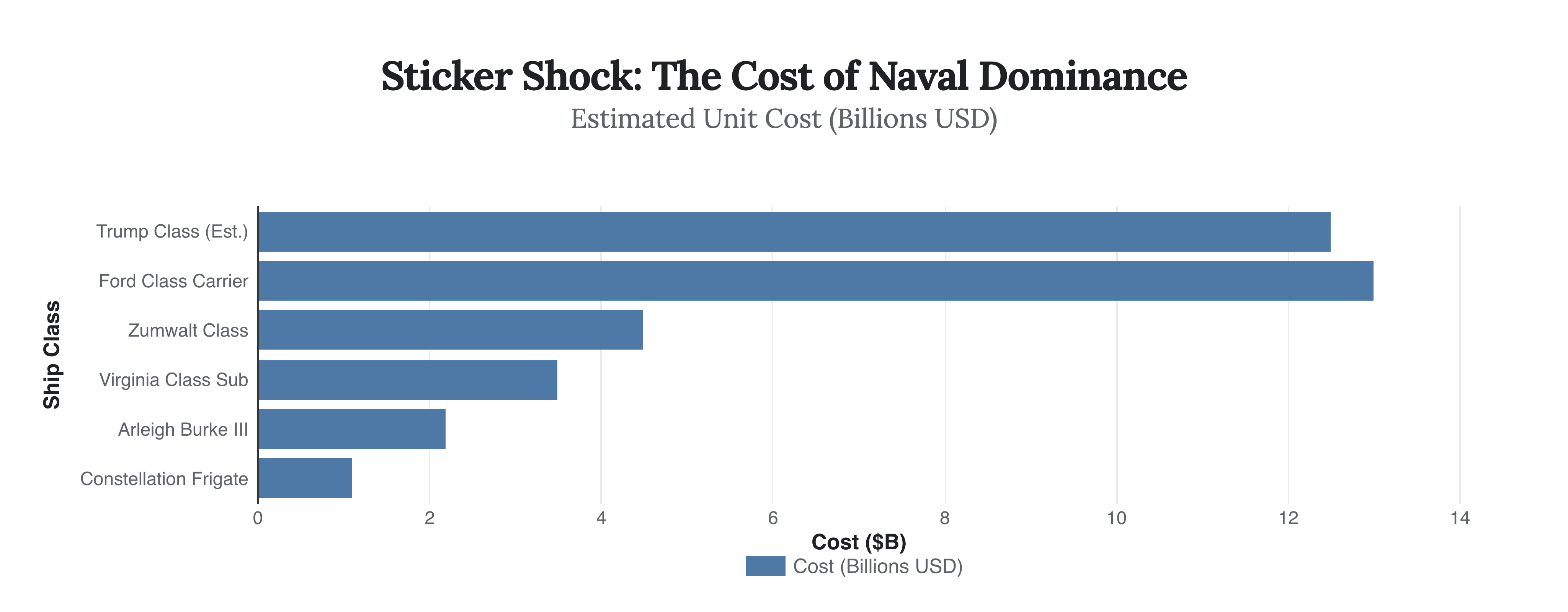
However, the ambition of the “Golden Fleet” comes with a staggering price tag. Initial estimates place the cost of a single Trump-class hull between $10 billion and $15 billion. To put this in perspective, for the price of one battleship, the Navy could purchase roughly six state-of-the-art Arleigh Burke destroyers or four Virginia-class fast-attack submarines. Critics argue that concentrating so much capital into a single target contradicts the Navy’s recent push for “distributed lethality,” where firepower is spread across many smaller, cheaper nodes to complicate enemy targeting.
The announcement also signaled a sharp pivot in industrial policy. The administration confirmed it would slash the orders for the smaller Constellation-class frigates to fund these behemoths. President Trump specifically mentioned that the ships would be built at the Hanwha Philly Shipyard, highlighting a complex partnership with South Korean industry to revitalize American shipbuilding capacity. This move aligns with the administration’s broader criticism that American ships have become “old, tired, and obsolete.”
“It’s something we’re actually considering—the concept of battleships, nice six-inch sides, solid steel... If it looks at a missile coming at it, [aluminum] starts melting when the missile’s about two miles away. No, those ships, they don’t make them that way anymore.” — President Donald Trump
The Trump-class battleship is a gamble that technology has come full circle—that in an era of hypersonic threats, the only defense is armor thick enough to survive a hit and a railgun powerful enough to strike back instantly. If the fleet expands to the planned 25 ships, it will represent a $300 billion commitment to a style of naval warfare the world hasn’t seen since 1945.