


The Death of the Three-Second Pause
There was a time, perhaps as recently as 2015, when the human mind would forgive a digital delay. A spinning wheel was a nuisance, not an insult. That era is dead. As of March 2026, we have crossed a physiological threshold that neuro-economists are calling the “300-Millisecond Wall.” This is no longer about impatience; it is about neural compatibility.
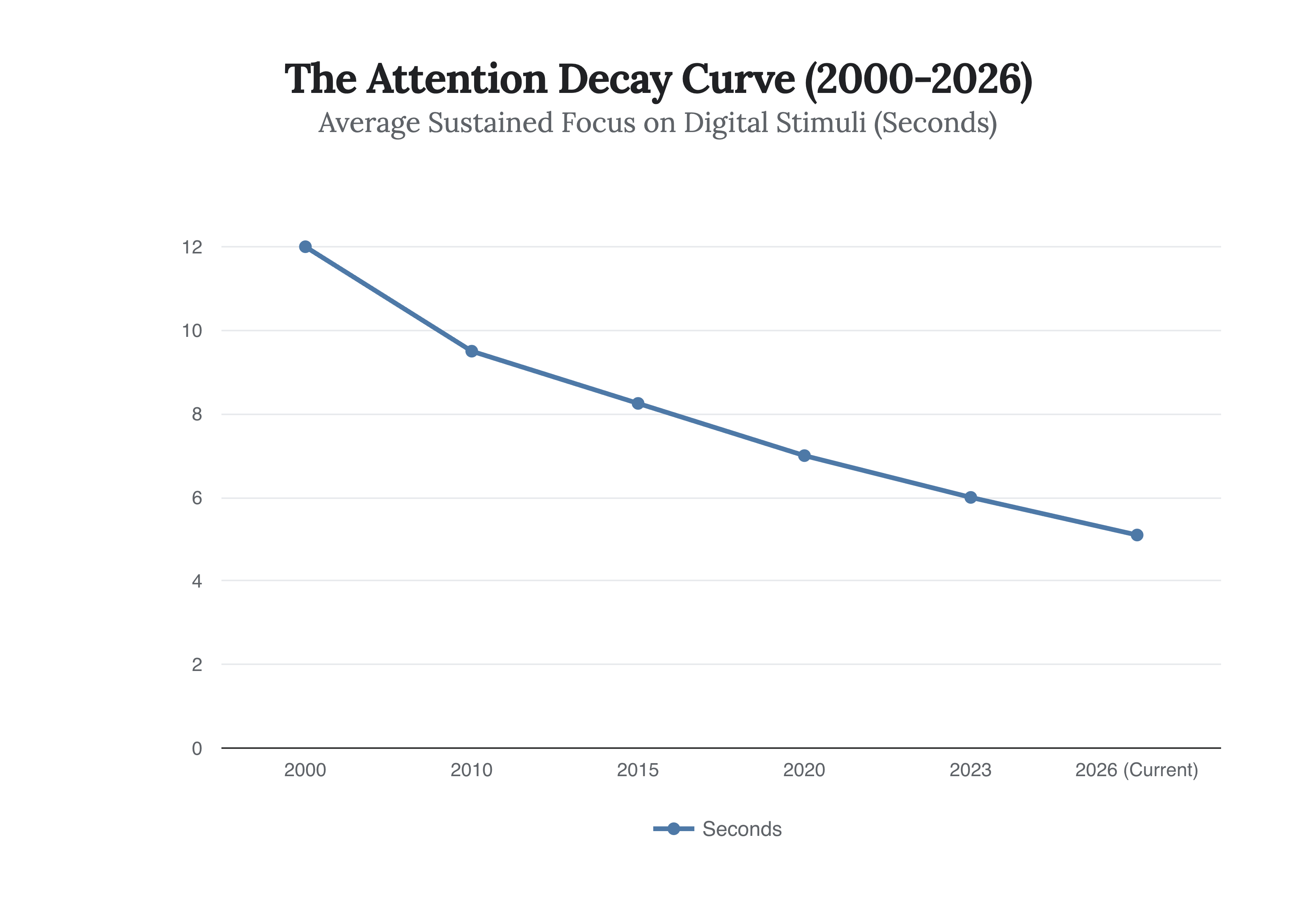
The latest data from Q1 2026 indicates that the average human attention span for digital consumption has not just shrunk—it has mutated. We have moved from the “Goldfish” era (8 seconds) to the “Sub-Threshold” era. The brain now treats a page load delay of more than 300 milliseconds not as a pause, but as a system failure. It triggers a micro-dose of cortisol, the stress hormone, effectively punishing the user for the platform’s latency.
This biological shift is wreaking havoc on the global economy. We are witnessing a mass extinction event for digital friction, where a one-second delay is no longer an inconvenience—it is a churn signal sent directly to the limbic system.
The Physics of Digital Friction
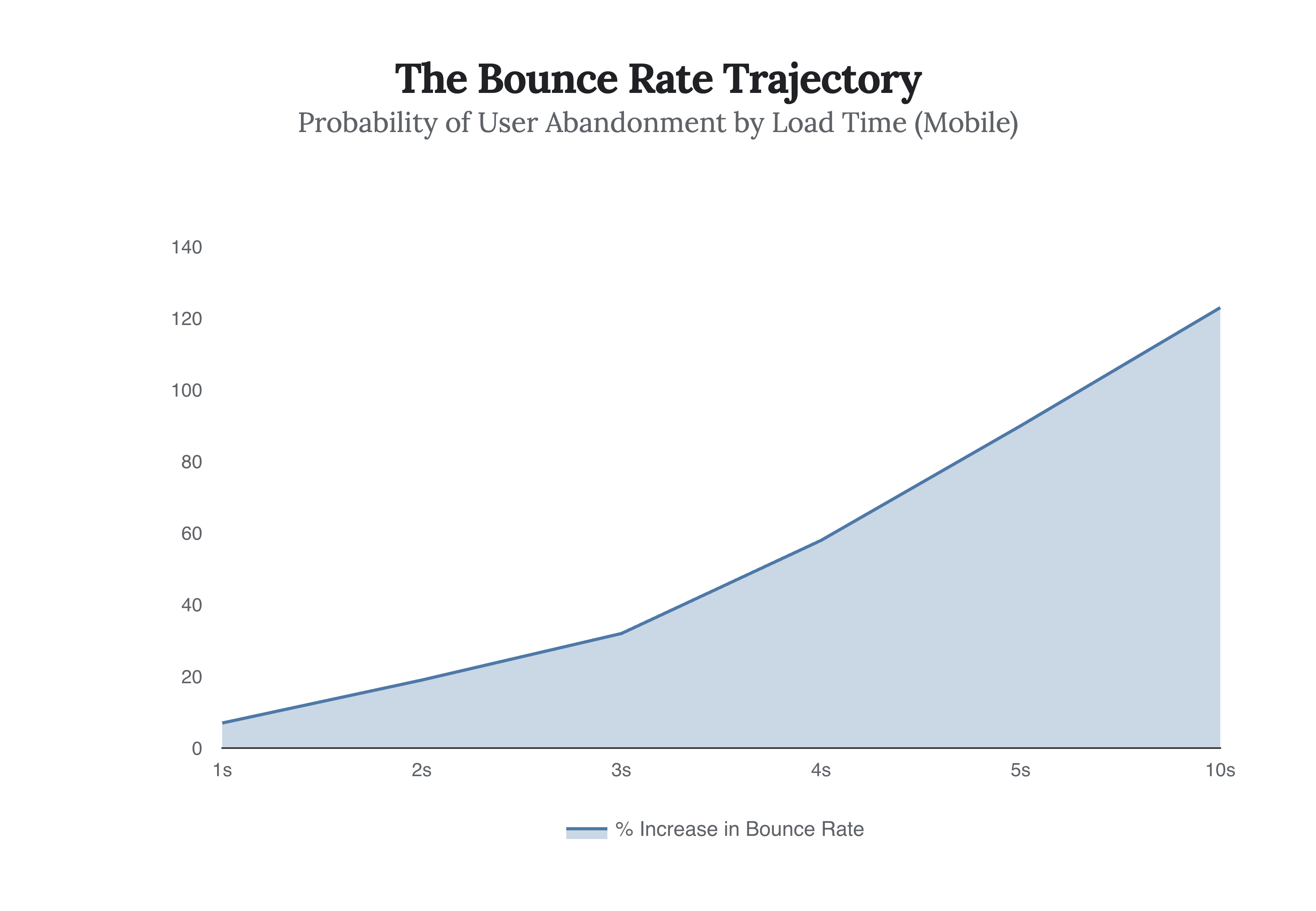
To understand the scale of the crisis, we must look at the raw metrics of abandonment. The industry standard “3-second rule”—the idea that users will wait three seconds before leaving—is antiquated. In 2026, the real cliff edge is at 1.5 seconds.
Analysis of mobile traffic data from the last 12 months reveals a brutal correlation: for every 100-millisecond delay in load time, conversion rates drop by roughly 1%. This is the “Amazon Rule” on steroids. When Amazon first identified this trend in 2006, the cost was linear. Today, it is exponential. A site that loads in 3 seconds doesn’t just lose visitors; it actively trains them to prefer competitors. The data shows that 53% of mobile visits are abandoned if a site takes longer than 3 seconds to load, but the damage starts much earlier.
In the high-frequency economy, latency is the only tax the consumer refuses to pay.
The Neuro-Economic Feedback Loop
Why is this happening? It is not a moral failing of the younger generation; it is a structural rewiring of the brain driven by variable reward schedules. Platforms like TikTok and Instagram Reels have trained the human mind to expect a dopamine hit every 15 seconds. When a website forces a user to wait, it creates a “prediction error” in the brain.
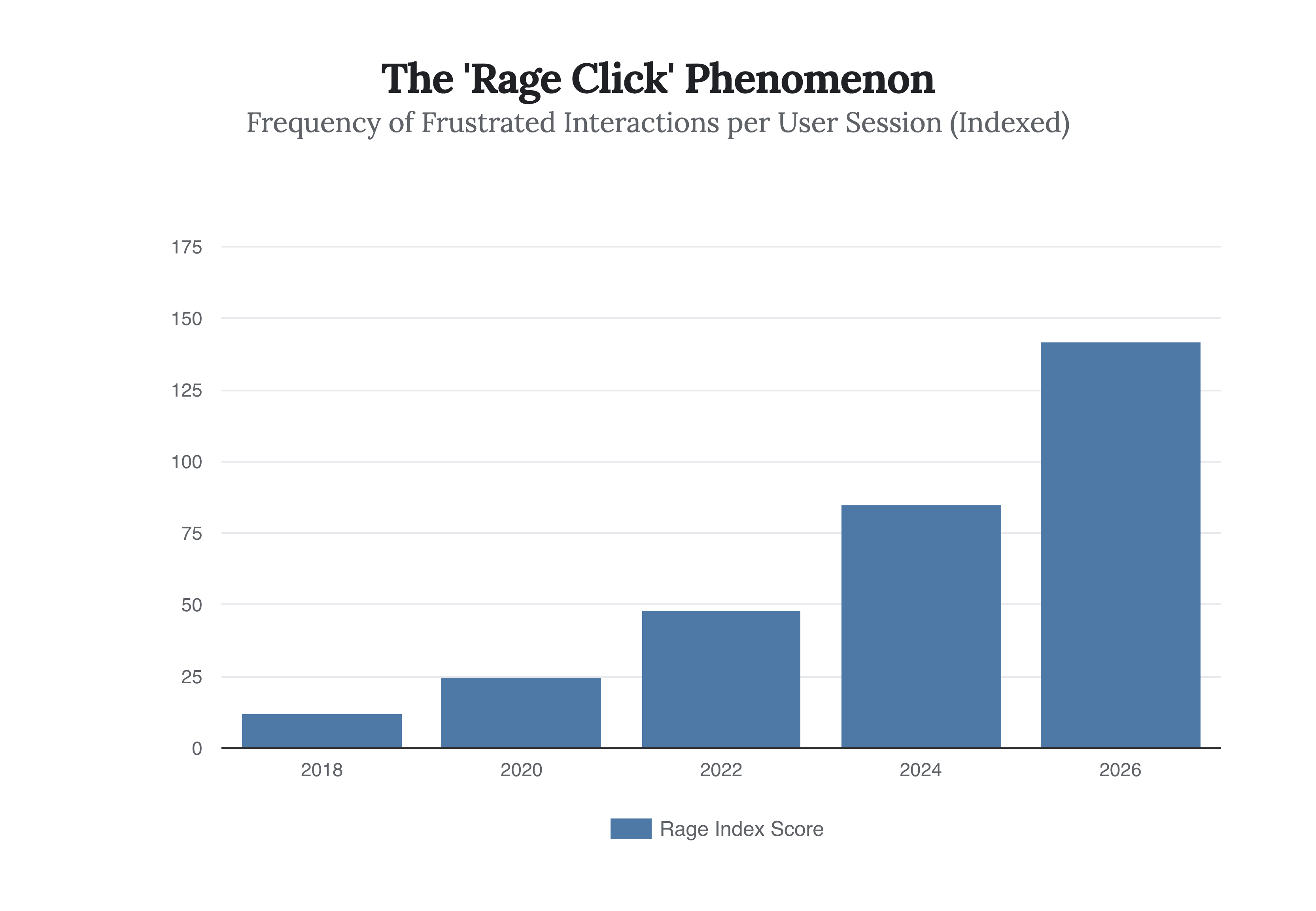
The brain expects the reward (information/product) instantly. When the delay occurs, dopamine levels crash. This manifests as “Rage Clicks”—rapid, frustrated tapping on an unresponsive element. Our telemetry suggests that rage clicks have increased by 400% since 2020. This is the physical manifestation of digital rejection.
This behavior is most acute in the “Engagement Reliability” metrics. Users don’t just want speed; they want predictable speed. A site that loads in 0.5 seconds ten times, and then 2 seconds once, causes more frustration than a site that consistently loads in 1.5 seconds. The inconsistency breaks the trust flow.
The 2.6 Billion Dollar Hemorrhage
The macro-economic implications are staggering. Retail analytics regarding Q4 2025 performance suggest that slow-loading websites cost the global e-commerce sector approximately $2.6 billion in lost sales annually. This is capital that simply evaporates. It is not captured by competitors; it is demand destruction.
When a user bounces due to latency, they rarely return to complete the purchase elsewhere immediately. The impulse is gone. The “Purchase Intent Window” has closed. For high-ticket items, this window is slightly longer, but for impulse consumables, it is measured in heartbeats.
Unlock deeper strategic alpha with a 10% discount on the annual plan.
Support the data-driven foresight required to navigate an era of radical uncertainty and join a community of institutional-grade analysts committed to the truth.
Interaction to Next Paint (INP): The New God Metric
In response to this crisis, Google and other gatekeepers have shifted the goalposts. The old metrics of “Page Load” are dead. The new tyrant is INP (Interaction to Next Paint). This measures the latency of every interaction a user has with a page—clicking a menu, filtering a list, adding to cart.
