



Decoupling Approval from Ballot Intent
As of February 8, 2026, the political landscape for the 120th United States Congress is defined by a radical divergence between macroeconomic indicators and partisan lean. Despite a Real GDP growth rate of 4.4% in late 2025 and a cooling Personal Consumption Expenditures (PCE) index at 2.8%, the generic congressional ballot aggregate reflects a significant 5.0% lead for the Democratic Party. This “sentiment-performance gap” suggests that the traditional coattail effects of a second-term administration are no longer functioning as a reliable predictor for legislative stability.
Institutional-grade polling from Morning Consult and RealClearPolitics indicates a consistent 47% support level for Democrats against 42% for Republicans, with a critical 11% of the electorate remaining undecided but leaning toward “economic change” candidates.
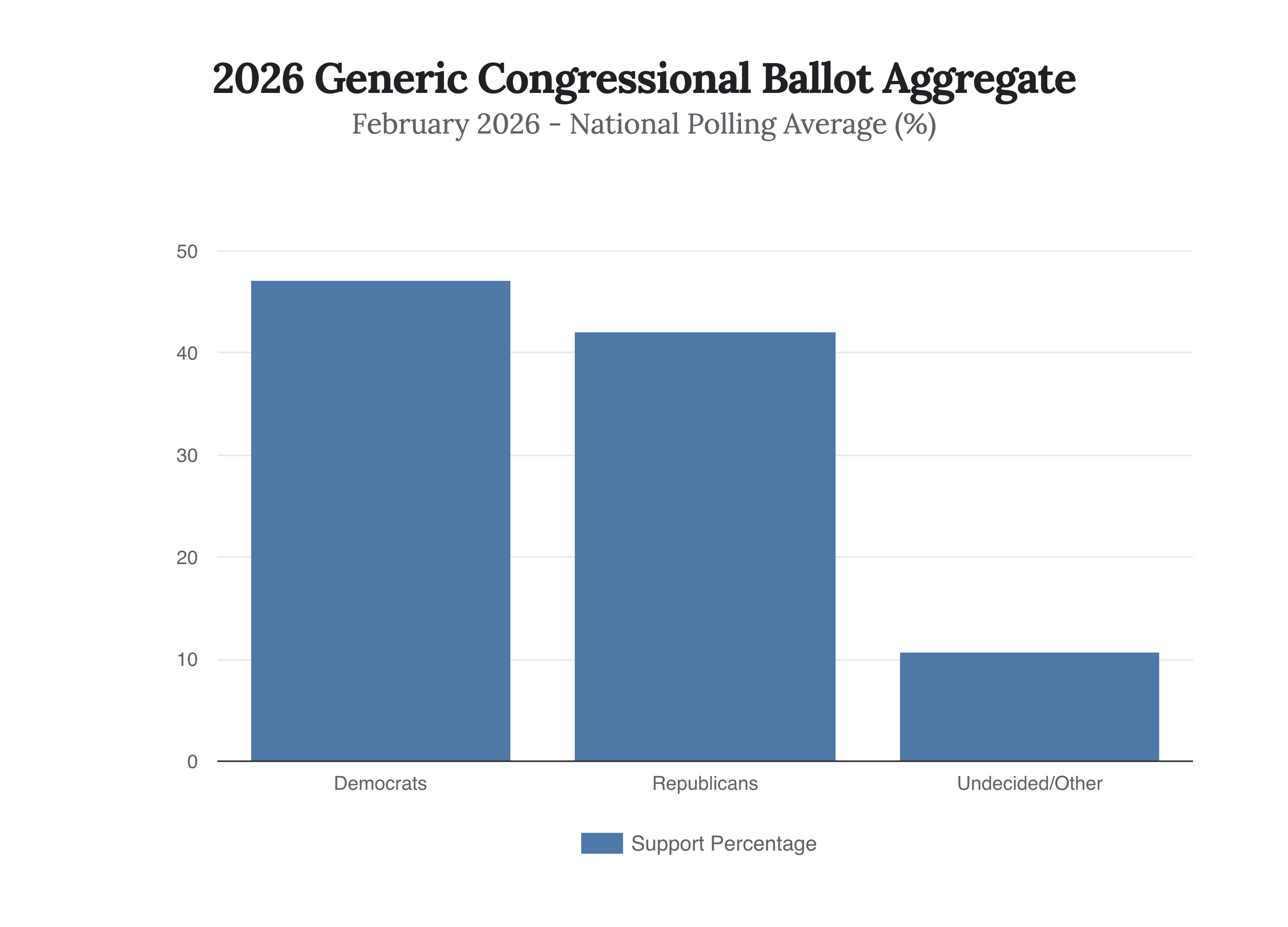
The internal data reveals that the 13% undecided block is primarily composed of “Independent-Leaning-Moderate” voters in the Sun Belt and the Great Lakes region. These voters are increasingly unresponsive to traditional culture-war messaging, focusing instead on the “Shadow Recession”—a state where nominal wage growth is neutralized by high cost-of-living floors in housing and insurance. The survival of the Republican House majority is now effectively a statistical outlier, dependent on a black-swan economic event rather than political strategy. Current projections suggest a 78% probability of the House flipping to Democratic control, which would represent the most significant shift in legislative agency since the 2010 midterms.
The Capital Velocity Gap: Fundraising as a Leading Indicator
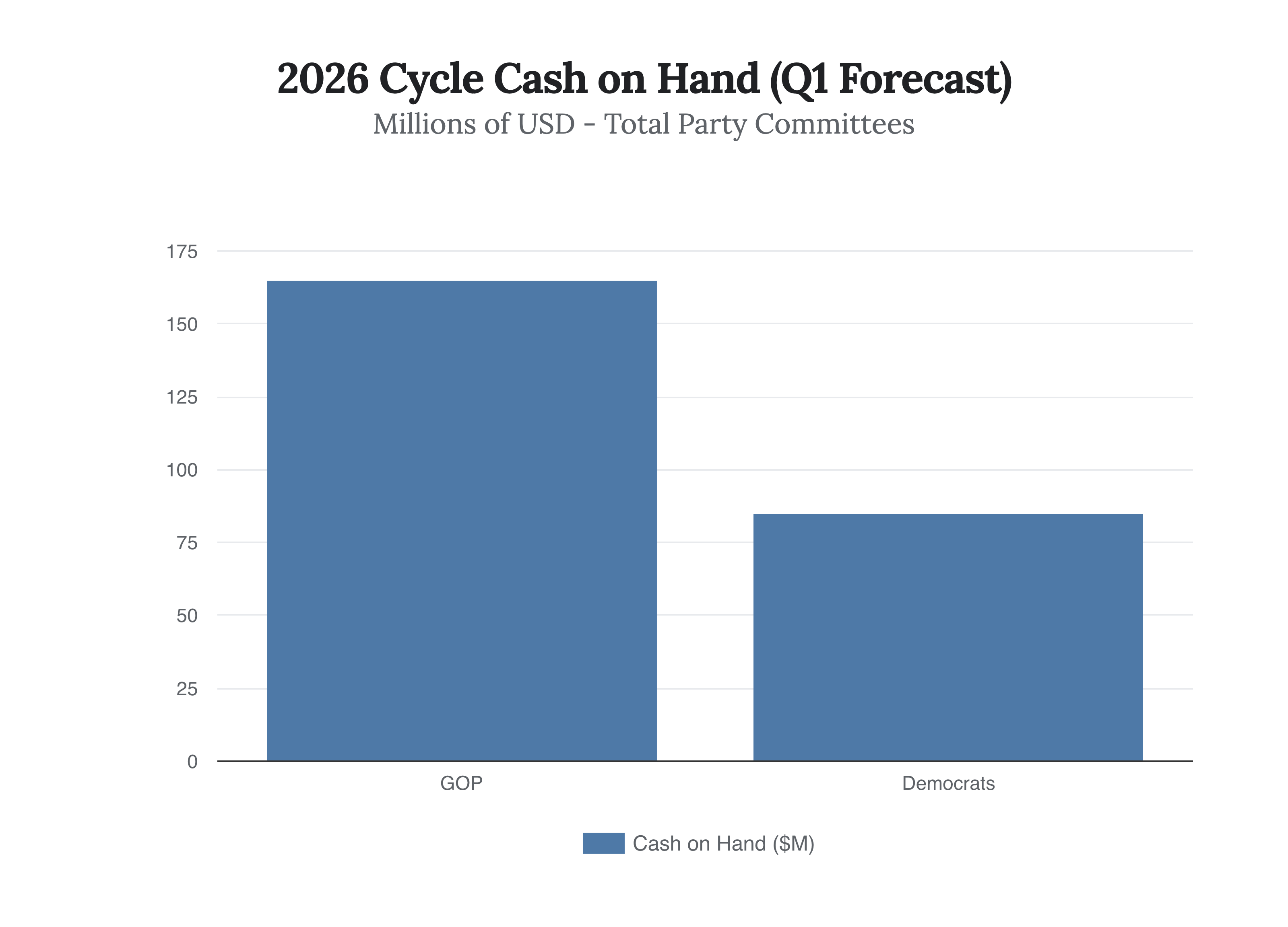
In the high-stakes environment of 2026, fundraising is not merely a resource for media buys; it is a measure of institutional confidence. The National Republican Congressional Committee (NRCC) and the Republican National Committee (RNC) entered the 2026 cycle with a combined $165 million cash-on-hand, nearly doubling the $85 million war chest held by Democratic committees. However, the “velocity” of this capital—how quickly it is deployed into micro-targeting and AI-driven voter mobilization—shows a different reality. Democrats have focused on small-dollar recurring donations, which historically exhibit higher resilience in the final 90 days of an election cycle.
Despite the GOP’s raw numerical advantage, the “Efficiency Quotient” of spending is under threat. The 2025-2026 redistricting wars in Texas, North Carolina, and Missouri have forced both parties to re-allocate funds toward legal defense and defensive operations in districts previously considered “safe.” Capital velocity, not public approval, has become the primary leading indicator for legislative viability in the post-AI era. For instance, a recent $2 million ad blitz in Maine targeting Senator Susan Collins highlights how early-cycle spending is being used to “test-fire” narrative models before the primary season peaks in the summer of 2026.
The AI Productivity Paradox and Voter Sentiment
The 2026 election is the first cycle to fully internalize the “AI Productivity Paradox.” Corporate earnings have surged due to rapid integration of Large Language Models (LLMs) in service and manufacturing sectors, but this hasn’t translated into consumer sentiment. The University of Michigan consumer sentiment index remains stuck at 57.3, far below long-run averages. Voters perceive the 4.4% GDP growth not as a sign of broad prosperity, but as a byproduct of capital-efficient automation that threatens mid-level clerical and technical labor. This “displaced anxiety” is fueling the 5-point lead for the opposition party, as voters seek a regulatory “handbrake” on the rapid deployment of disruptive technologies.
Unlock deeper strategic alpha with a 10% discount on the annual plan.
Support the data-driven foresight required to navigate an era of radical uncertainty and join a community of institutional-grade analysts committed to the truth.
The Senate Paradox: Map Advantage vs. Momentum
While the House appears poised for a shift, the Senate map remains a formidable “partisan firewall” for the Republican party. Of the 35 seats up for election, Republicans are defending 22, while Democrats defend only 13. However, the specific geography of these races—Class 2 seats—includes critical battlegrounds in Georgia (Jon Ossoff) and Michigan (open seat following Gary Peters’ retirement). The GOP has a 63% probability of holding the Senate, primarily because the Democratic path to a majority requires flipping four seats in states like North Carolina and Maine, where incumbency effects are historically sticky.
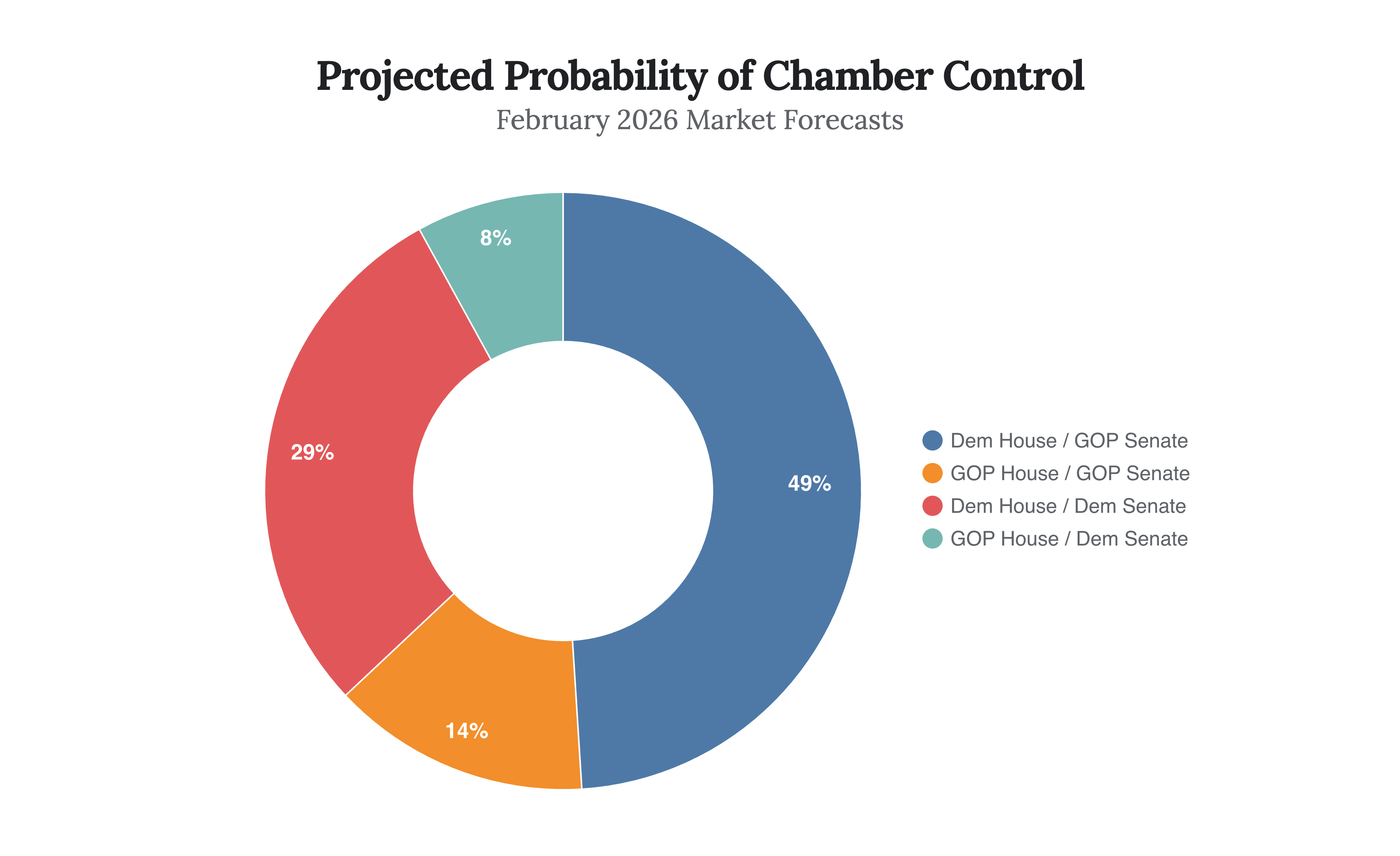
The “Divided Control” scenario (Democratic House, Republican Senate) is currently the highest-probability outcome at 49%. For institutional investors, this represents a return to legislative gridlock, particularly regarding tax policy (the 2027 expiration of TCJA provisions) and international trade. Voter sentiment is decoupling from GDP growth, creating a ‘Shadow Recession’ where productivity gains are viewed as a threat to labor rather than a benefit to the electorate. This decoupling is most visible in states like Ohio and Utah, where mid-decade redistricting has created a volatile “swing-back” potential that was not present in the 2024 cycle.
Second-Order Geopolitical and Strategic Effects
The midterm results will dictate the trajectory of US foreign policy in a multipolar environment. A Democratic-led House would likely result in increased scrutiny of executive military deployments, particularly given the recent tensions in Venezuela and the ongoing trade friction with mainland China. Conversely, a Republican-held Senate would act as a check on judicial appointments and cabinet-level nominations, potentially leading to a “stasis period” in the 2027-2028 legislative window.
Furthermore, the 2026 midterms are the first to occur in a fully “LLM-saturated” information environment. Both parties are utilizing generative models for “Hyperscale Micro-targeting”—the ability to generate unique, video-based ad content for tens of thousands of individual voter personas simultaneously. The data indicates that this technology is lowering the “Cost per Persuasion Point” (CPP), but increasing the overall noise in the digital ecosystem. The ultimate signal of the 2026 midterms will not be the raw seat count, but the collapse of the traditional media-gatekeeping model in the face of decentralized, AI-orchestrated influence campaigns.
The Redistricting Warfare and Demographic Realignment
A final critical variable is the “Mid-Decade Redistricting Crisis.” In states like Texas and North Carolina, Republicans have aggressively redrawn maps to maximize seat count, while in California and Utah, court mandates have forced more competitive configurations. The Cook Political Report currently identifies 42 districts (12% of the House) as true “Toss-Ups.” Within these districts, a silent realignment is occurring among Black and Hispanic voters. Early 2026 data shows that roughly 19% of Black voters who supported the administration in 2024 now favor a Democratic “corrective” in the midterms. This shift, combined with the gender gap (women favoring Democrats by 8 points), creates a structural headwind for the GOP that cash reserves alone cannot mitigate.
As we move toward the primary season in March and April, the “Data Reality” is clear: the US electorate is in a state of high-variance transition. The 2026 midterms will not merely decide the 120th Congress; they will determine the feasibility of the current executive’s second-term agenda and set the baseline for the 2028 presidential cycle.