


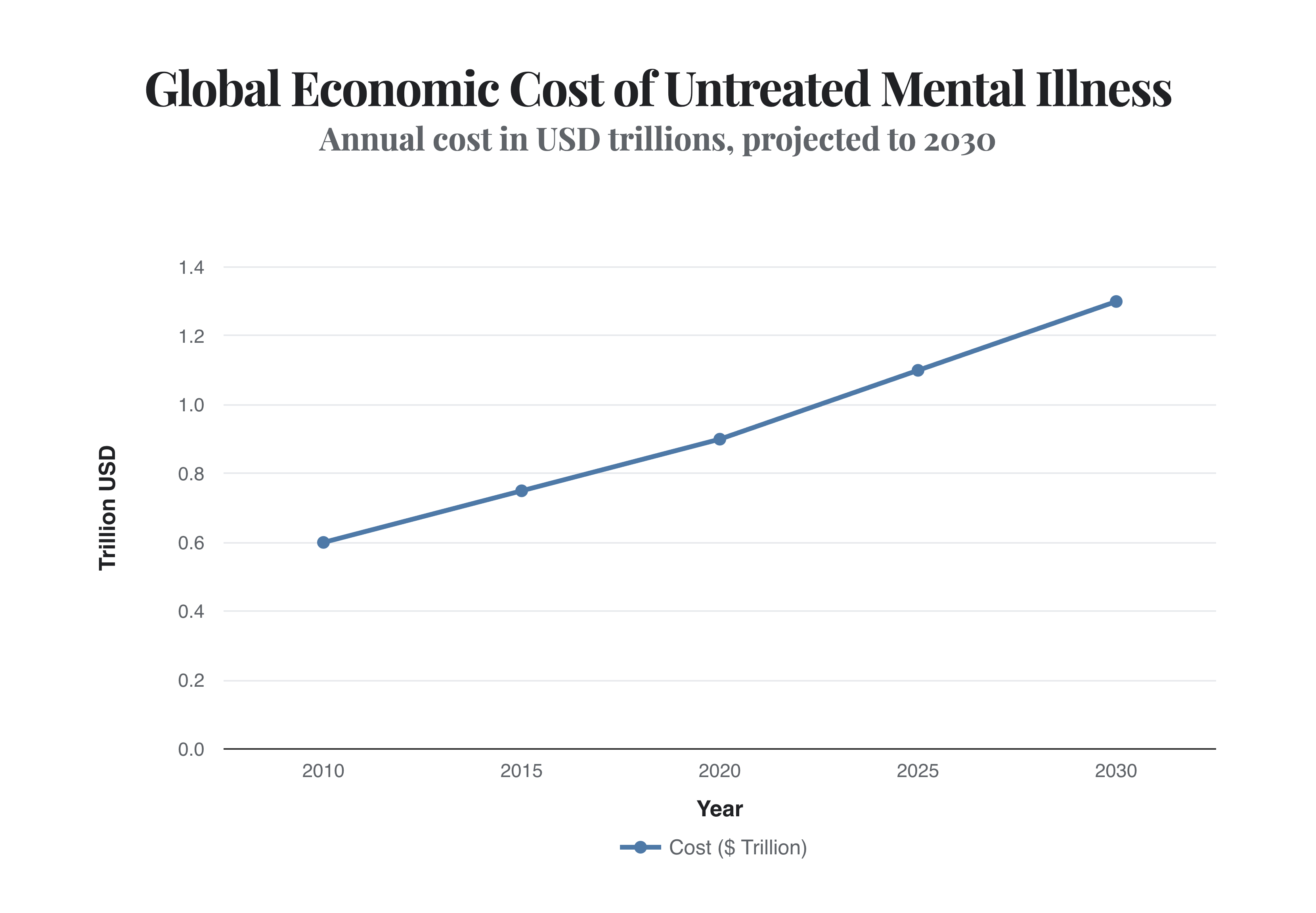
A 2024 joint analysis by the World Economic Forum and the Lancet Commission estimates that the global economic output lost to untreated mental illness will reach $1.3 trillion per year by 2030, up from $900 billion in 2020. This figure includes direct healthcare costs, lost productivity, and presenteeism. Yet the root driver is not biological—it is structural. The average American now spends 7 hours and 4 minutes per day on screens (eMarketer, 2024), and every additional hour of recreational screen time correlates with a measurable decline in mental health. The $1.3 trillion is the price of attention misallocated.
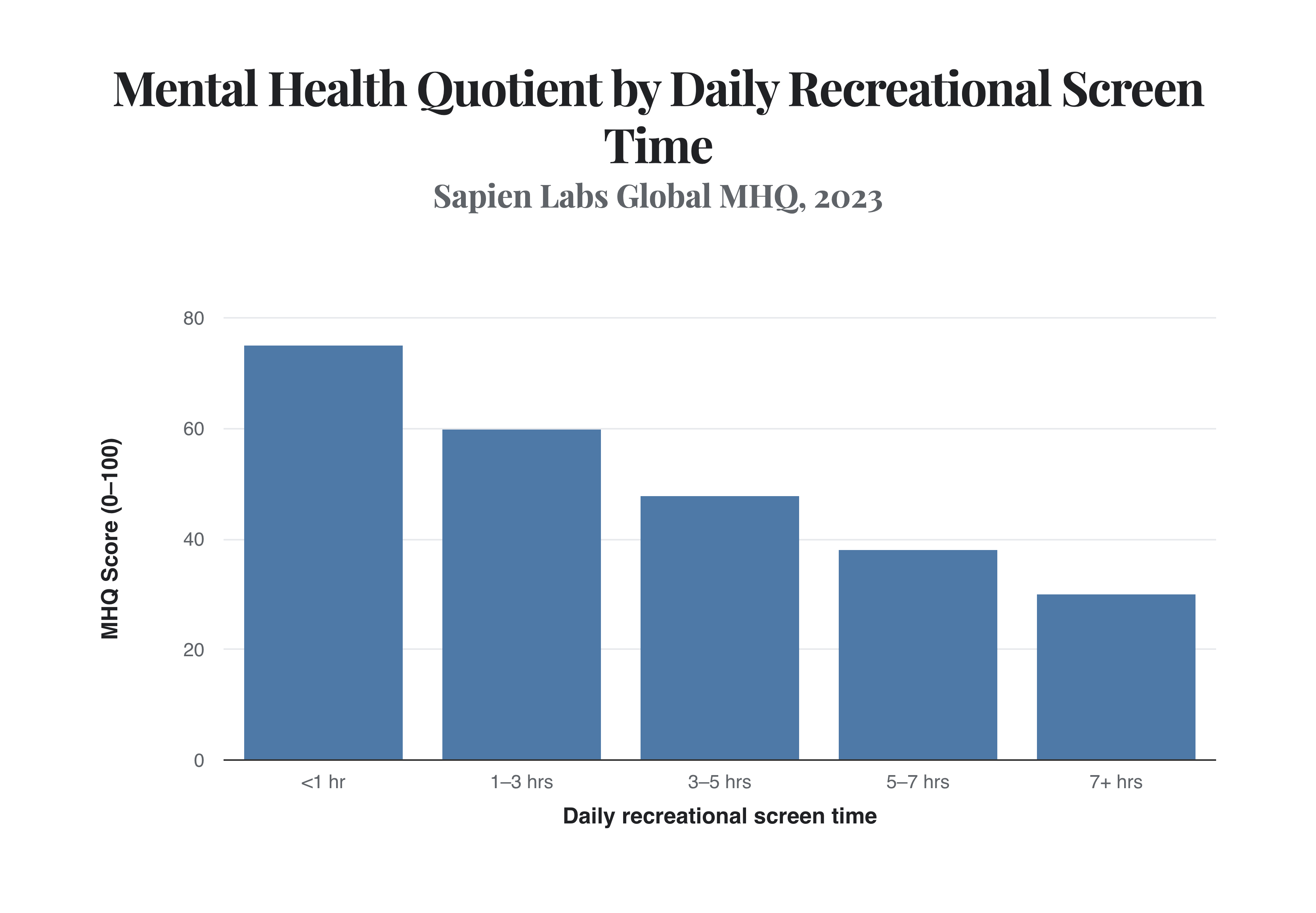
The Screen Time Gradient
The Sapien Labs Mental Health Quotient (MHQ) 2023 report, based on a global sample of over 500,000 respondents, shows a stark dose-response relationship between daily recreational screen time and mental wellbeing. Individuals reporting 7 or more hours of recreational screen time per day score 40% lower on the MHQ than those with less than 1 hour. The drop is not linear—the steepest decline occurs between 1 and 3 hours, suggesting a threshold beyond which attention fragmentation becomes pathogenic. This is not correlation by lifestyle confound; the association persists after controlling for income, age, and exercise.
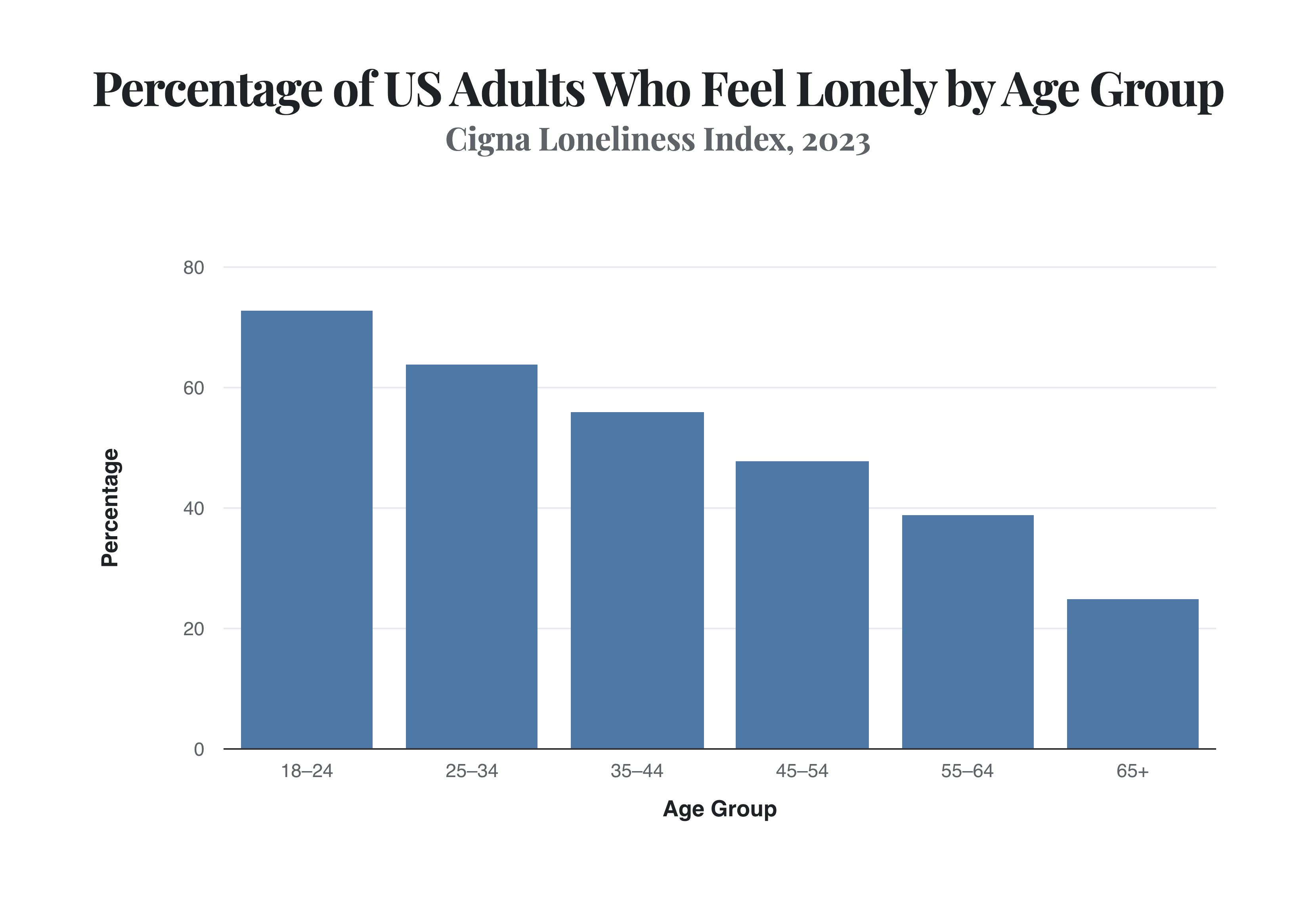
Loneliness in the Connectome
The Cigna Loneliness Index (2023) found that 58% of American adults score as lonely on the UCLA Loneliness Scale—the highest rate recorded since tracking began. Among 18–24 year olds, the figure reaches 73%. Simultaneously, Pew Research (2024) reports that 31% of US adults say they are online ‘almost constantly,’ up from 15% in 2015. The constant connective interface does not reduce loneliness; it exacerbates it. Each notification interrupts a potential moment of genuine presence, replacing depth with volume. The result is a paradox: more contact, less connection.
You’ve seen the $1.3 trillion projection—now access the synthesis that maps the causal chain from screen time to neural rewiring to economic collapse, and the policy levers most analysts miss.
Presenteeism and the Performance Imperative
Gallup’s State of the Global Workplace (2024) reports that 60% of workers are emotionally detached at work and 19% are miserable. The resulting loss in global GDP is estimated at $8.8 trillion, but that figure includes all disengagement. Narrowing to depression-related presenteeism, a 2023 RAND study puts the US cost alone at $200 billion per year—more than the cost of treating all cancers combined. Depressed workers lose 27.5 working days per year per person to reduced productivity, and screen time is the modifiable risk factor that explains the rise. The always-on email culture blurs work and rest, creating the burnout Byung-Chul Han describes as ‘the dialectic of the self-driving subject.’
