



In a stunning display of economic divergence, the preliminary November consumer sentiment reading from the University of Michigan has plummeted to 50.3, a level teetering just above the all-time low recorded during the inflation crisis of June 2022. This near-historic collapse, driven by a prolonged government shutdown and acute anxiety over personal finances, paints a grim picture of the American consumer psyche heading into the crucial holiday season. Yet, buried within this headline despair is a far more strategically significant story: a profound, K-shaped fracture in the nation’s economic mood. While sentiment cratered across nearly every demographic, consumers in the top tercile of stock holdings reported a remarkable 11% *increase* in confidence. This stark bifurcation reveals two Americas experiencing vastly different economic realities. One, buoyed by strong equity market performance, remains insulated and optimistic. The other, facing the brunt of political dysfunction and persistent inflation, is rapidly losing faith. This briefing deconstructs the November data, analyzes the tectonic forces creating this economic divide, and outlines the critical implications for investors, corporate strategists, and policymakers navigating an increasingly fragmented consumer landscape.
The Anatomy of a Collapse: Shutdowns, Stagnation, and Sinking Feelings
The 6% month-over-month decline in the headline sentiment index was both sharp and widespread, falling well short of economists’ expectations. The primary catalyst, cited repeatedly in the survey’s analysis, is the ongoing federal government shutdown, which has dragged on for over a month. This political paralysis in Washington is no longer an abstract headline; it is actively fueling consumer fears about tangible, negative consequences for the national economy. The absence of official federal data, also a result of the shutdown, has magnified the importance of surveys like this one, turning them into critical barometers of economic health.
Deconstructing the November Nosedive
The internals of the report reveal a particularly concerning erosion of confidence in present conditions. The Current Economic Conditions Index plunged a staggering 10.8% from the previous month to a reading of 52.3—its lowest level on record. This was led by a severe 17% drop in how consumers view their own personal finances. The forward-looking Index of Consumer Expectations also fell, though less dramatically, by 2.6% to 49.0, reflecting an 11% decline in year-ahead business expectations. Essentially, consumers feel worse about their financial situation *right now* than ever before recorded by this metric, and they see little prospect for improvement in the near term.
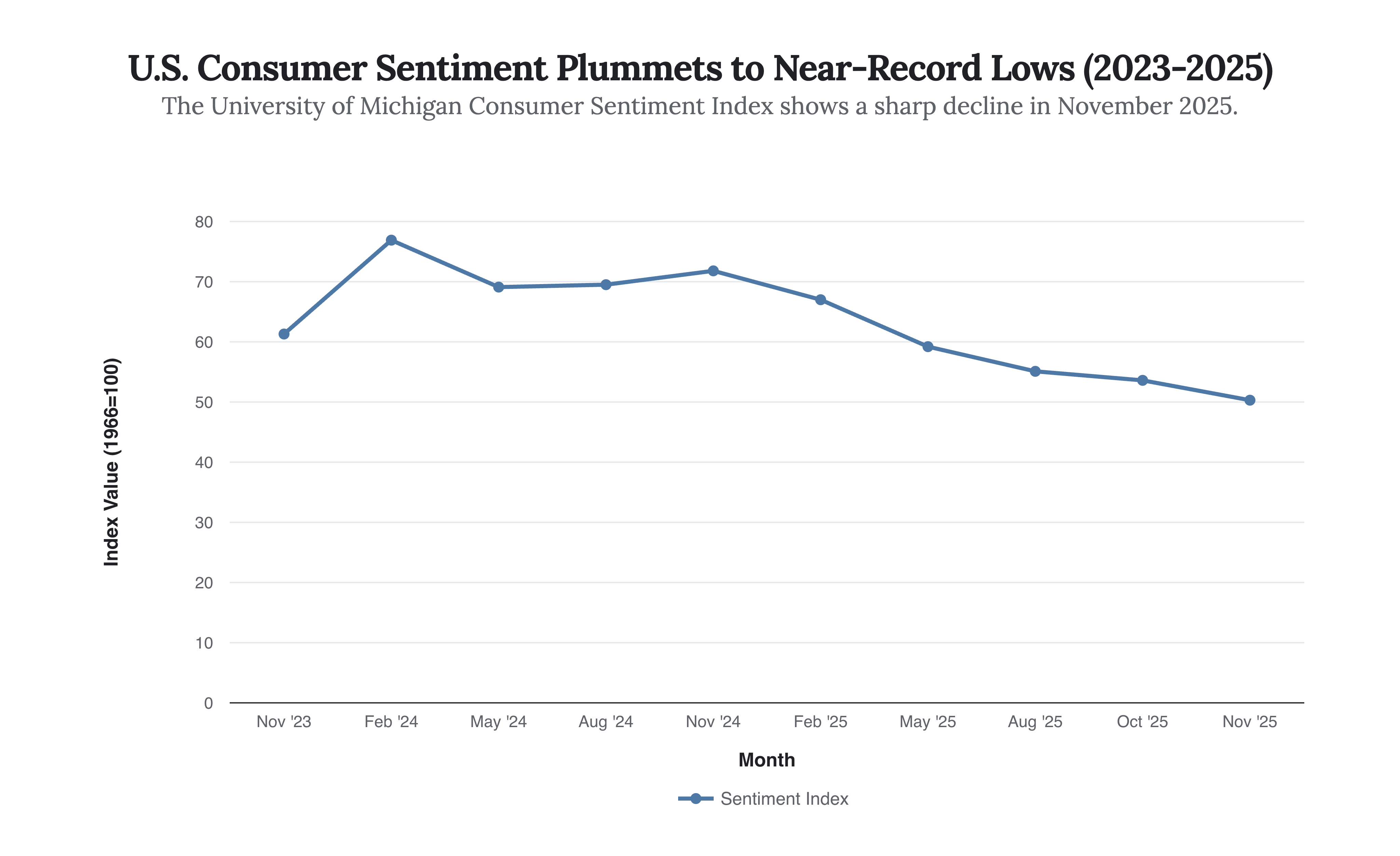
This chart illustrates the steady erosion of consumer confidence over the past year, culminating in the dramatic drop in November to a level just above the historic low of 50.0 set in June 2022.
Inflation: A Tale of Two Timelines
While the government shutdown is the acute cause of November’s anxiety, the chronic issue of inflation continues to loom large. Year-ahead inflation expectations ticked up slightly, from 4.6% in October to 4.7% in November. This suggests that households still feel the immediate sting of rising prices for everyday goods and services. However, in a sign that consumers may believe the worst of the inflationary wave is over, long-run (5-year) inflation expectations actually eased, falling from 3.9% to 3.6%. This divergence indicates that while short-term price pain is a reality, there is a nascent hope that the Federal Reserve’s policies might eventually stabilize prices over a longer horizon. The persistence of near-term inflation fears, however, continues to weigh heavily on sentiment, especially for lower-income households whose budgets are less flexible.
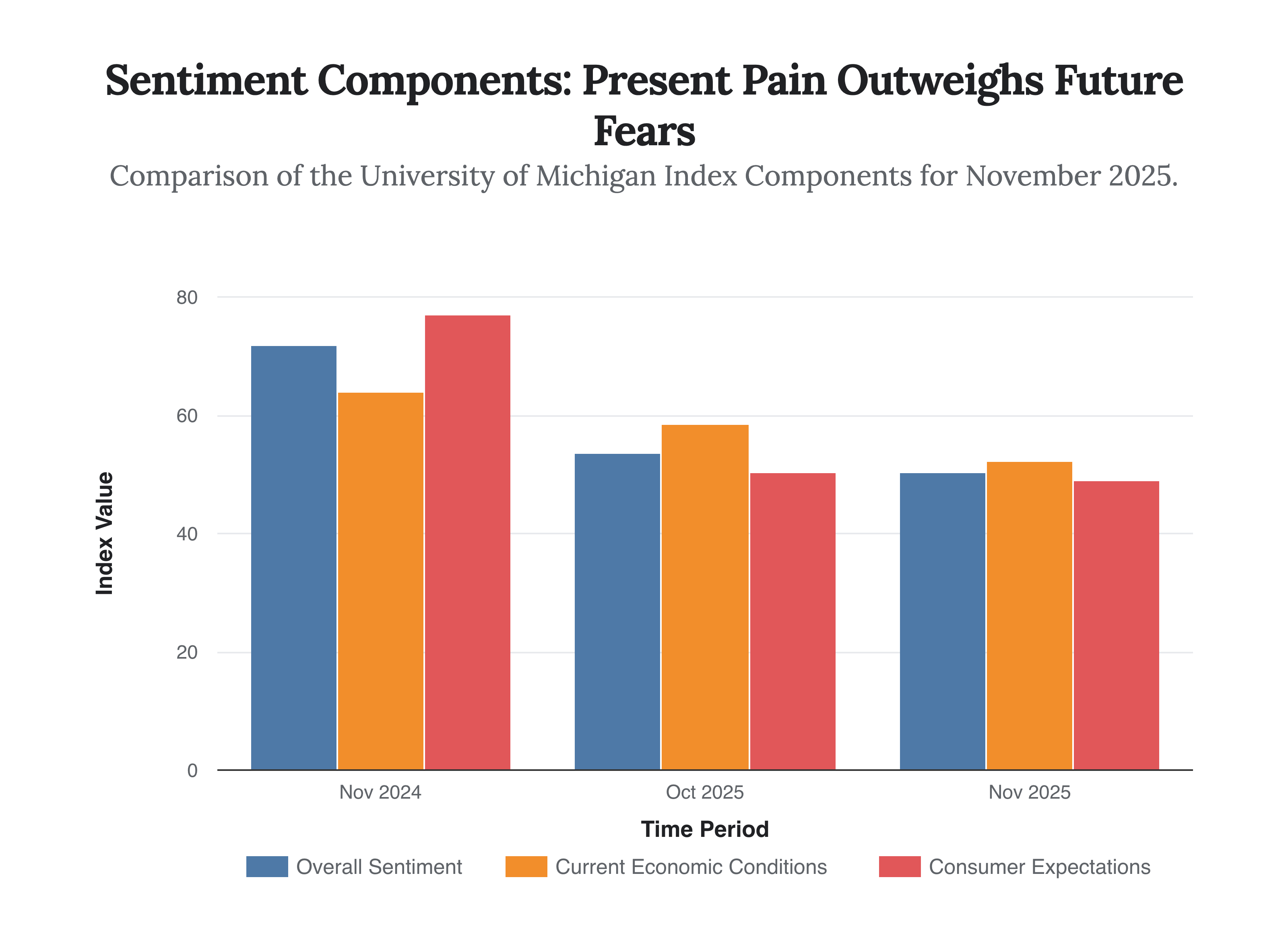
This bar chart breaks down the collapse, showing the dramatic fall in the Current Economic Conditions index, which had a much larger percentage drop than the forward-looking Expectations index, highlighting the acute financial stress consumers feel today.
A Tale of Two Consumers: The Great K-Shaped Divide
The most strategically vital insight from the November data is not the overall decline, but the stark bifurcation of sentiment. The report explicitly states that the decline was widespread across age, income, and political affiliation, with one profound exception: households in the top third of stock ownership. For this group, buoyed by resilient equity markets, sentiment *rose* by a remarkable 11%. This phenomenon, where the wealthy feel increasingly confident while the rest of the population sinks into pessimism, is the definition of a K-shaped dynamic. It suggests that economic reality is splintering, creating a chasm between the asset-owning class and the wage-earning majority.
“This month’s decline in sentiment was widespread throughout the population, seen across age, income, and political affiliation. One key exception: consumers with the largest tercile of stock holdings posted a notable 11% increase in sentiment, supported by continued strength in stock markets.”
- Joanne Hsu, Director, Surveys of Consumers
The Wealth Effect vs. The Wallet Squeeze
The divergence is a direct reflection of two opposing economic forces. For the wealthiest third of Americans, the so-called “wealth effect” is in full force. Strong stock market performance has bolstered their investment portfolios and retirement accounts, creating a psychological buffer against concerns like short-term inflation and political turmoil. Their balance sheets provide a sense of security that allows them to look past the current disruption.
For the other two-thirds, the reality is a persistent “wallet squeeze.” Their daily economic lives are not defined by stock tickers but by grocery bills, gas prices, and job security. Data from other sources reinforces this narrative, with 58% of consumers saying their wages are lagging behind inflation and 61% living paycheck to paycheck. For this majority, the government shutdown represents a direct threat to economic stability and potential job losses, not a temporary political squabble.
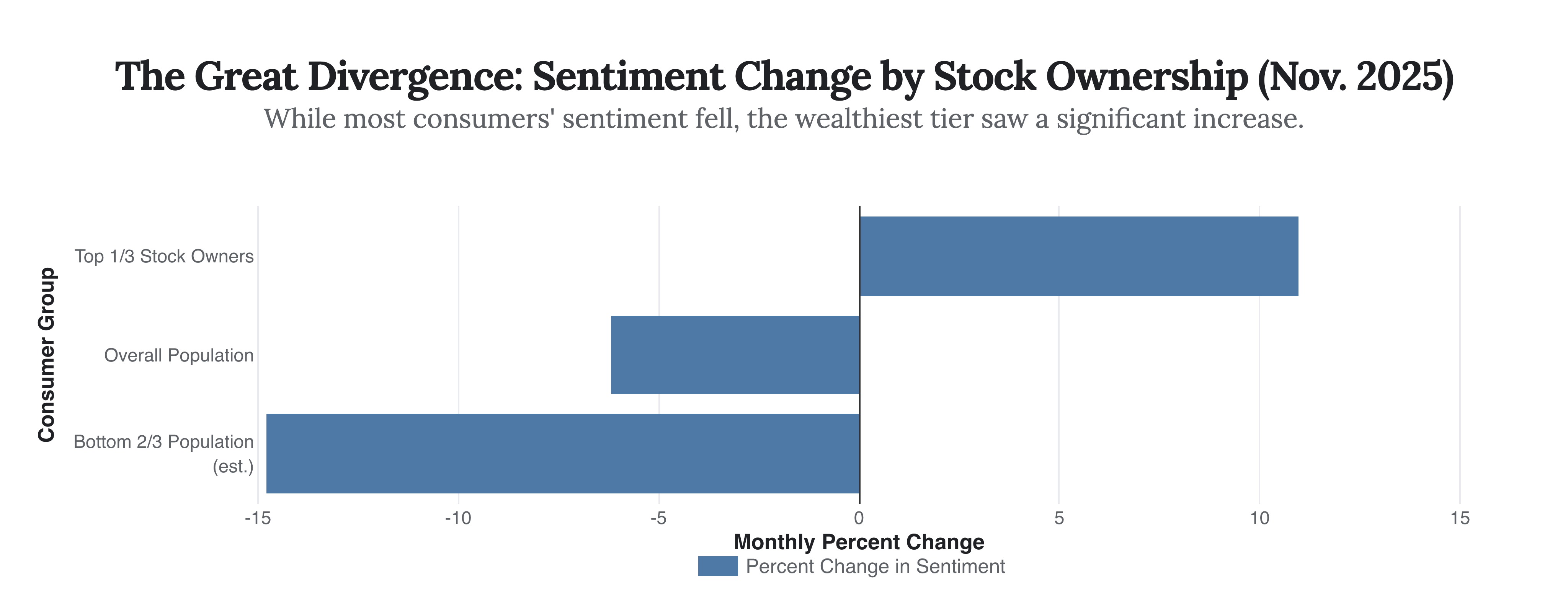
This chart is the centerpiece of our analysis. It starkly visualizes the K-shaped reality, where the economic mood of the asset-holding class is moving in the complete opposite direction from the rest of the country.
Strategic Implications: Navigating a Fractured Landscape
The bifurcation of consumer sentiment is not merely an academic observation; it has profound strategic consequences for businesses and investors. A single, monolithic view of the “American consumer” is now obsolete and dangerously misleading. Strategy must be tailored to address a deeply fragmented market.
Retail and Consumer Goods: A Barbell Market Emerges
The K-shaped recovery points toward a continued “barbell” effect in the consumer market.
Luxury and High-End Markets: Companies catering to the affluent consumer, whose confidence is unshaken, can expect continued resilience. This group’s spending is insulated from the day-to-day pressures affecting the broader population. The wealth effect will likely sustain demand for premium goods, travel, and services.
Value and Discount Markets: At the other end of the spectrum, the majority of consumers will become increasingly price-sensitive. Their eroding confidence and squeezed finances will drive demand for discounts, private-label brands, and value-oriented retailers. Mid-market brands that fail to offer either a clear luxury appeal or a compelling value proposition risk being squeezed out.
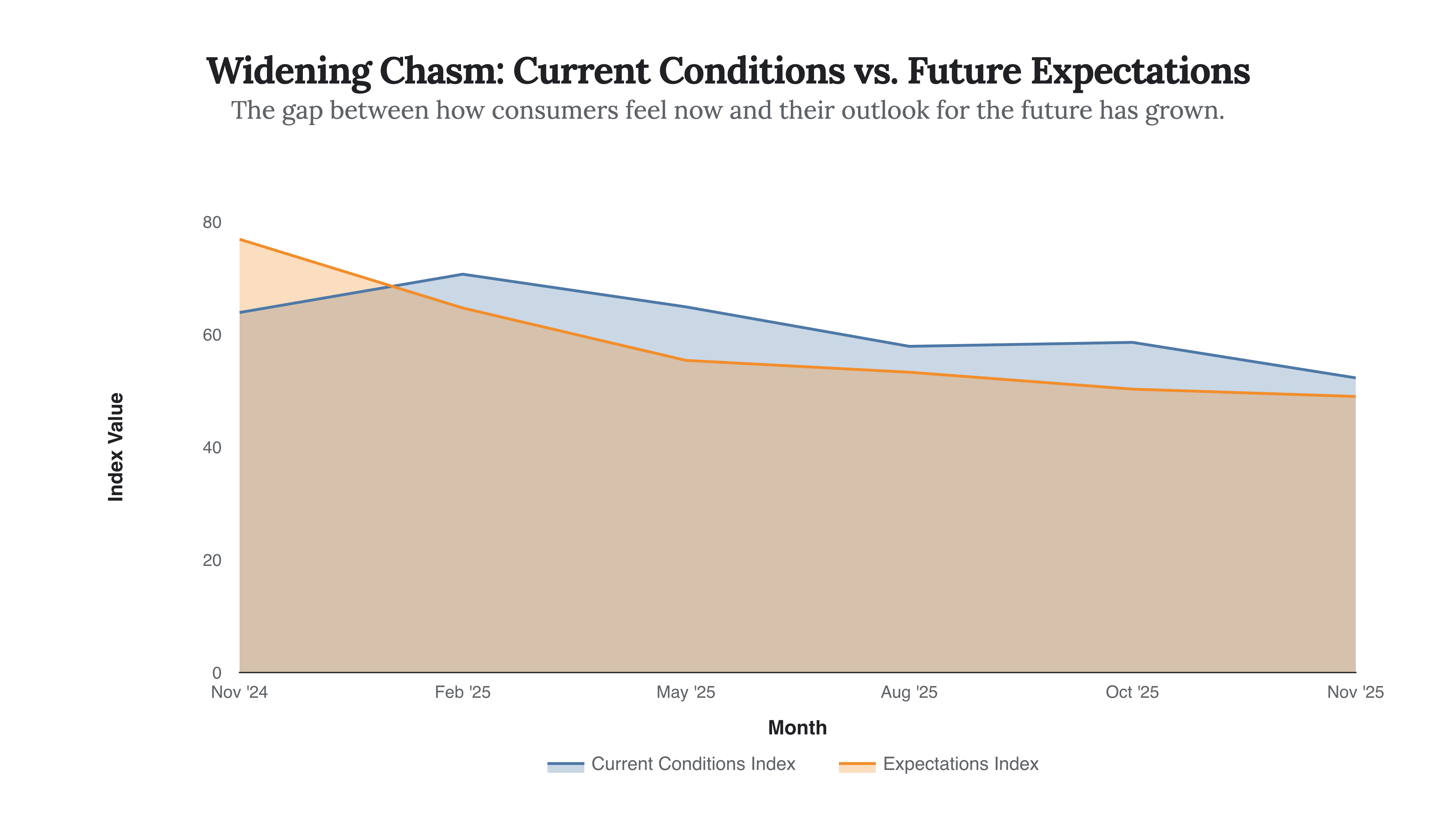
This area chart shows how both components of the sentiment index are falling, but the recent collapse in the Current Conditions index is widening the gap, indicating a crisis of confidence in the immediate economic reality for many.
Investment and Policy: Watching the Fault Lines
For investors, the key is to look beyond the headline number. While a low overall sentiment figure might flash recession warnings, the resilience of the high-end consumer could keep corporate earnings for certain sectors surprisingly robust. The political fallout is also significant.
“The shutdown could lead even higher-income households to increase precautionary savings, potentially weakening the spending growth that has kept the economy strong.”
- Elizabeth Renter, Senior Economist, NerdWallet
This warning suggests that if the political stalemate continues, the pessimism could begin to creep up the income ladder, creating a more systemic risk. Policymakers face the challenge of addressing a crisis of confidence that is disproportionately affecting their core constituency. The longer the shutdown persists, the greater the risk that this sentiment collapse translates into a genuine pullback in consumer spending, which has so far remained the primary engine of economic growth.
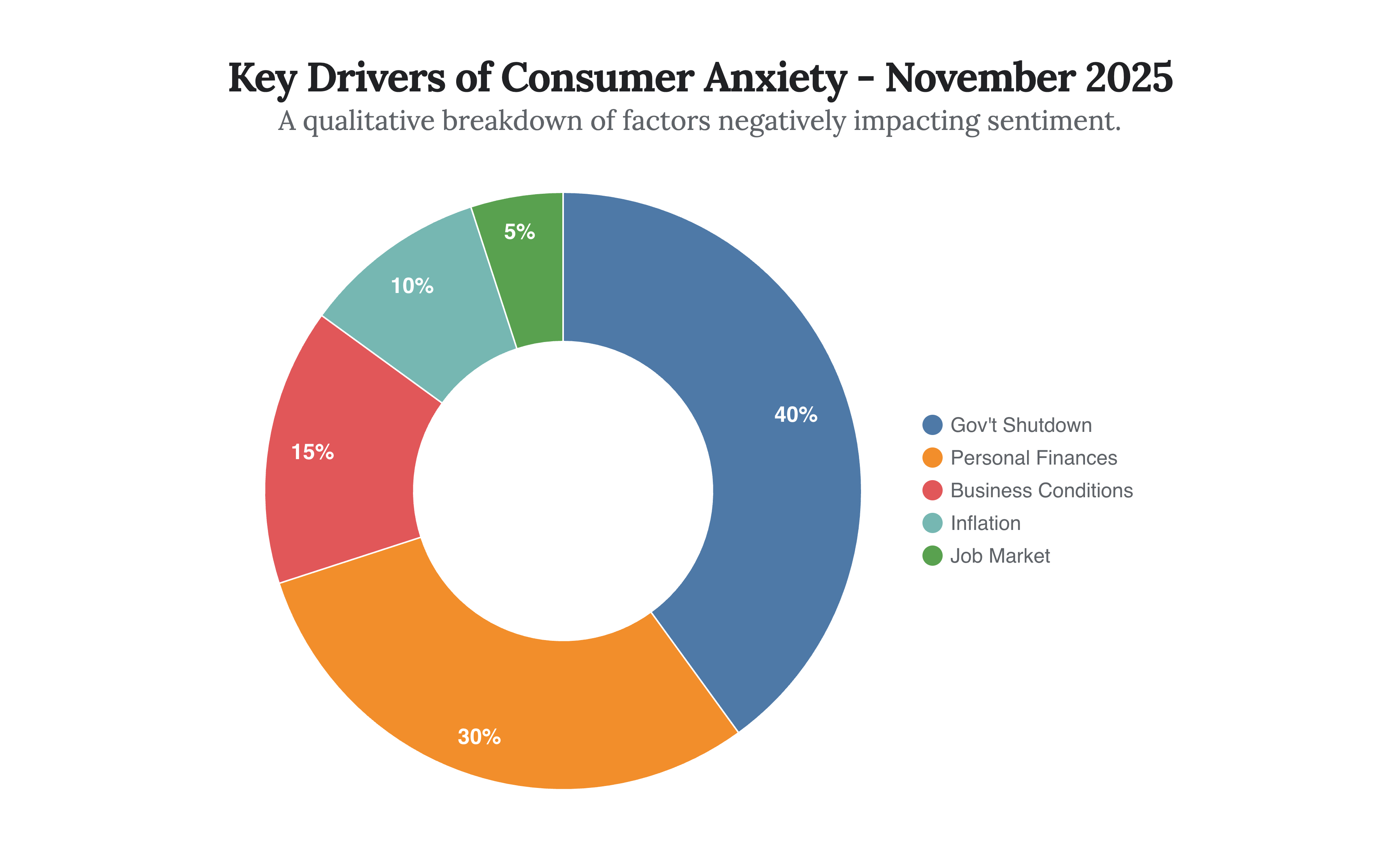
This chart, based on the qualitative drivers mentioned in the reports, shows that while inflation and job fears are present, the acute political crisis and its impact on personal finances are the dominant sources of anxiety this month.
The November consumer sentiment report is a clear warning sign. The headline number is alarming, but the real story lies in the deep, and growing, fracture between the economic realities of the rich and the rest. The confidence of the wealthiest Americans, underwritten by a strong stock market, is creating a dangerously misleading picture of stability that masks the widespread anxiety and financial distress felt by the majority. This K-shaped divide is not sustainable. For strategists and policymakers, ignoring this bifurcation is no longer an option; it is the central challenge that will define the economic landscape in the months ahead.
The resilience of the top-tier consumer is a fragile buffer against a broader economic downturn; should their optimism falter, the floor could give way with shocking speed.