



The data from late 2024 and early 2025 reveals a catastrophic divergence in the global wellness equation. While global consumer spending has surged—surpassing 2019 levels by 25% in the US alone—global happiness indices have collapsed by nearly 10 points (from 66% to 58%). From the vantage point of Epicurus, the ancient Greek strategist of pleasure, this is not a paradox; it is a mathematical inevitability. Modernity has engineered an economy based entirely on Kinetic Pleasure—active, fleeting stimulation driven by dopamine loops—while systematically destroying the conditions for Static Pleasure (Ataraxia), the stable absence of pain and anxiety. This briefing deconstructs the current “Anxiety Machine,” arguing that the 210 million-person digital addiction crisis and the $1.5 trillion luxury slowdown are proof that we have over-leveraged our biological reward systems.
The Kinetic Trap: Dopamine as a Depreciating Asset
Epicurus distinguished between two types of pleasure: kinetic (the act of satisfying a desire, like eating) and static (the state of satiety, or not being hungry). Modern digital ecosystems are designed to keep users perpetually in the kinetic phase, preventing them from ever reaching the static state of satisfaction. 2025 data on digital consumption confirms this “treadmill of desire” is running faster than human neurology can sustain.
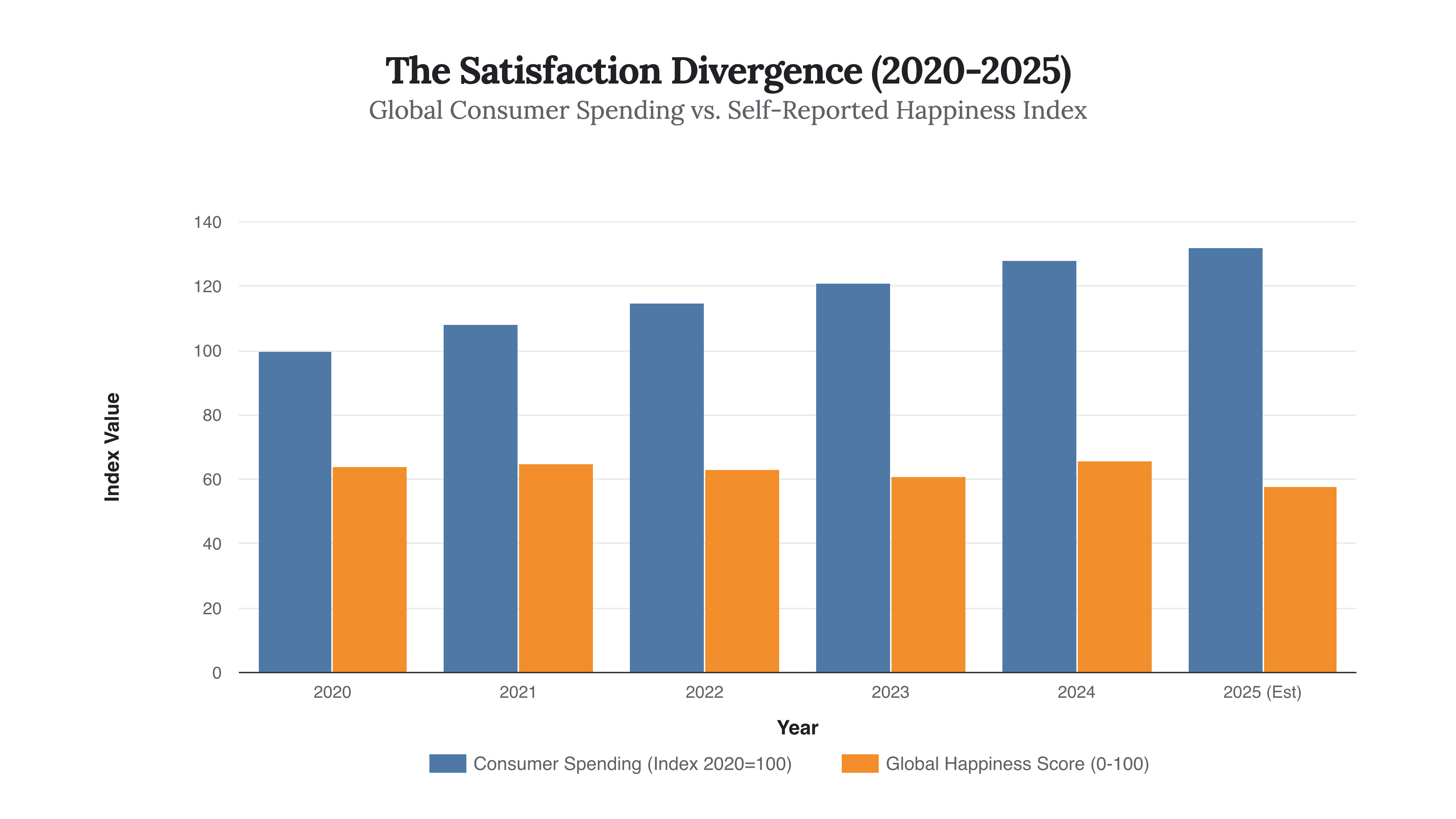
Strategic Implication: The chart above illustrates the collapse of the “consumption = happiness” correlation. Despite a recovery in spending power, the “Happiness Crash” of 2025 indicates that capital is being allocated to “Vain and Empty” desires (status, algorithmic validation) rather than “Natural and Necessary” needs (community, tranquility). Epicurus would argue that the modern consumer is purchasing anxiety, not pleasure.
The Notification Tax on Ataraxia
The prerequisite for Epicurean happiness is Ataraxia—an untroubled mind. Current telemetry on attention fragmentation suggests this state is now impossible for the average participant in the digital economy. With the average smartphone user receiving between 65 and 90 notifications daily, and suffering from “phantom vibration syndrome” at a rate of 73%, the mind is in a constant state of hyper-vigilance.
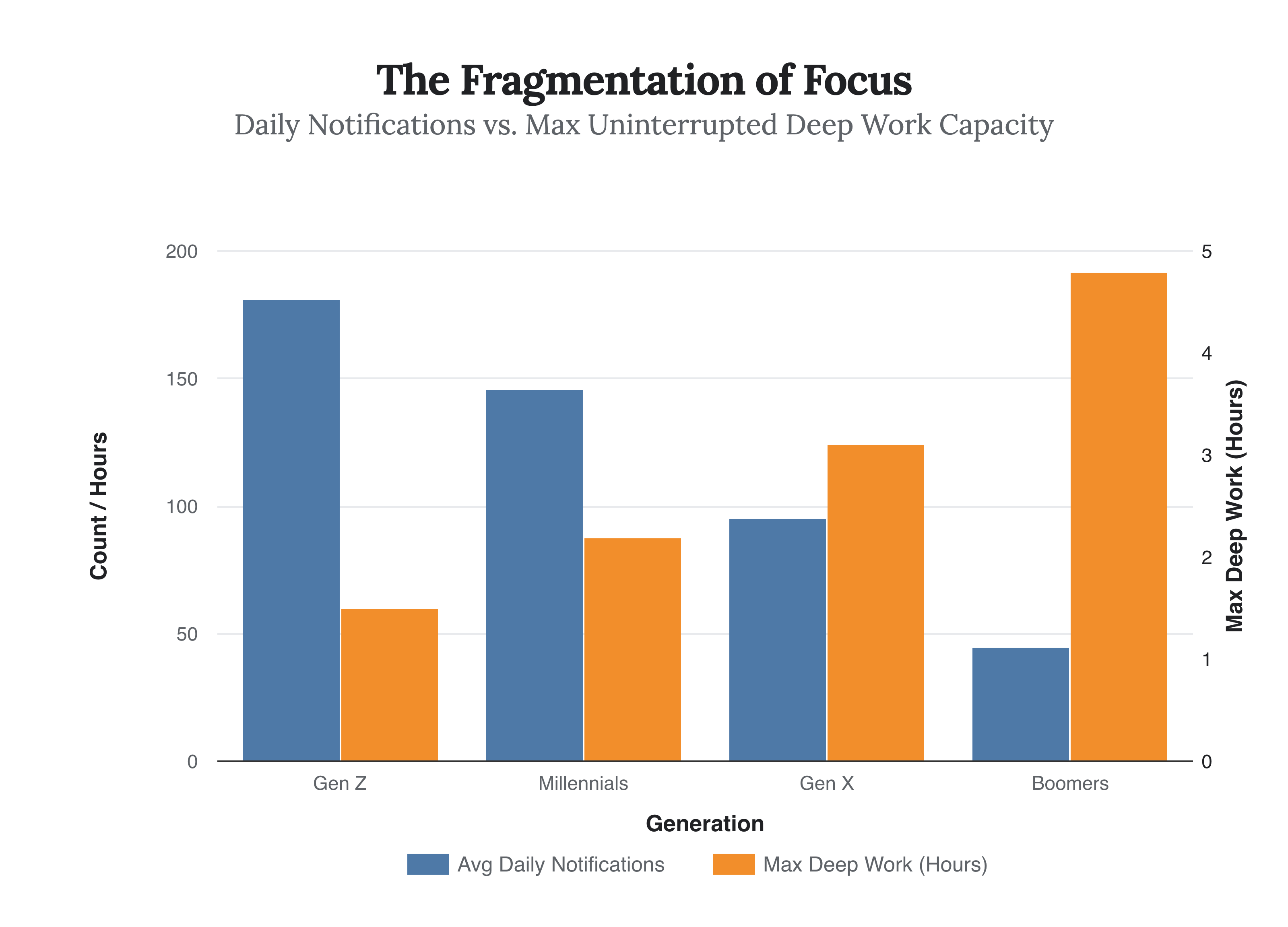
Analysis: The data shows a direct inverse relationship between digital connectedness and cognitive peace. For Gen Z, receiving a notification every 8 minutes effectively renders Ataraxia structurally impossible. An Epicurean audit of this lifestyle would reject the smartphone not out of Luddism, but out of a “hedonic calculus”—the pain of constant interruption outweighs the pleasure of connection.
The Vain Economy: Buying Status, Harvesting Anxiety
Epicurus famously categorized desires into three tiers: Natural & Necessary (friends, food), Natural & Non-Necessary (luxury food), and Vain & Empty (fame, power, statues). The 2025 slowdown in the personal luxury goods market (projected 1-4% growth) alongside the explosion of the “Digital Detox” market (growing at 24% CAGR) suggests a correcting mechanism is beginning to form. The market is realizing that “Vain” desires have no saturation point—you can never get enough of what you don’t actually need.
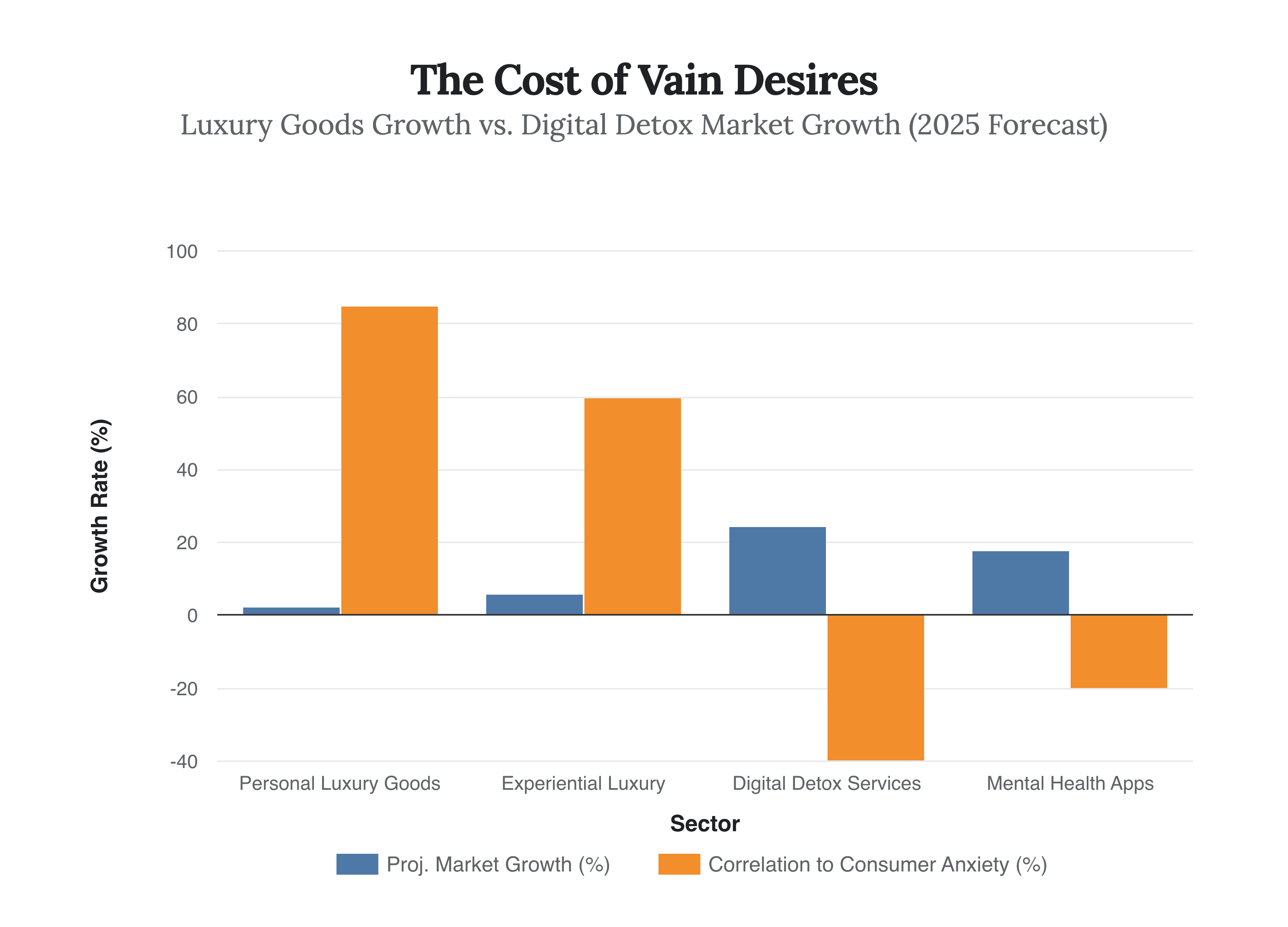
The “Enough” Point: Epicureanism is built on the concept of “limit”—knowing when you have enough. The modern “Vain” economy is built on the concept of “infinite scroll.” The chart above highlights a capital flight from traditional status goods toward corrective services (detox, therapy) designed to undo the damage of modern consumption. We are essentially paying to cure the side effects of our pleasures.
The Friendship Deficit: Algorithmic Isolation
Perhaps the most damning metric for the modern era is the commercialization of social connection. Epicurus valued friendship above all else as a source of security and happiness. Today, while “connectedness” is at an all-time high, genuine connection has collapsed. 2025 statistics indicate that 57% of Gen Z report chronic loneliness, and heavy social media users (top 25%) are twice as likely to be lonely.
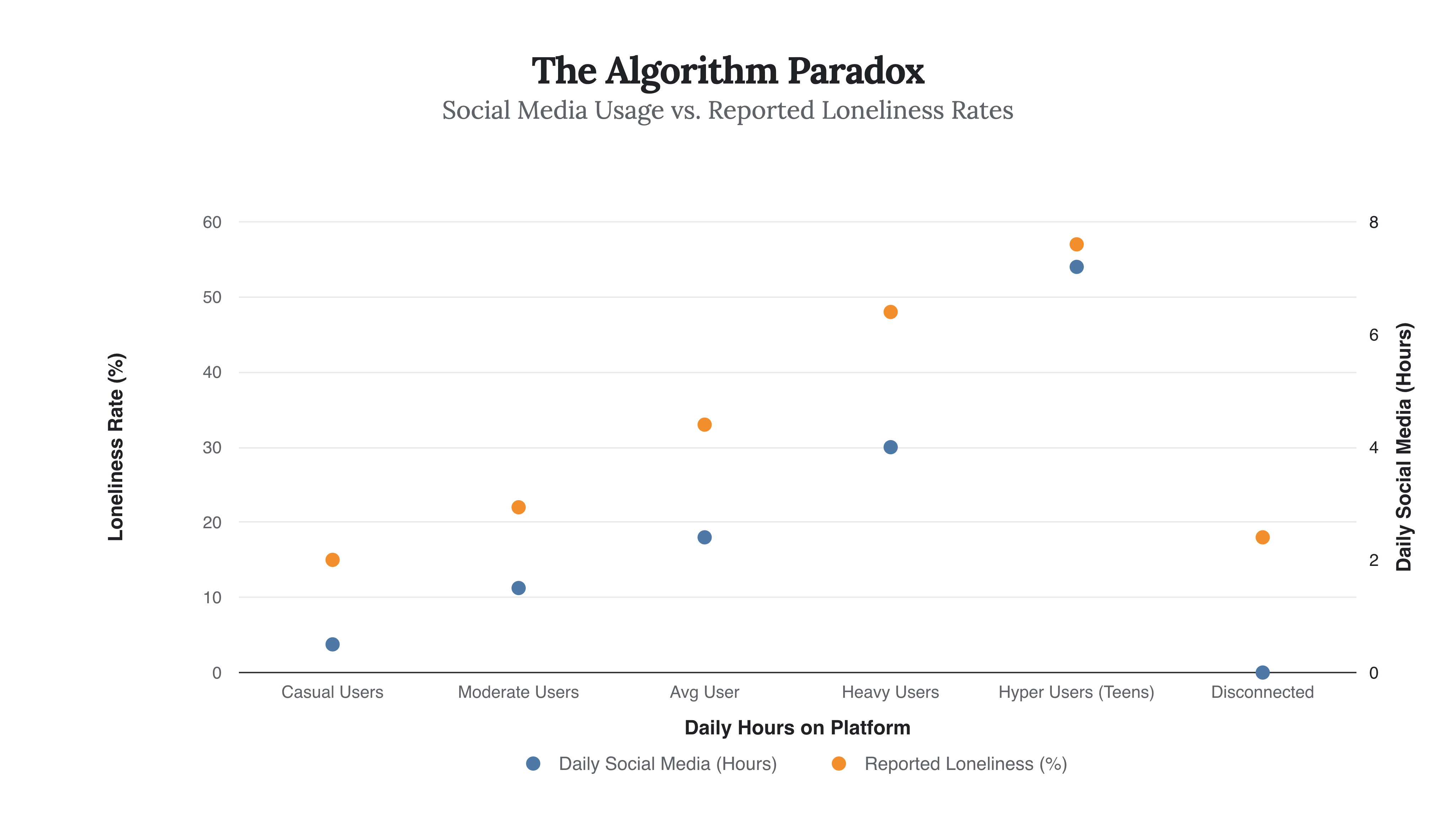
The Hollow Social Graph: The scatter plot reveals a clear trend: the platform mechanisms designed to simulate friendship (likes, follows, streaks) actually displace the time and emotional energy required for real friendship. Epicurus would view social media as a “salty drink”—it increases the thirst for connection while simultaneously dehydrating the user of genuine intimacy.
Strategic Foresight: The Return to Static Pleasure
The data suggests we are reaching a “Peak Kinetic” saturation point. The human nervous system is beginning to reject the high-frequency, high-anxiety input of the modern attention economy. We are seeing early signs of a “Silence Premium” emerging in the market.
“We are not just seeing a mental health crisis; we are seeing a ‘liquidity crisis’ of peace. Attention is the currency, and we are bankrupt.”
Future Projections (2026-2028):
The Rise of “JOMO” as a Status Symbol: The “Joy of Missing Out” will transition from a meme to a market segment. Expect high-end tourism and real estate to pivot from “connectedness” to “Faraday Cage” experiences—guaranteed disconnection as the ultimate luxury.
Algorithmic Liability: As the correlation between algorithmic engagement and mental health decline (57% loneliness) becomes irrefutable, expect policy frameworks to treat infinite scroll mechanics similarly to tobacco or gambling.
The “Dopamine Fast” Economy: The 24% growth in digital detox services is just the beginning. We will see the emergence of “Analogue-First” communities and workplaces that ban digital interruptions to reclaim productivity and Ataraxia.
Conclusion: Epicurus would not reject modern technology, but he would ruthlessly reject the passive consumption of it. The current metrics—rising spending, falling happiness, and skyrocketing anxiety—prove that the modern “pleasure” protocol is a failed strategy. It generates infinite desire but zero satisfaction.
The single most critical insight for the strategist is that in an age of infinite kinetic stimulation, the only asset with true alpha is a static, untroubled mind.
The distinction between “wanting” - anticipated pleasure - and “liking” - experienced pleasure - developed by Kent Berridge, is relevant to this. I discuss the issue more in the essay on my website.
Absolutely one of the best articles that I read over the past weeks. Solid analysis and breaking out the conclusions. I am a big fan of analogue revival and I’m noticing those changes in myself and places around me. These stats are truly scary but necessary to comprehend the size of this crisis and mobilize people and organisations around it. Before it too too late. Thanks for collecting and sharing.