


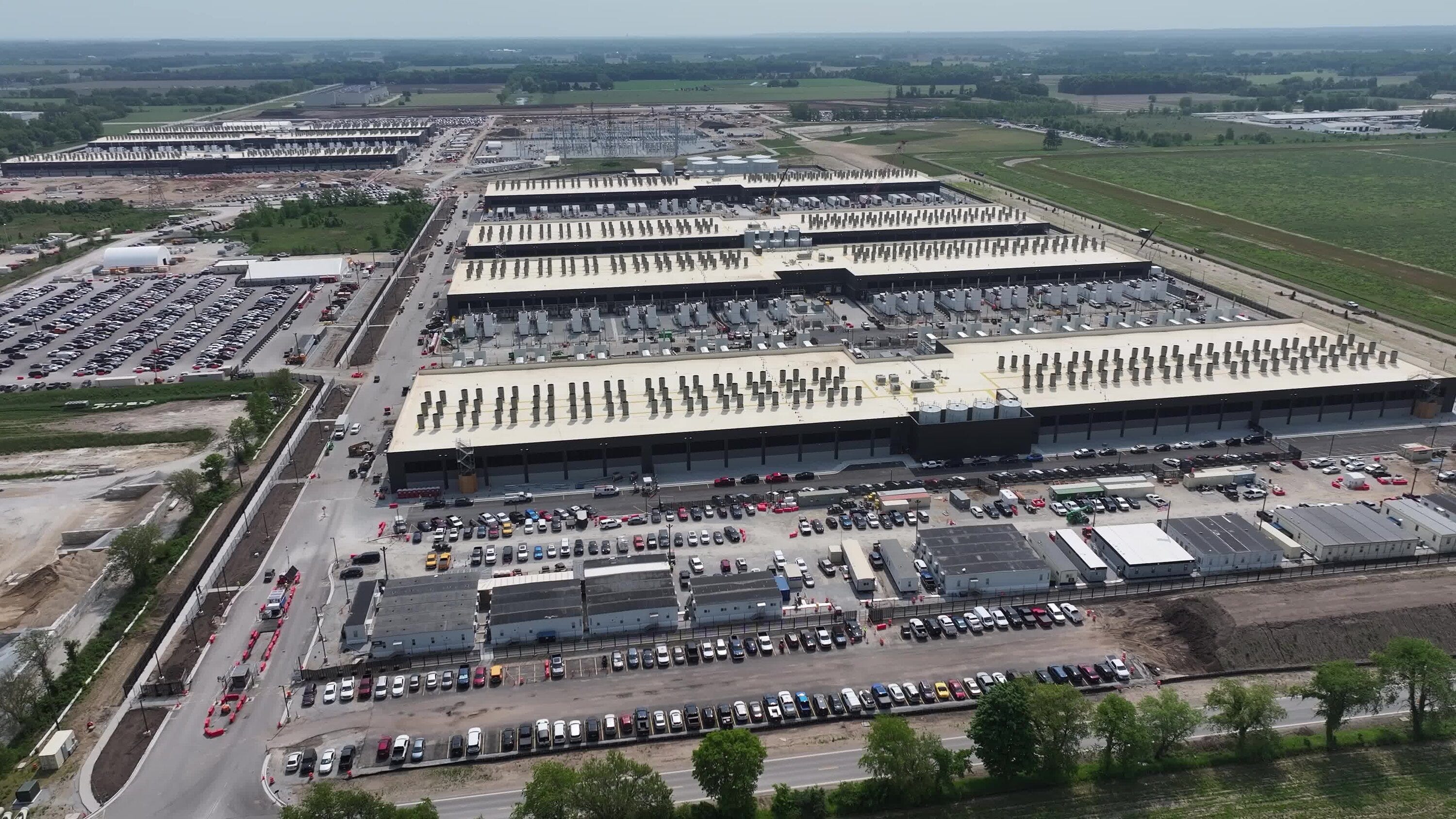
In Q2 2026, the global data center capital expenditure (CapEx) trajectory has violently detached from historical enterprise IT cycles, accelerating toward an unprecedented $1 trillion annual run rate. This shift represents the most aggressive capital reallocation in modern economic history. The “Big Four” hyperscalers—Amazon, Microsoft, Alphabet, and Meta—have transitioned from software conglomerates into the world’s apex physical infrastructure architects. As of May 2026, the combined projected CapEx for these four entities exceeds $715 billion, a sum dwarfing the GDP of several G20 nations. This is not a mere capacity expansion; it is an existential arms race where the table stakes are measured in tens of billions of dollars per quarter.
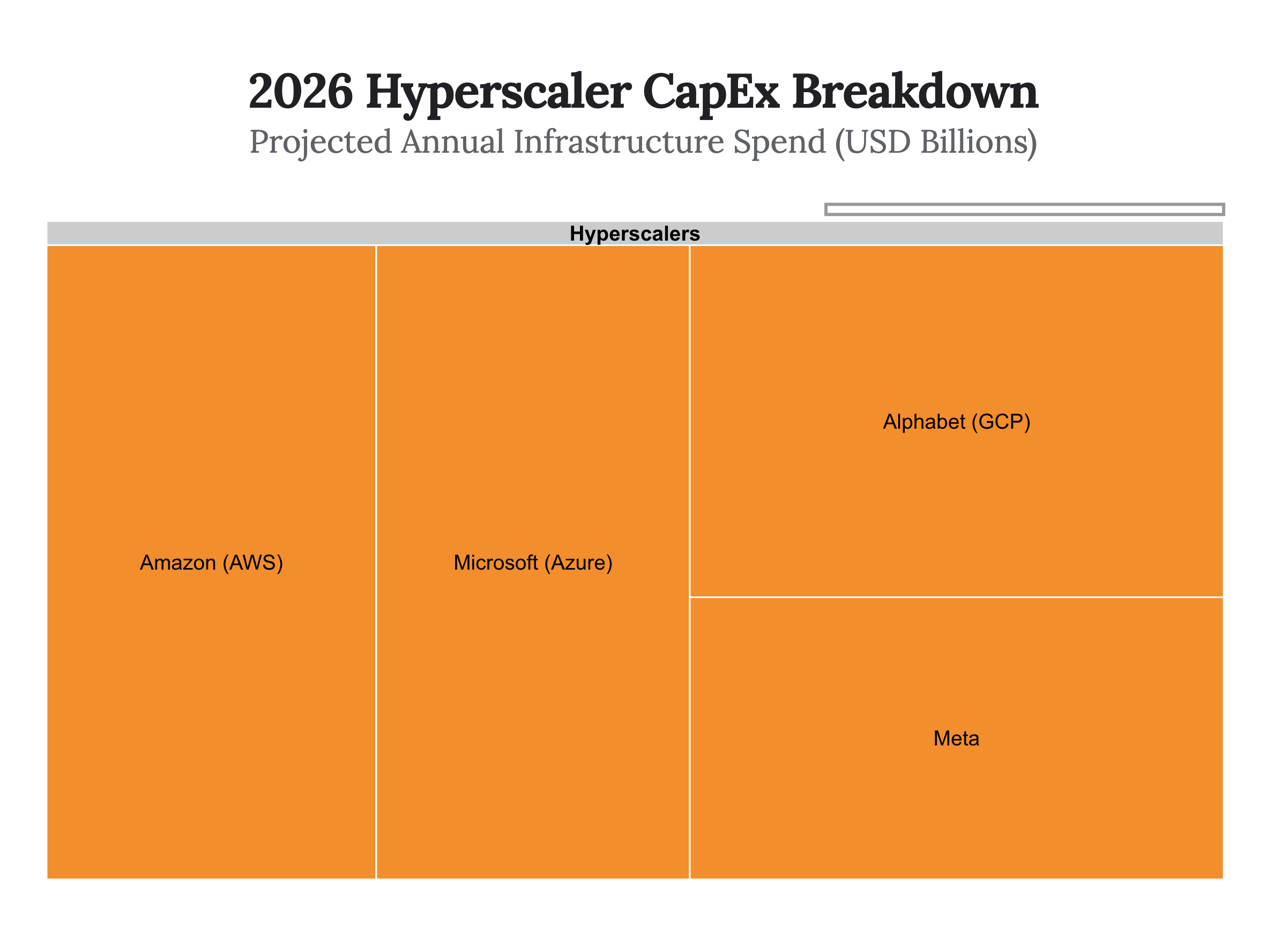
The sheer scale of this buildout is anchored in a brutal truth: artificial intelligence is heavy industry. Unlike the asset-light cloud era of CPU virtualization, the 2026 AI factory model commands monstrous, liquid-cooled physical footprints. This year, the top technology monopolists will spend more on physical compute infrastructure than the combined annual defense budgets of the United Kingdom, France, and Germany. This absolute concentration of capital is permanently warping global supply chains, bleeding into sovereign energy markets, and forcing a fundamental repricing of debt.
The “AI Tax”: Deconstructing the Hardware Cost Paradox
A vicious divergence has emerged in the hardware market: the price of compute capacity has completely decoupled from unit volume. Analysis of May 2026 supply chain dynamics reveals that hyperscalers are absorbing massive component price inflation. Microsoft alone attributed $25 billion of its 2026 CapEx budget purely to rising memory chip and component costs. High-Bandwidth Memory (HBM3e) and proprietary interconnects have created a structural bottleneck, establishing a draconian “AI Tax.” Consequently, while CapEx is skyrocketing, physical rack deployments are expanding at a muted pace, reflecting a forced pivot toward extreme density over horizontal sprawl.
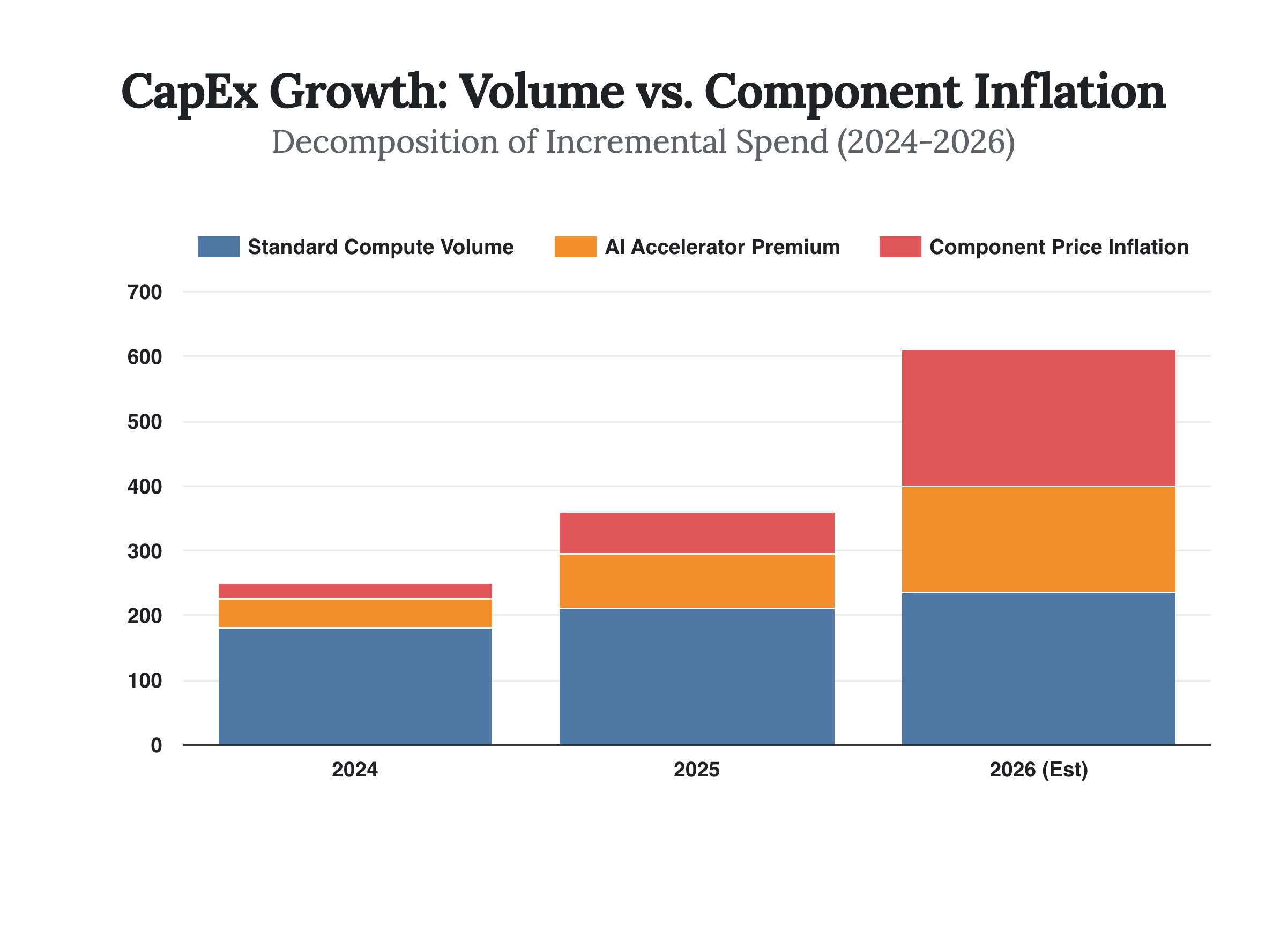
The strategic fallout is absolute: enterprises unable to afford the AI premium are being priced out of the frontier, forced into the hyperscalers’ walled gardens. Furthermore, the relentless pace of NVIDIA’s Blackwell and Rubin architectures has ignited a hardware obsolescence crisis. Frontier model training now demands a continuous, multi-billion dollar refresh cycle, rendering 24-month-old silicon economically toxic.
The Financing Pivot: Debt as the New Engine
For a decade, Big Tech’s hegemony was underwritten by mythic free cash flow. Today, the 2026 data center supercycle has shattered the limits of organic self-funding. Hyperscalers are now projected to consume an unprecedented percentage of their operating cash flow just to maintain infrastructure parity. This financing pivot has forced Silicon Valley into the debt markets with staggering aggression, transforming cash-printing software empires into highly levered, capital-intensive utility borrowers.
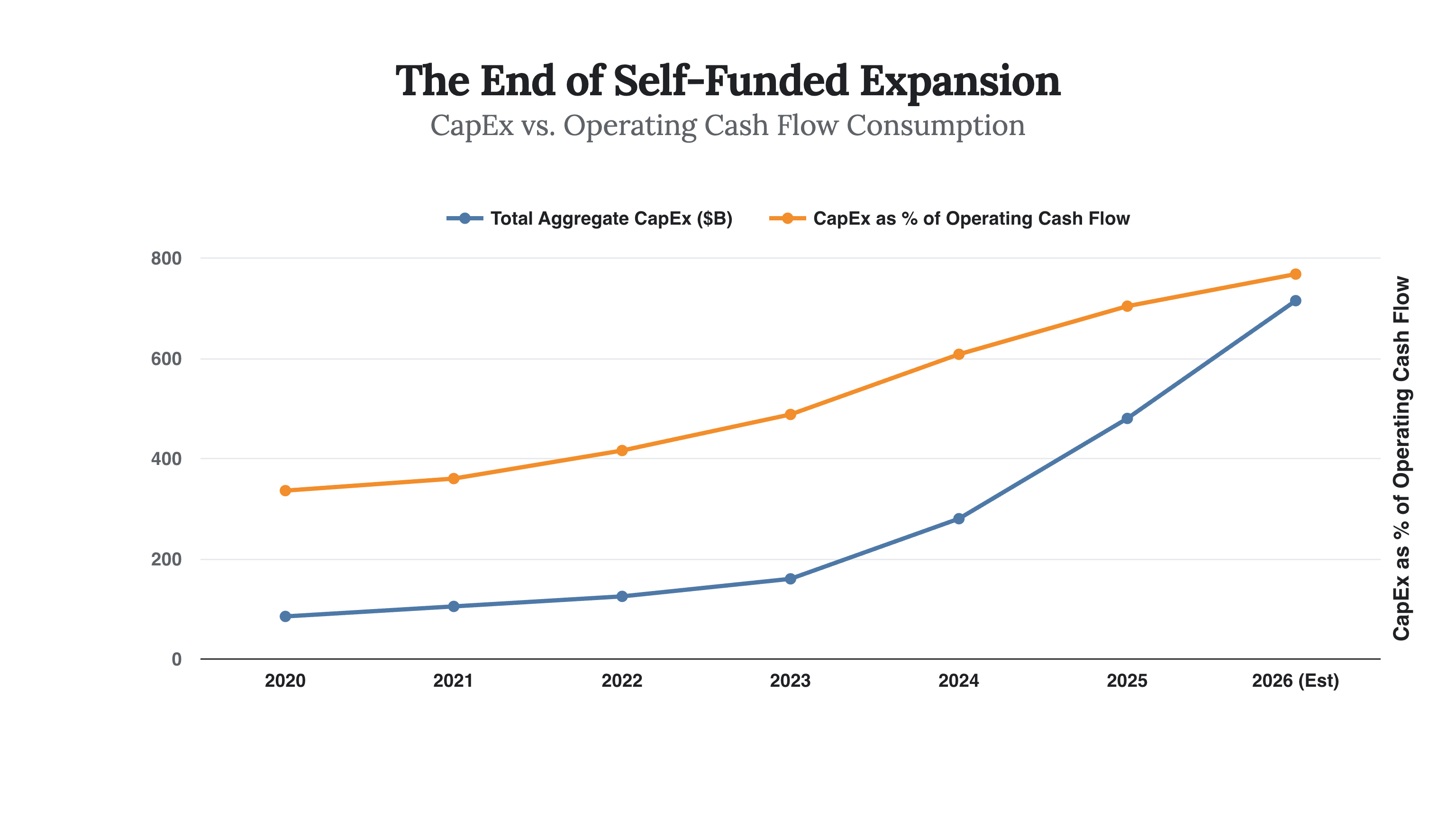
This massive leverage introduces systemic fragility. As balance sheets become inextricably tethered to the depreciation cycles of short-lived silicon, stock valuations are exposed to acute interest rate sensitivity. The $1.7 trillion cumulative hardware depreciation projected by the end of the decade is an anvil hanging over Big Tech, entirely reliant on an AI software monetization curve that has yet to mathematically justify the physical spend.
Unlock deeper strategic alpha with a 10% discount on the annual plan.
Support the ruthless, data-driven foresight required to navigate an era of radical uncertainty and join a community of institutional-grade analysts committed to the unvarnished truth.
The Power Wall: A $100 Billion Rate Shock
If capital is the fuel for this supercycle, electricity is the ultimate hard limit. U.S. data center capacity will require a staggering 95 GW by 2030, an exponential surge that local utilities simply cannot accommodate. The collateral damage is playing out in real-time within the PJM Interconnection (Mid-Atlantic). Capacity auction prices have triggered a catastrophic rate shock, exploding from $28.92 to a FERC-capped $329.17 per megawatt-day. This equates to billions in added costs shifted directly onto the backs of retail ratepayers. Grid operators are utterly failing to integrate the continuous baseload required by AI clusters with a decaying transmission network.
To circumvent this grid paralysis, Big Tech has executed a sovereign energy pivot. The hyperscalers have recognized that the public grid is a failing state. They are bypassing utilities entirely, executing massive behind-the-meter natural gas acquisitions and underwriting commercial nuclear deployments to secure captive, baseload generation for their sovereign digital states.
Engineering the AI Factory: Breaking the Laws of Thermodynamics
Inside the data center, the physical architecture has breached the limits of traditional thermodynamics. The standard 15 kW racks of the previous era have been obliterated by NVIDIA GB200 NVL72 configurations drawing an astonishing 132 kW, with next-generation platforms rapidly pushing toward 240 kW per rack. At these extreme densities, moving enough air to cool the silicon is no longer just inefficient—it physically violates the laws of thermal dynamics. Direct-to-chip (D2C) and immersion liquid cooling are no longer experimental premium features; they are the mandatory baseline physics of the AI factory.
Conclusion: The Infrastructure Absolute
The AI data center has become the oil refinery of the 21st century—the indispensable physical node through which all macroeconomic value must pass. The projected $5 trillion to $6.7 trillion cumulative digital infrastructure investment by 2030 is a fundamental terraforming of the global economy. While systemic risks compound—from grid saturation and component inflation to a looming ROI chasm—the capital commitment from the hyperscalers remains violently absolute. In an era defined by radical uncertainty, the only certainty is the silicon and concrete being poured today. By 2027, those who do not own the infrastructure will find themselves permanently indentured to the few who do.
Thank you for this insight.