


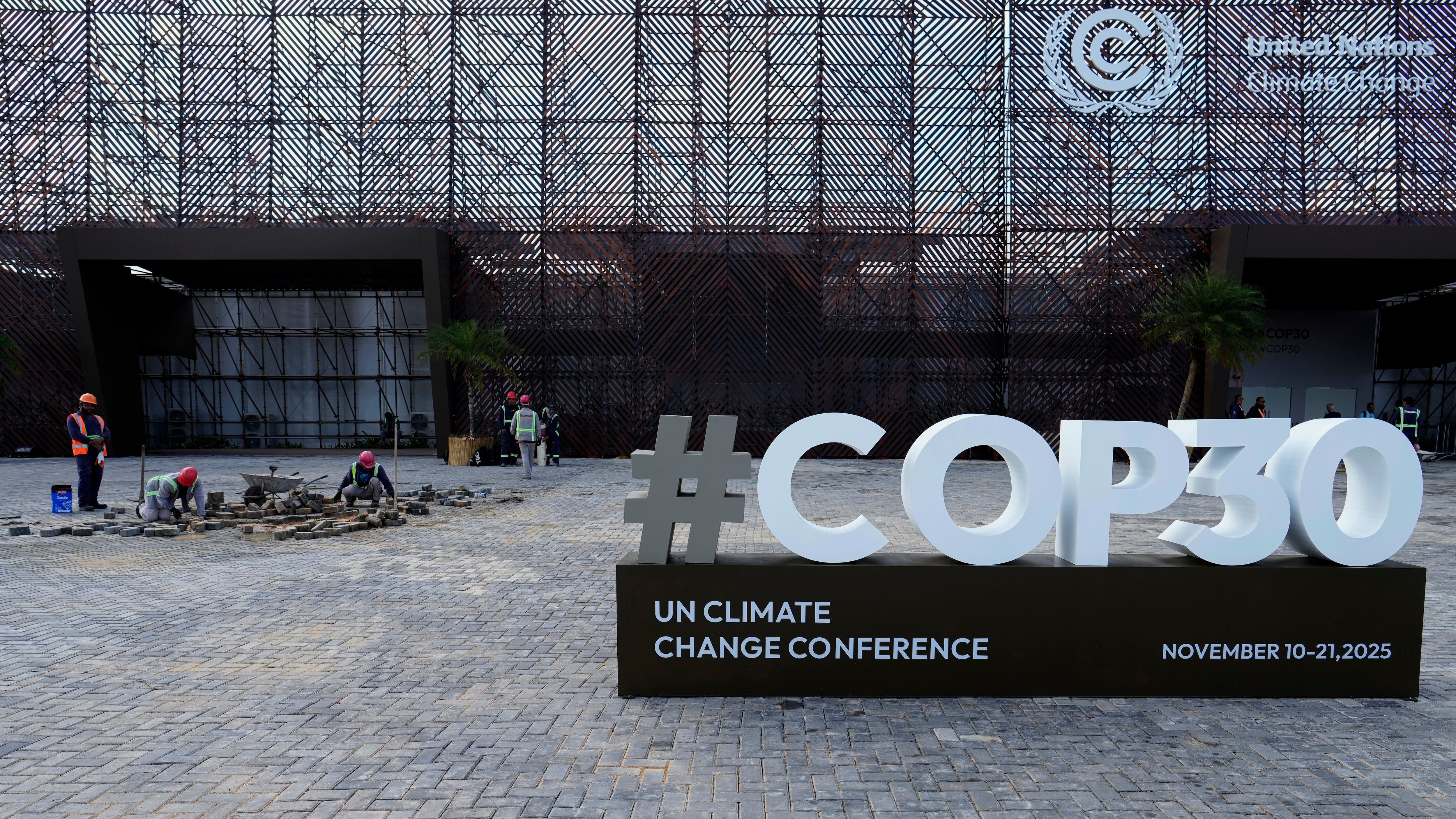
BELÉM, BRAZIL – As world leaders converge on this city at the mouth of the Amazon River for the 30th Conference of the Parties (COP30), the air is thick with a mixture of cautious optimism and profound apprehension. Hailed by its host, Brazilian President Luiz Inácio Lula da Silva, as the “COP of Truth,” this summit is designed to force a global shift from rhetoric to reality, from promises to implementation.
That truth is twofold: while Brazil arrives with tangible success in hand—a dramatic reduction in Amazon deforestation—the conference’s core challenge lies in a financial chasm so vast it threatens to swallow any progress. The central debate is no longer about billions, but trillions, and the success of this landmark summit will be measured by its ability to bridge that gap.
The defining issue for negotiators in Belém is the New Collective Quantified Goal (NCQG) on climate finance, a target meant to arm developing nations with the resources to mitigate emissions and adapt to a warming world. Yet, the official goal feels worlds apart from the recognized need. At COP29 in Baku, developed nations formally committed to providing $300 billion annually by 2035. However, expert analysis and the demands of vulnerable countries place the actual requirement at a staggering $1.3 trillion per year. This creates a $1 trillion annual shortfall—a gap that represents the gulf between survival and catastrophe for many parts of the world.
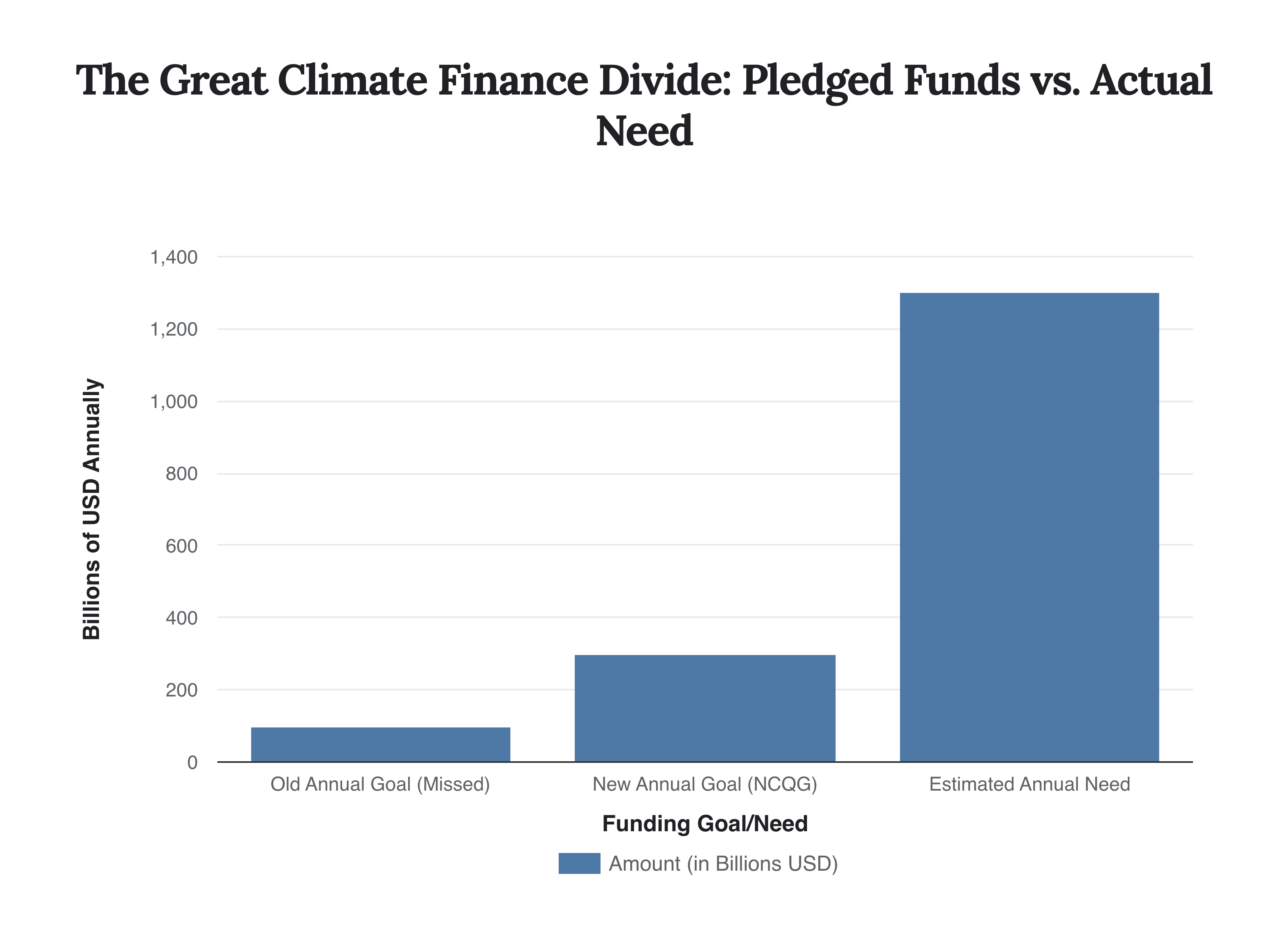
This chart starkly illustrates the disparity between the formal commitments made by developed nations and the true scale of the financial resources required for meaningful climate action in developing countries. The “Baku to Belém Roadmap” is a desperate attempt to map a path across this chasm, aiming to mobilize private finance and reform global financial institutions to unlock the necessary capital.
“If we fail to move beyond speeches into real action, our societies will lose faith – not only in the COPs, but in multilateralism and international politics more broadly. That is why I have summoned leaders to the Amazon: to make this the ‘Cop of truth’.”
- Luiz Inácio Lula da Silva, President of Brazil
Against this daunting global backdrop, Brazil offers a powerful, if localized, proof of concept. The decision to host COP30 in the heart of the Amazon was a deliberate statement, and the host nation has the data to back it up. Recent figures from Brazil’s National Institute for Space Research (INPE) show that deforestation in the Amazon fell by 11% in the year leading up to July 2025, reaching 5,796 square kilometers—the lowest level in 11 years. This marks a significant reversal of the rising deforestation rates seen under the previous administration and demonstrates that concerted government policy can yield rapid results.
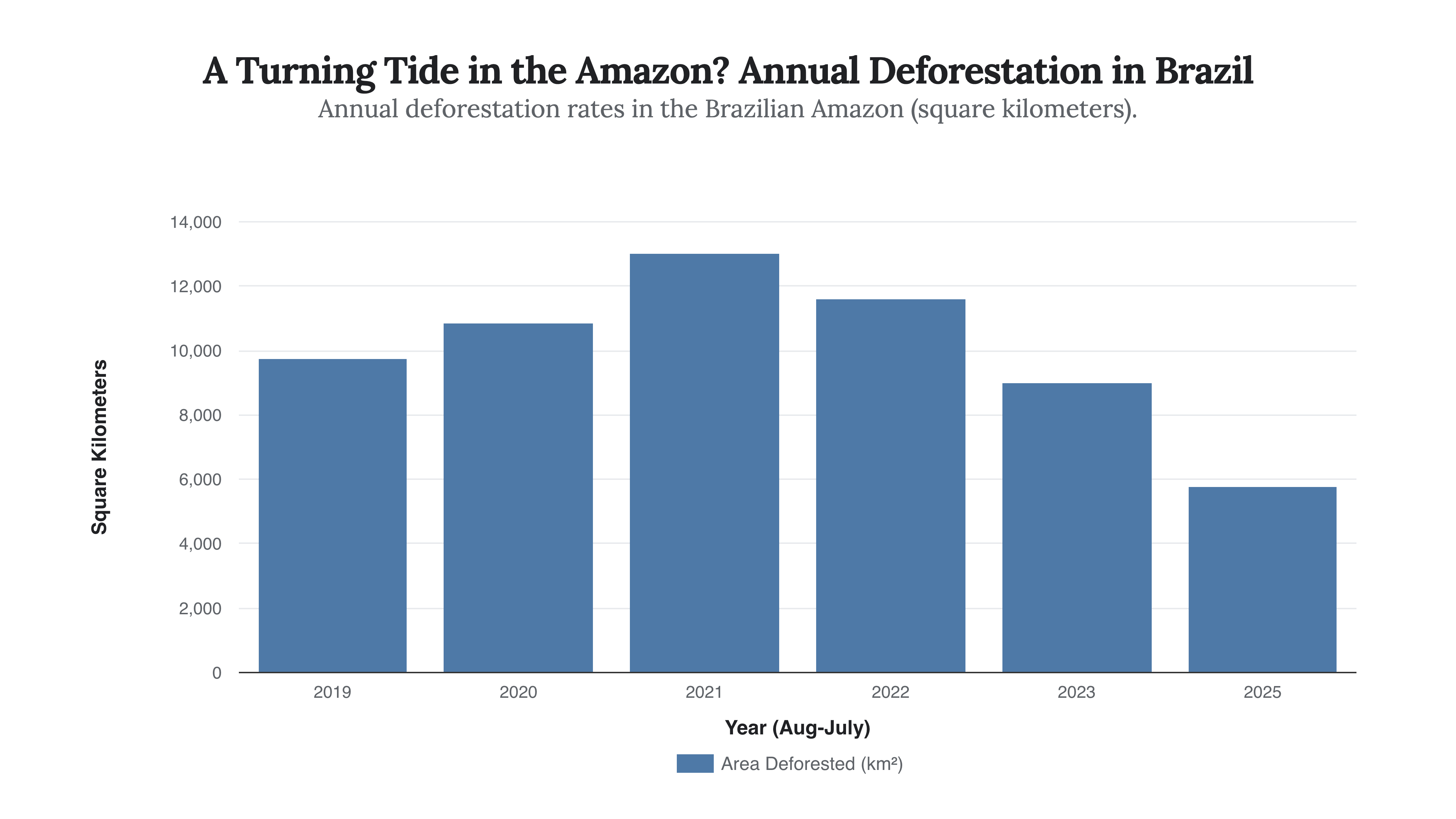
The dramatic decline since 2023 underscores the impact of President Lula da Silva’s renewed environmental enforcement and conservation policies. This success is the foundation for a key Brazilian initiative at COP30: the proposed $125 billion “Tropical Forest Forever Facility,” a fund designed to pay nations for the service of keeping their forests intact.
“What we are facing today is the bill for 30 years of inaction.”
- André Guimarães, Special Envoy for Civil Society, COP30
Herein lies the central tension of Belém. The host nation is showcasing a model for success—demonstrating that with political will, the destruction of vital ecosystems can be slowed and reversed. Yet this progress is dwarfed by the scale of the global challenge, a challenge that cannot be met without unprecedented financial mobilization. The world knows what is required, and Brazil is providing a real-world example of effective action. The question now is whether the wealthiest nations will finally pay their share of the bill.
The legacy of COP30 will be determined not by speeches delivered in the Amazonian humidity, but by the tangible financial commitments made to protect the planet. It is a moment of truth, where the world must decide if it will invest in a sustainable future or be consumed by the cost of inaction. The gap between $300 billion and $1.3 trillion is not just a number; it is the difference between a livable planet and a world of escalating climate chaos.