



The data profile of the global workforce has shifted. We are no longer observing a simple “Attention Economy,” where platforms compete for neutral minutes of eyeballs. That model effectively collapsed in late 2024. What has replaced it, confirmed by the Q1 2026 data emerging from the Economic Survey 2025-26 and bio-metric meta-analyses, is a Stress-Response Economy.
In this new paradigm, the primary commodity is not your attention, but your physiological arousal—specifically, the extraction of cortisol and the triggering of the Hypothalamic-Pituitary-Adrenal (HPA) axis. The platforms have pivoted from engagement to provocation. This is not a metaphor; it is a measurable biological arbitrage.
Oxford University Press named “Rage Bait” the Word of the Year for 2025. This was not a cultural quirk; it was an acknowledgment of the dominant algorithmic incentive structure. As of February 2026, the average global internet user is now clocking 4 hours and 47 minutes on internet-connected screens daily, with Gen Z cohorts (ages 16-24) pushing a catastrophic 9.1 hours of total screen engagement per day. We are witnessing the industrial-scale liquidation of human cognitive capacity, sold off in exchange for ad impressions that require increasingly higher doses of shock to register.
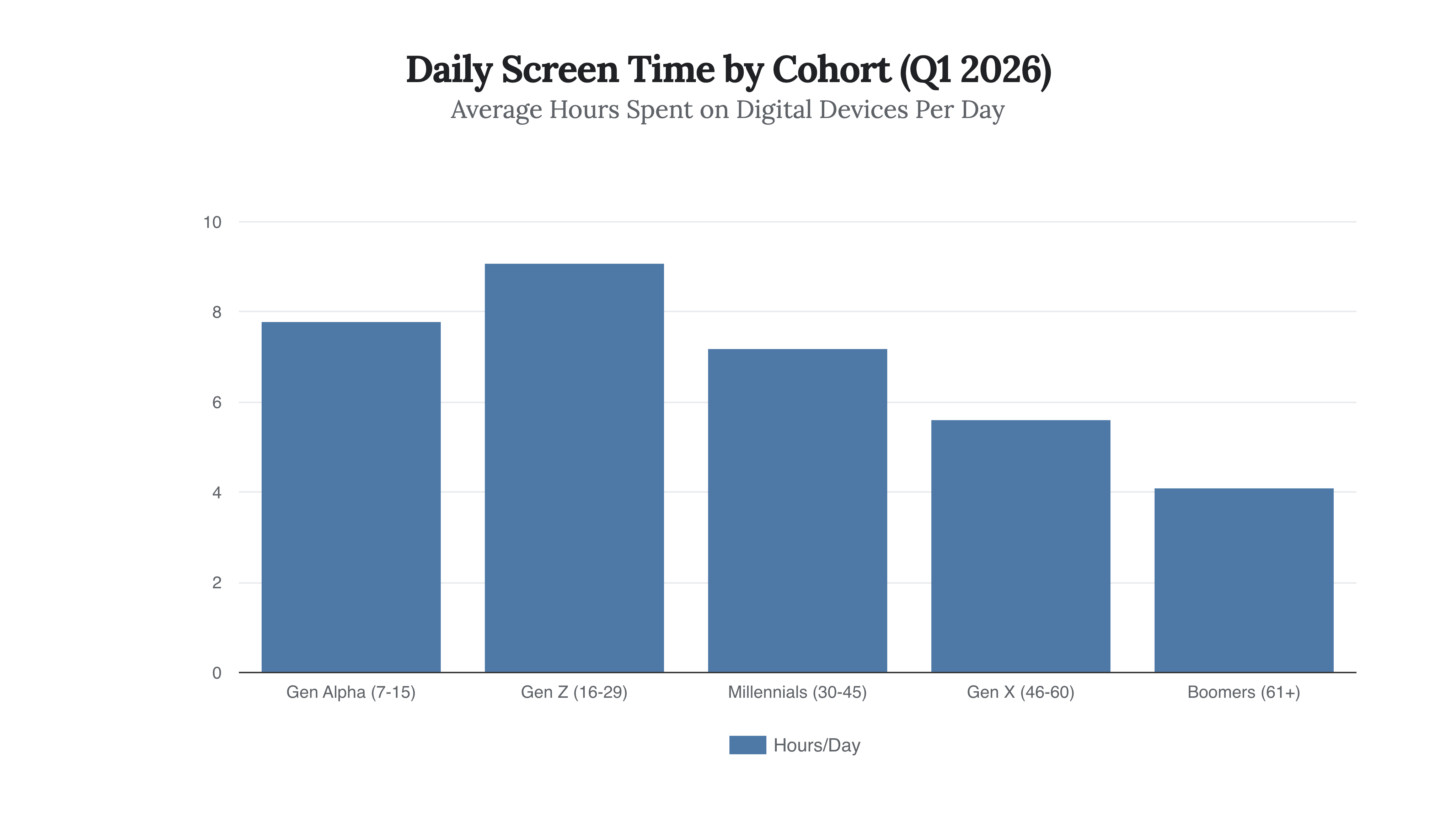
This dossier analyzes the latest intelligence on the “Doomscrolling” phenomenon as of early 2026, breaking down the physiological costs, the economic drag, and the generational fracture that is now visible in the data. The bottom line is stark: We have effectively transitioned from an information society to a hyper-arousal society, where the biological cost of participation is the slow degradation of the user’s nervous system.
I. THE PHYSIOLOGY OF EXTRACTION: THE CORTISOL FEEDBACK LOOP
To understand the 2026 landscape, one must look at the biometric data. In late 2025, a landmark study utilizing real-time wearable telemetry on heavy social media users confirmed what neuroscientists had long suspected: doomscrolling is not a passive activity. It is a series of micro-traumas.
The mechanism is “Intermittent Variable Threat.” The algorithm operates like a slot machine, but instead of dispensing coins, it dispenses threat signals interspersed with dopamine hits. This inconsistency forces the brain into a state of hypervigilance. The user checks their phone not to see what is new, but to scan for danger. The average user in 2026 checks their phone 144 times per day. That is one check every 6.6 minutes of waking life.
Every check initiates a micro-spike in cortisol. When a user encounters “rage bait”—content specifically engineered to trigger moral outrage or fear—the amygdala overrides the prefrontal cortex. The body prepares for a fight that never comes. This unspent energy manifests as chronic inflammation, anxiety, and the “hyperarousal model of insomnia” detailed in the January 2026 clinical reviews.
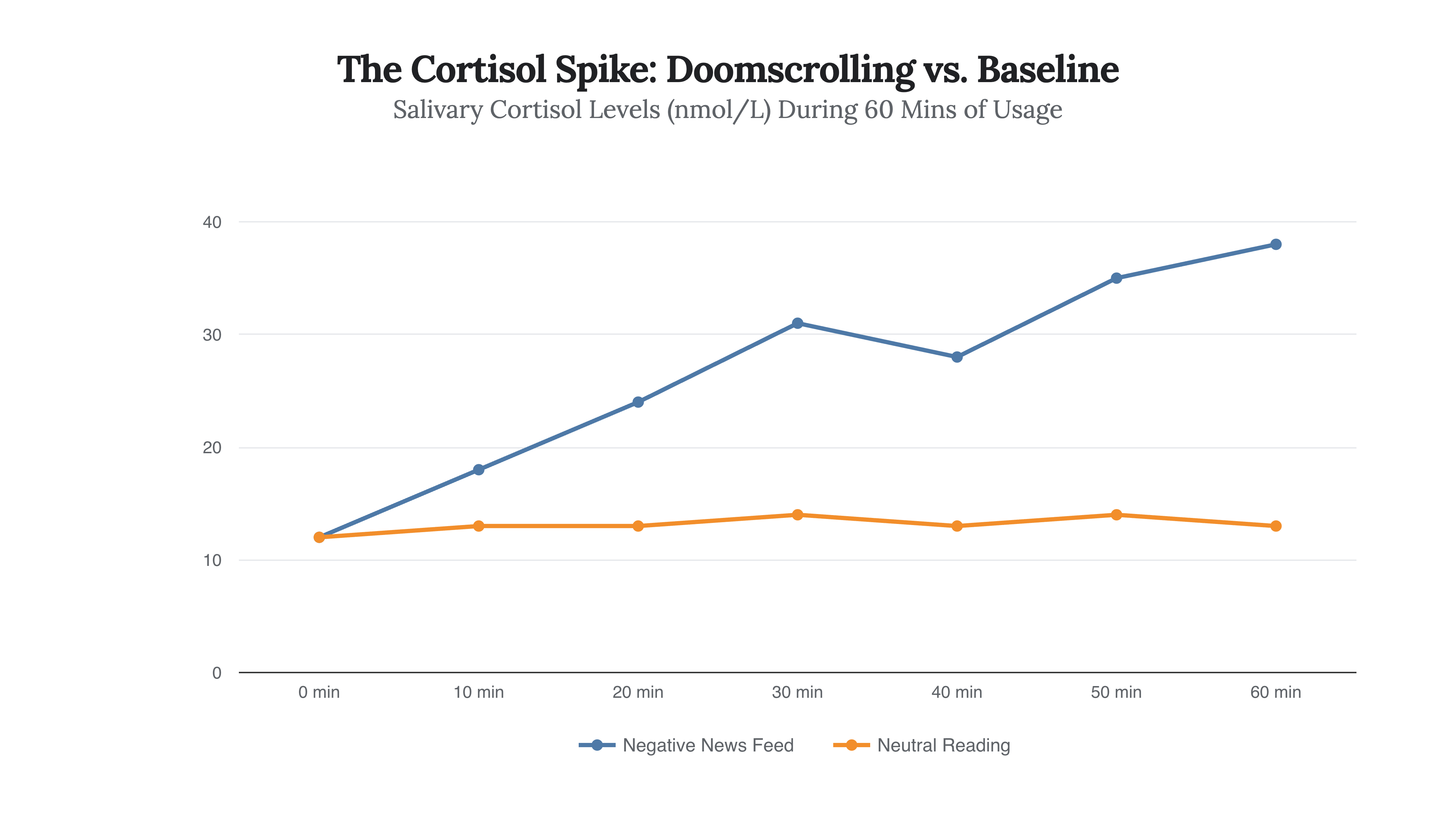
The “vicarious trauma” noted in the July 2025 Flinders University study has now calcified into a population-level baseline. Users are experiencing the neurochemical aftermath of witnessing global collapse—war, climate disaster, societal fragmentation—without the agency to act on it. This creates a “Learned Helplessness” loop. The brain, flooded with stress hormones but paralyzed by the medium, seeks more information to resolve the uncertainty, driving the user deeper into the scroll.
This is the definition of the Cortisol Extraction Engine: The platform creates the anxiety that only the platform can (temporarily) soothe, charging the user’s mental health for the privilege.
II. THE ALGORITHMIC PIVOT: RAGE AS THE NEW OIL
Why has the content become so aggressive in 2025 and 2026? Because the “neutral” engagement metrics plateaued. To maintain growth, algorithms had to tap into stronger biological drivers. Anger is the most viral emotion available to the human spectrum.
Data from late 2025 indicates that falsehoods and rage-inducing content travel 70% faster than factual or positive content. But the 2026 nuance is the “Rage Seeding” phenomenon. Content farms are no longer just posting fake news; they are posting deliberately flawed interpretations of reality designed to force users into the comments section to “correct” the record.
Engagement-based algorithms treat a 500-word comment arguing against a post as a “Super-Like.” They do not distinguish between approval and disgust; they only measure caloric investment. Therefore, the most efficient way to grow an account in 2026 is to be egregiously, offensively wrong in a way that targets a specific tribe’s identity.
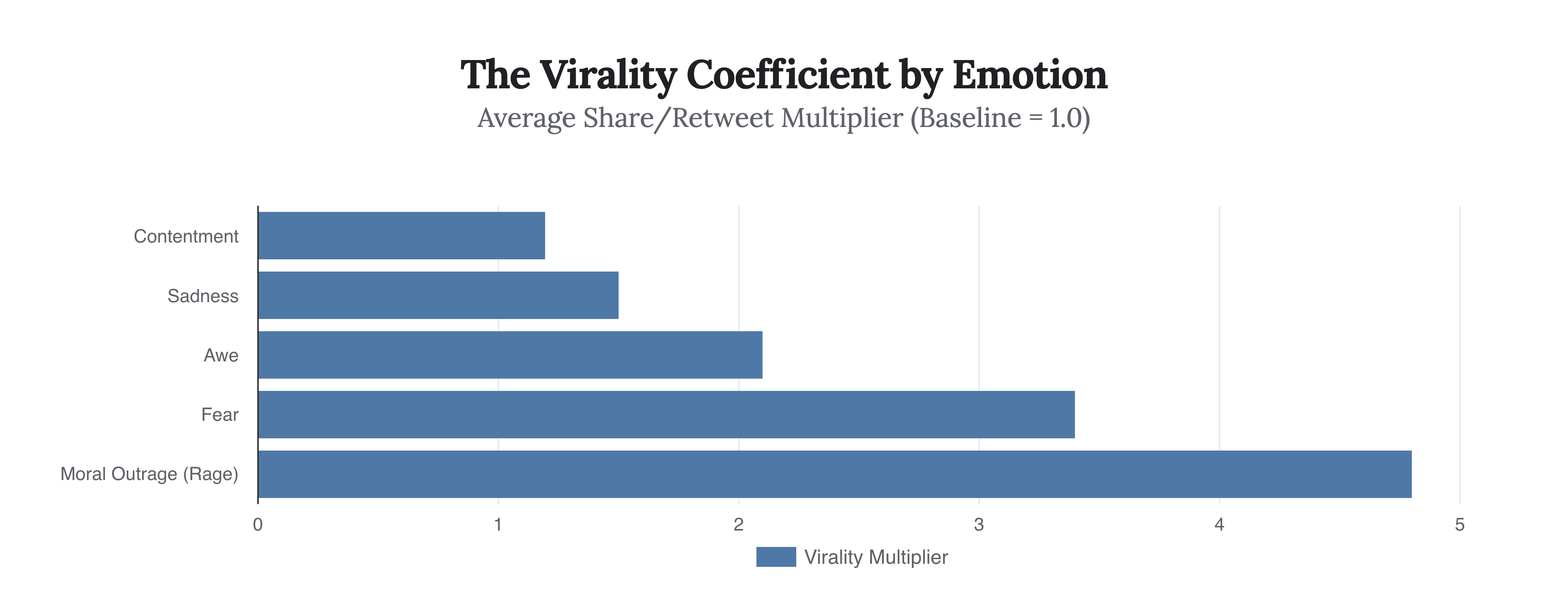
This “Rage Bait” economy has shattered the concept of a shared reality. By January 2026, we observe that users are not just polarized; they are inhabiting completely different threat landscapes. One cohort’s timeline is a documentary of economic collapse; another’s is a feed of cultural erasure. The only commonality is the cortisol spike.
Unlock deeper strategic alpha with a 10% discount on the annual plan.
Support the data-driven foresight required to navigate an era of radical uncertainty and join a community of institutional-grade analysts committed to the truth.
