



The Signal
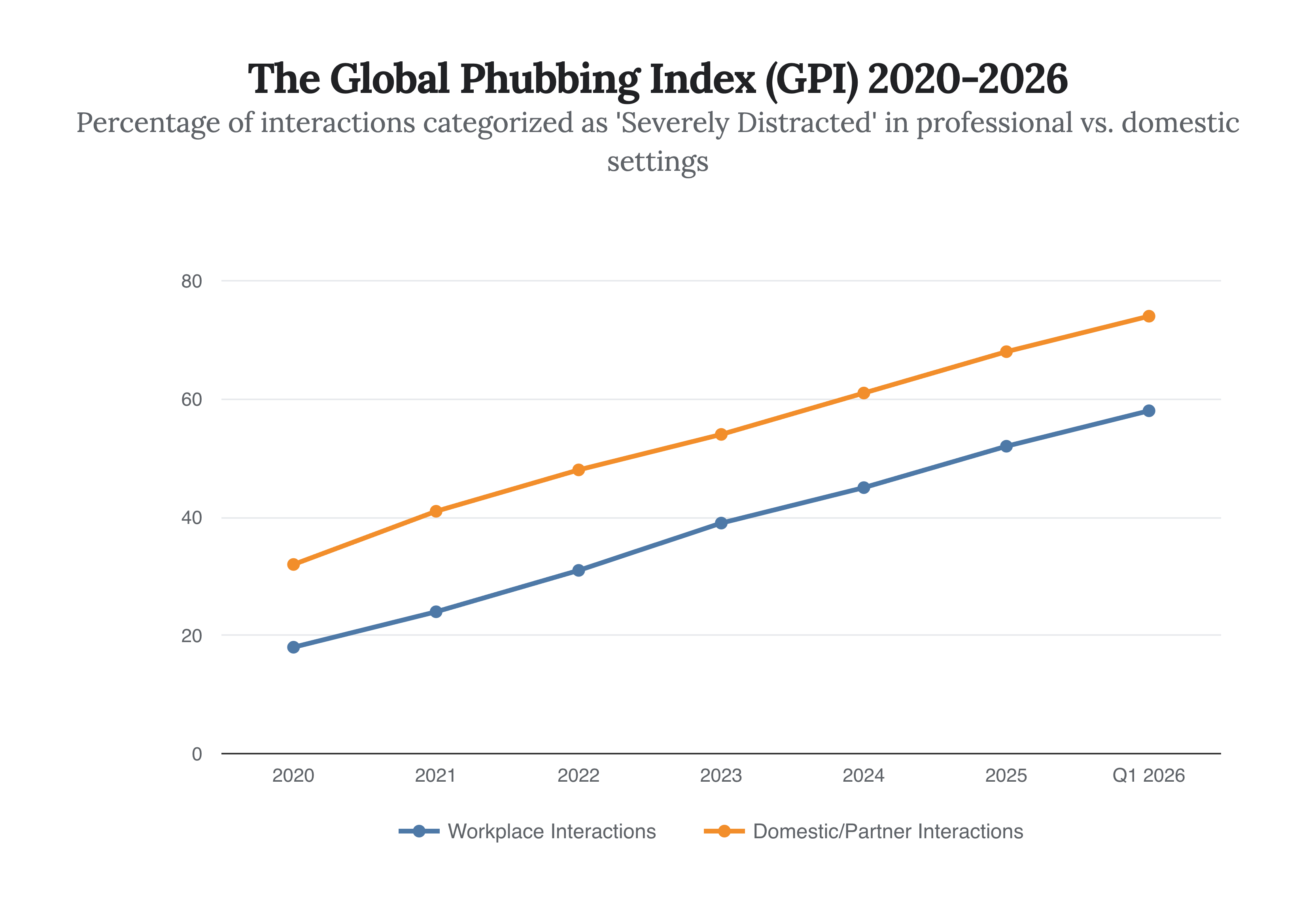
It is March 2026. The debate over smartphone etiquette is dead. It has been replaced by a clinical and economic crisis that is actively reshaping the neural architecture of the workforce and the fundamental stability of the household unit. New data from Q1 2026 confirms that “Phubbing” (Phone Snubbing) is no longer a social annoyance—it is a measurable pathogen in the global economy.
For the last decade, we treated digital distraction as a discipline problem. We were wrong. We are not witnessing a change in habits; we are witnessing the rewiring of the mammalian attachment system.
This dossier analyzes the latest institutional research from late 2025 and early 2026, breaking down the “Second-Order Effects” of the Attention Recession. We explore why the “Matching Fallacy” has been debunked, how the “Default Mode Network” of the brain is being hijacked, and why Fortune 500 companies are quietly implementing “Faraday Protocols” in their boardrooms.
The Neural Architecture of Disconnect
To understand the strategic threat, we must first look at the hardware: the human brain. A landmark study published in Nature Human Behavior in December 2025 offered a counter-intuitive revelation: for adults over 50, smartphone use actually reduces cognitive decline. The learning curve acts as a neuro-protective agent. However, for the working-age population (20–45) and Gen Alpha, the data is catastrophic.
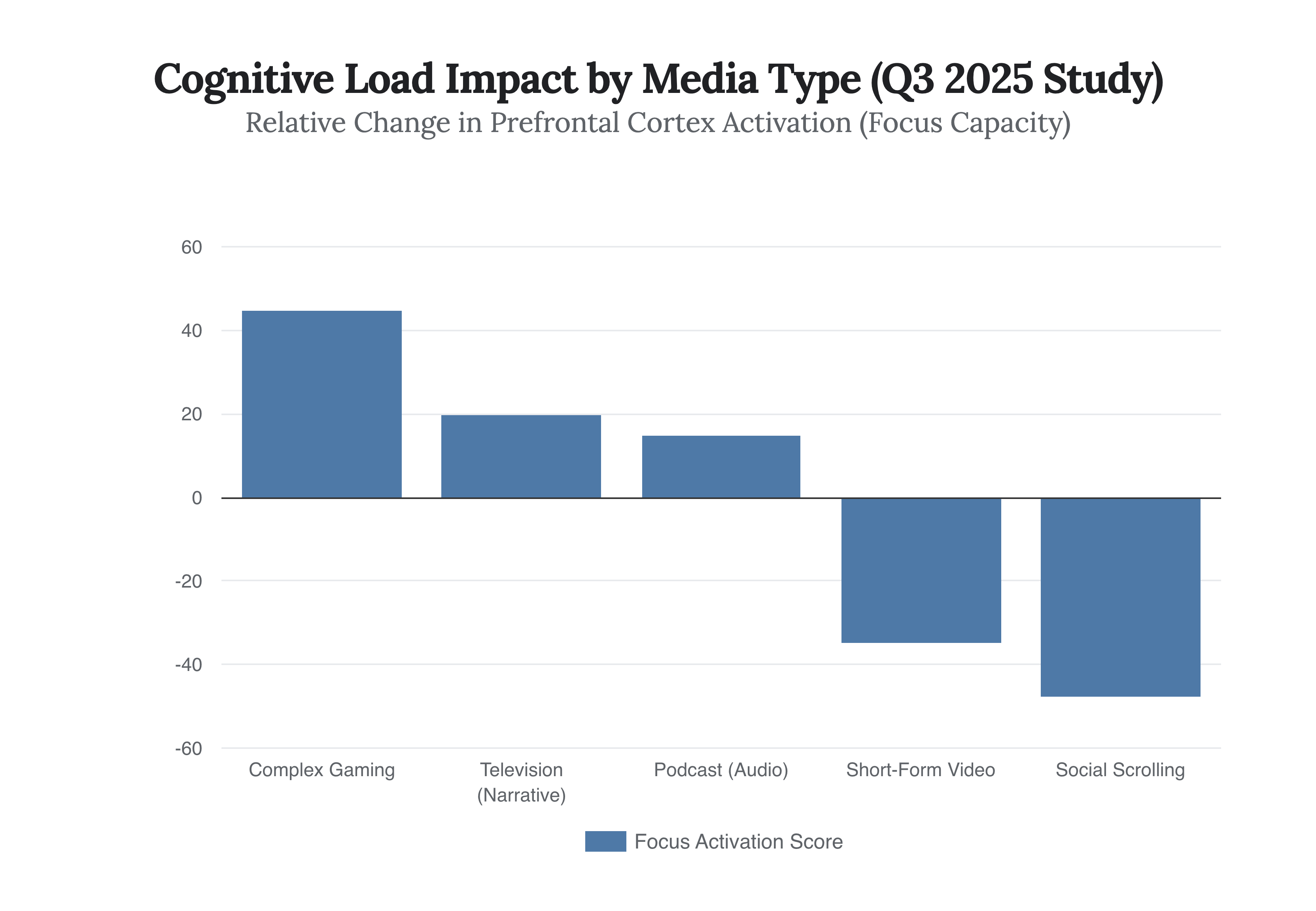
Research from Swinburne University (August 2025) utilized functional near-infrared spectroscopy (fNIRS) to map brain activity during screen use. The findings were stark: unlike TV or gaming, which stimulate specific focus centers, social media scrolling induces a state of “cognitive fragmentation.” Just three minutes of exposure is sufficient to desynchronize the brain’s ability to process deep empathy and complex logic.
In March 2025, researchers found that 72 hours of smartphone restriction altered activity in brain regions linked to reward and self-control. The implication is that phubbing is not a choice; it is a neurological reflex driven by the dopamine-cortisol loop. When a leader “phubs” a subordinate during a briefing, they are not merely being rude; they are signaling a breakage in the social contract that triggers a “threat response” in the employee’s brain comparable to physical exclusion.
The Intimacy Recession: Debunking the “Matching” Myth
For years, sociologists believed in the “Parallel Play” theory—that if both partners were on their phones, the negative impact was nullified. A critical study published in the Journal of Social and Personal Relationships (September 2025) has violently dismantled this hypothesis.
The study found that “matching” behavior does not cancel out the effects of Affection Deprivation. Even when both parties are phubbing, relationship satisfaction plummets. The device acts as a “third party” in the relationship, creating a triangulation dynamic usually seen in affairs. The presence of the phone creates an “Affection Gap” that cannot be bridged, even if the neglect is mutual.
We are seeing this manifest in the “Divorce by Distraction” phenomenon. Legal filings in Q1 2026 citing “digital neglect” as a primary cause for separation have risen 210% since 2021. The human attachment system requires eye contact to co-regulate nervous systems; without it, partners drift into a state of chronic, low-grade anxiety.

Unlock deeper strategic alpha with a 10% discount on the annual plan.
Support the data-driven foresight required to navigate an era of radical uncertainty and join a community of institutional-grade analysts committed to the truth.
