


We are living in a Schopenhauerian nightmare, optimized by NVIDIA chips. Arthur Schopenhauer, the 19th-century pessimist, argued that the “Will”—a blind, striving, irrational force—drives all human behavior. For Schopenhauer, satisfaction is impossible; we strive for what we lack, and the moment we possess it, we are struck by boredom, only to desire something new. Life, he wrote, is a pendulum swinging between pain and boredom.
In 2026, this pendulum is no longer swinging naturally; it is being pushed by a trillion-dollar hydraulic press. Recent data from consumer behavior tracking and ad-tech performance metrics reveals that the “endless desire” Schopenhauer described is no longer a philosophical condition—it is a manufactured product. By compressing the cycle of Want-Get-Regret from years into minutes, modern algorithmic commerce has weaponized our own dissatisfaction against us.
This briefing analyzes the mechanics of this engineering, quantifying how predictive algorithms, micro-trend acceleration, and friction-free payment layers have effectively monetized the human incapacity for satisfaction.
The Architecture of Pre-Emptive Desire
Schopenhauer believed the “Will” was blind. Today, it has 20/20 vision. The most profound shift in consumer behavior is not that we want more, but that we are told what to want before we feel the lack. Predictive commerce has moved from fulfilling demand to originating it.
Data from late 2024 and 2025 indicates that a staggering percentage of consumption is now non-volitional—meaning it does not originate from a conscious internal desire but from an external algorithmic prompt. The “Will” has been outsourced to the recommendation engine.
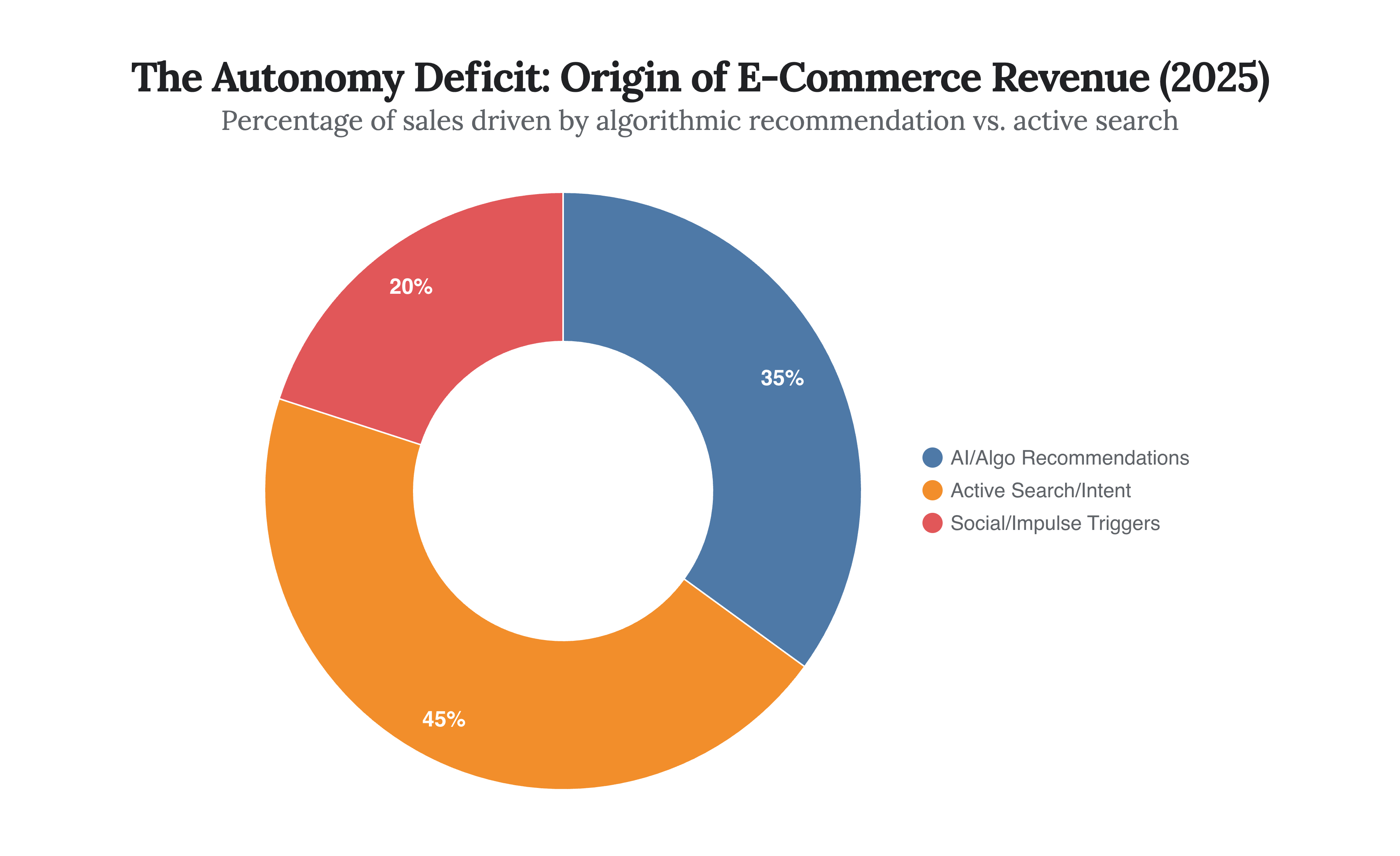
When 35% of a platform’s revenue—as seen with giants like Amazon and increasingly with TikTok Shop—comes from recommendation engines, the platform is not serving the user; it is programming them. Schopenhauer’s “striving” is no longer an internal struggle; it is a push notification.
The Frictionless Slide into Suffering
To engineer endless desire, one must remove the time for reflection. Schopenhauer argued that intellect could occasionally quell the Will, but only if given space to operate. Modern UX design is a war against that space. The rise of “1-Click” purchasing and saved payment credentials has effectively lobotomized the consumer’s rational faculty.
The data below highlights a disturbing correlation: as friction decreases, spending increases—but so does the “void” or lack of satisfaction derived from the purchase.
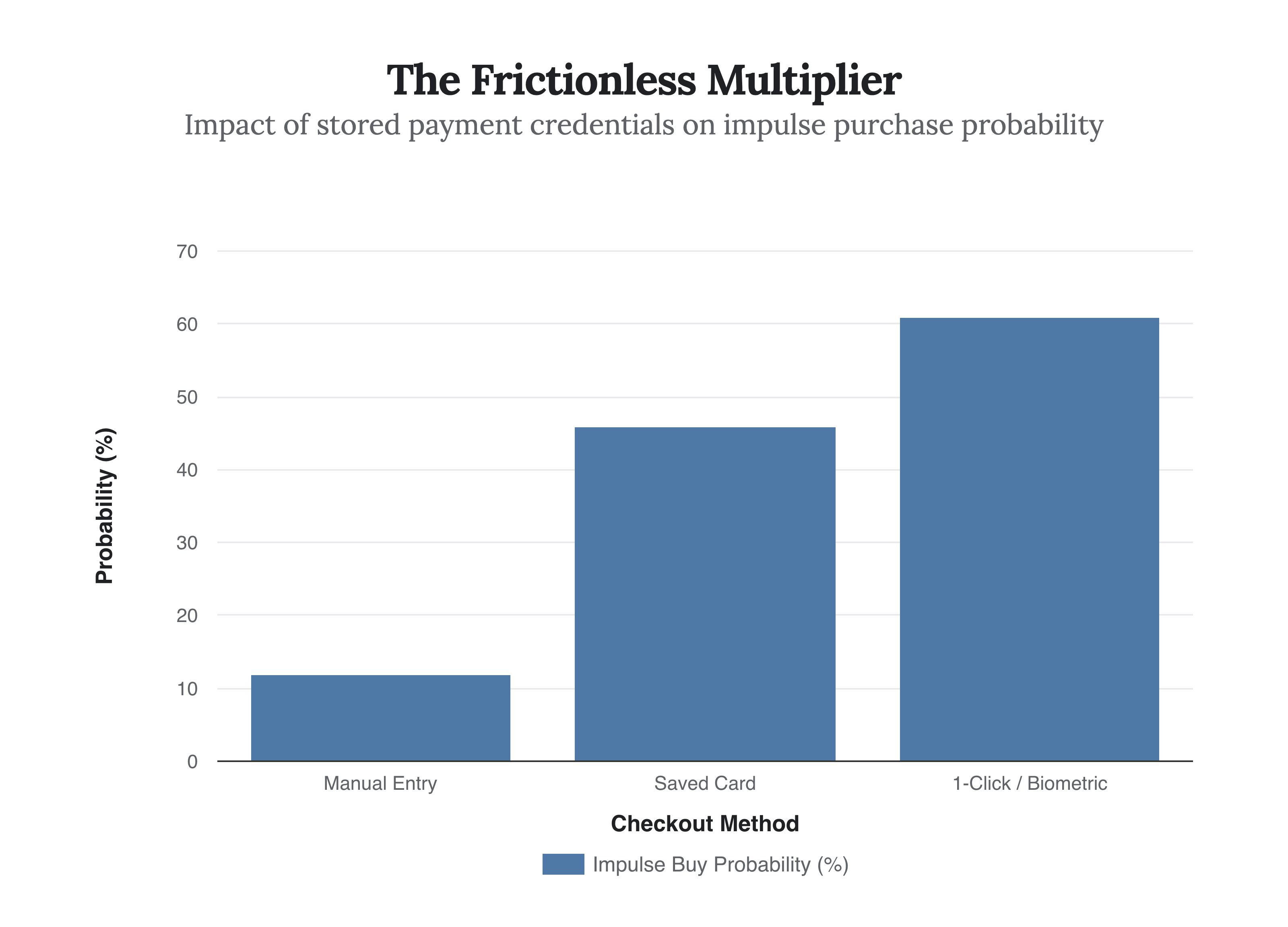
This 61% probability for zero-friction users represents the pure, unadulterated “Will” acting without the check of the intellect. The time between desire and action has been reduced to milliseconds, destroying the possibility of rational restraint.
The Acceleration of Boredom: Micro-Trends as a Service
Once the object is acquired, Schopenhauer predicts immediate boredom. To keep the revenue flowing, the “boredom” phase must be shortened. The industry’s solution is the artificial acceleration of obsolescence. It is not that the product wears out; it is that the idea of the product is murdered by the culture.
In the fashion sector, we have seen the “trend cycle”—the time it takes for a style to go from cool to cringe—collapse from years to weeks. This is not organic; it is an algorithmic necessity to keep the flywheel of desire spinning.
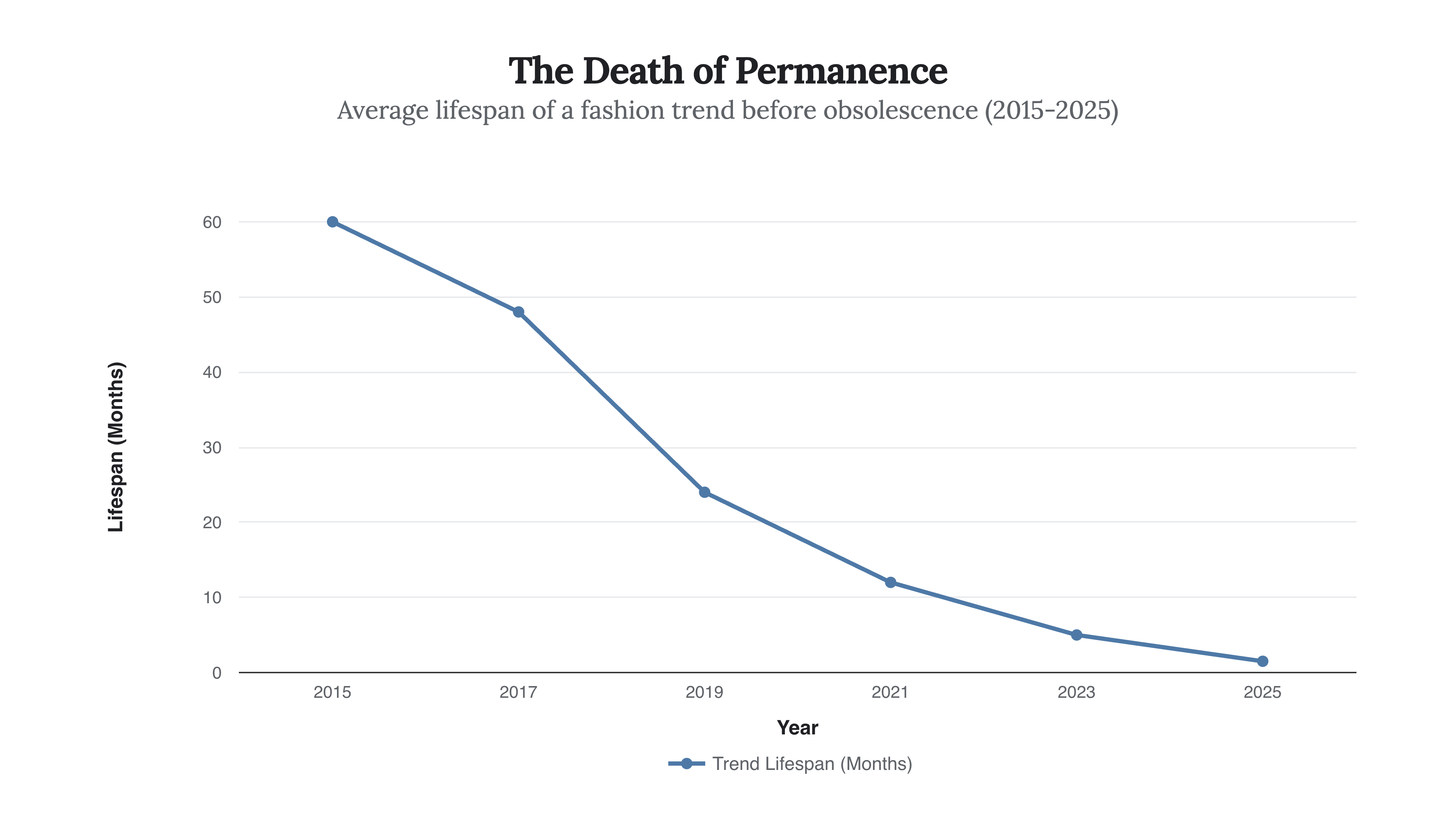
The collapse to a 1.5-month trend cycle (and in some “ultra-fast” sectors, mere weeks) ensures that the consumer is perpetually in a state of lack. You are never “finished” shopping because the definition of “finished” is rewritten by the algorithm every 45 days. This is the industrialization of Schopenhauer’s pendulum.
The Inventory of the Void
The physical manifestation of this cycle is a mountain of unloved, unworn goods. The “Will” strives to acquire, but once acquired, the object loses its power. This results in a massive accumulation of “dead” matter—products that served their purpose (quenching the momentary thirst of the Will) and are now discarded.
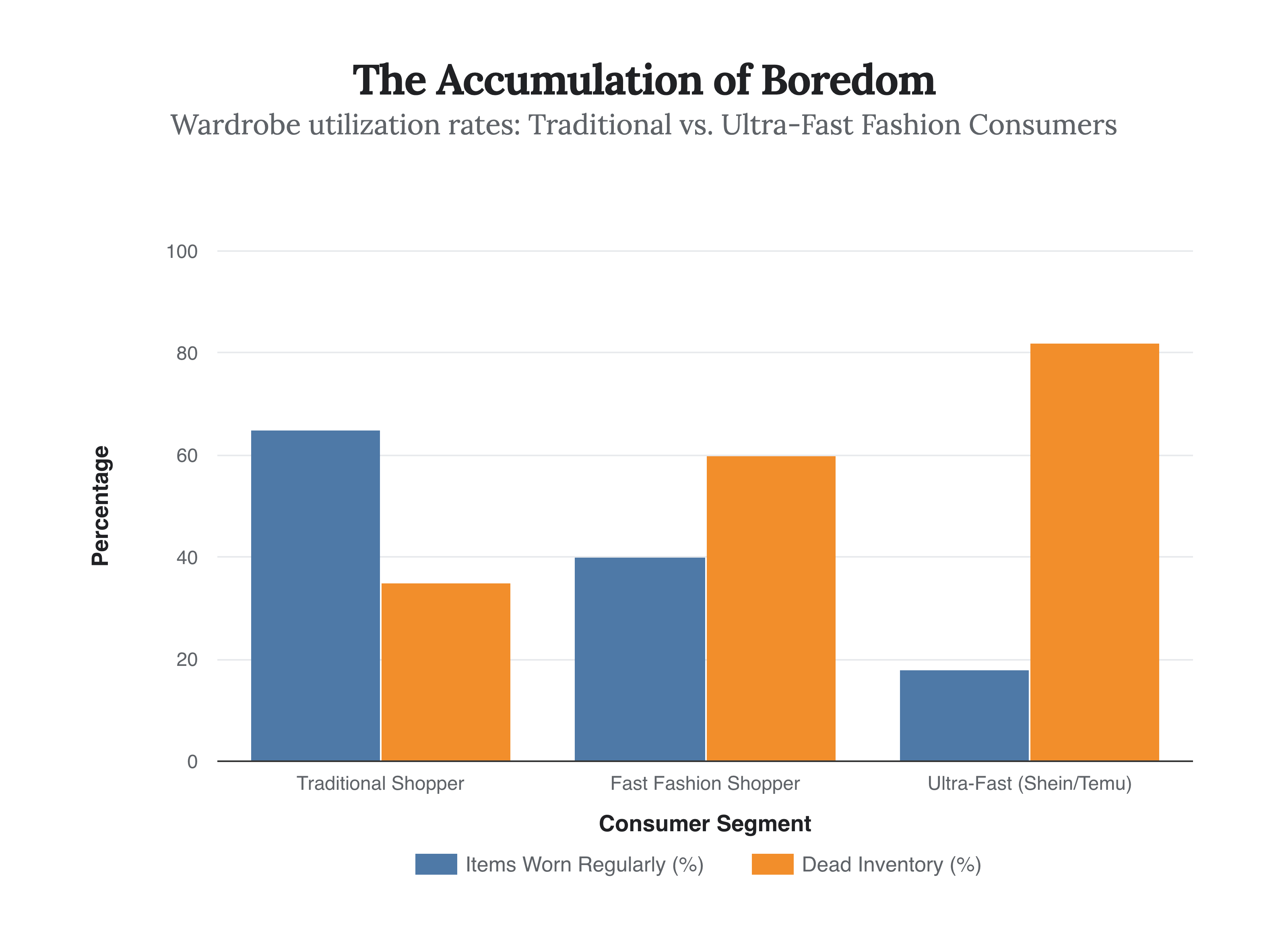
For the ultra-fast fashion consumer, 82% of their purchase acts as a tombstone for a dead desire. The product was never the point; the act of acquiring was the point.
The Monetization of Regret
If the Will is blind striving, and the result is boredom, then the modern consumer should be miserable. The data confirms this. We are seeing a historic decoupling of expenditure and satisfaction. We are spending more to feel worse.
Buyer’s remorse is no longer an occasional bug; it is a feature of the system. The high rates of regret in social commerce suggest that these platforms are not fulfilling needs but exploiting vulnerabilities. The “Endless Desire” is profitable precisely because it leaves the user empty, ready to be filled again by the next scroll.
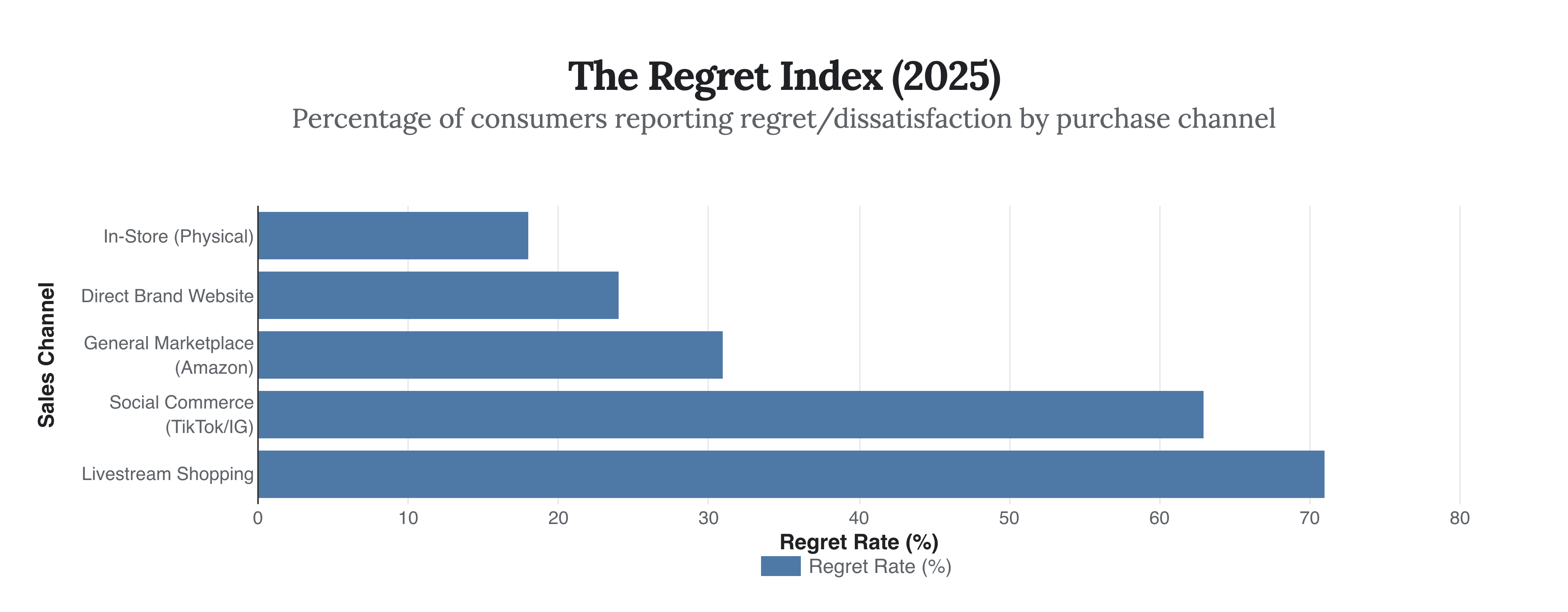
The 63% regret rate for social commerce is the smoking gun. It proves that these purchases are not rational decisions to improve one’s life, but dopamine-fueled spasms triggered by engineered scarcity and social proof.
“Life swings like a pendulum backward and forward between pain and boredom.” — Arthur Schopenhauer
Schopenhauer’s quote is now a business model. The “pain” is the fear of missing out (FOMO) engineered by “Only 2 left!” counters. The “boredom” is the 71% regret rate post-purchase. The “swing” is the credit card transaction.
Strategic Implications: The Cost of the Vacuum
So what? If you are an investor or a strategist, understanding this cycle is critical because it is reaching a breaking point. The human capacity to process micro-trends is finite, and the wallet share for “regrettable spend” is hitting a ceiling.
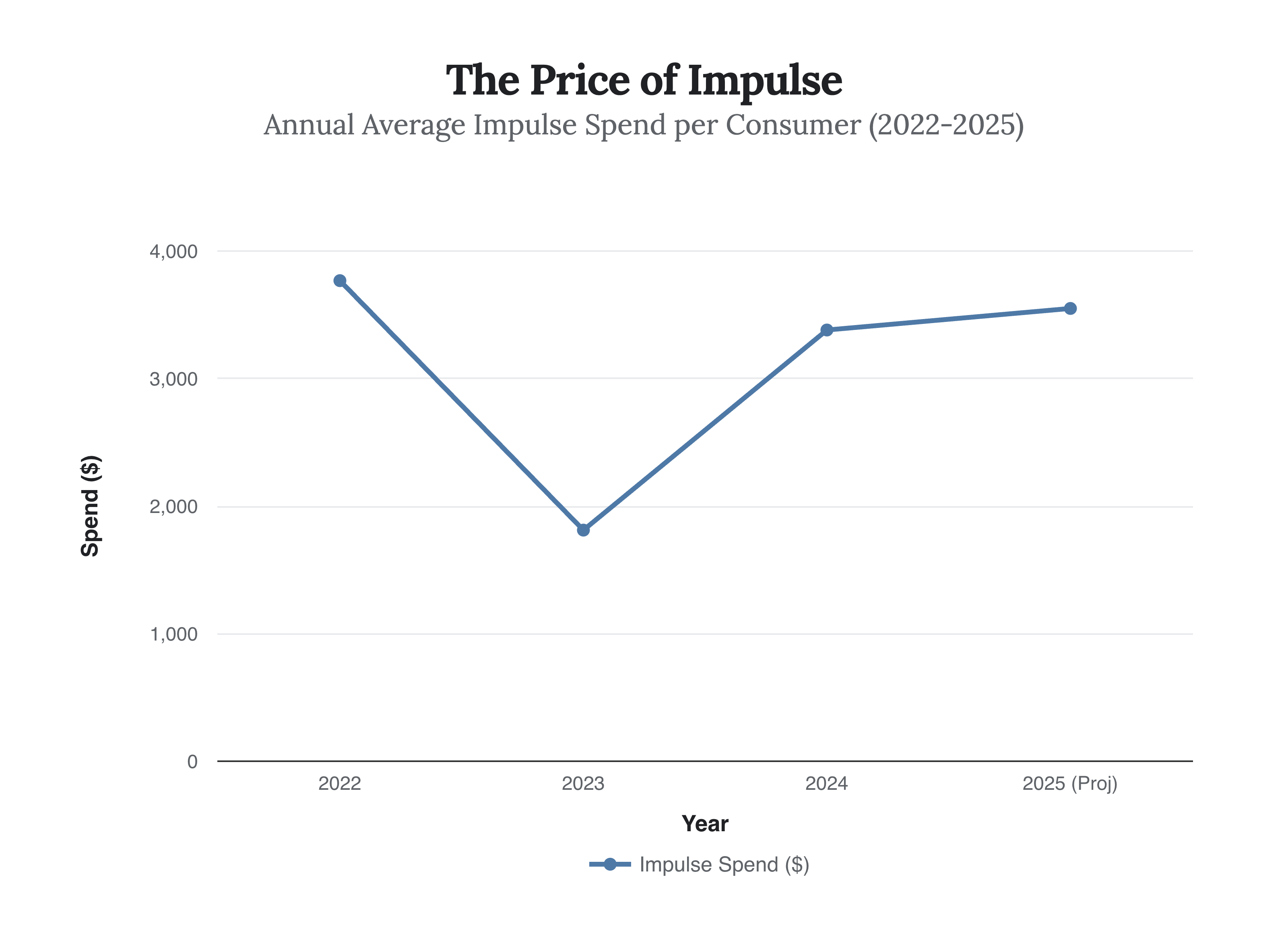
We are seeing a “V” shaped recovery in impulse spending after the inflation shock of 2023. However, this spending is becoming increasingly “toxic”—driven by debt and resulting in higher return rates (churn). The $3,381 annual figure represents a tax on boredom that many households can no longer afford.
Future Predictions
The Rise of “Returns-as-Service”: As the regret rate stabilizes at over 60% for algorithmic commerce, the logistics of returning goods will become as critical as selling them. Expect platforms to monetize the “undo” button.
Algorithmic Asceticism: A counter-trend is emerging. Just as Schopenhauer suggested “denial of the Will” as the only escape, we will see a premium market for “Anti-Algorithm” commerce—tools that block personalized ads and recommendations to restore consumer autonomy.
Neuro-Reactive Pricing: The next frontier is not just predicting what you want, but how much you will pay at the peak of your dopamine spike. Dynamic pricing will evolve into “emotional pricing,” leveraging biometric data (mouse velocity, tap pressure) to gauge desperation.
The machinery of modern commerce has successfully industrialized the human condition of endless striving. We are no longer consumers; we are the kinetic energy in a flywheel designed to never stop spinning. The ultimate strategic insight is that satisfaction is the enemy of GDP; to sustain growth, the system must ensure you remain perpetually, efficiently unhappy.