


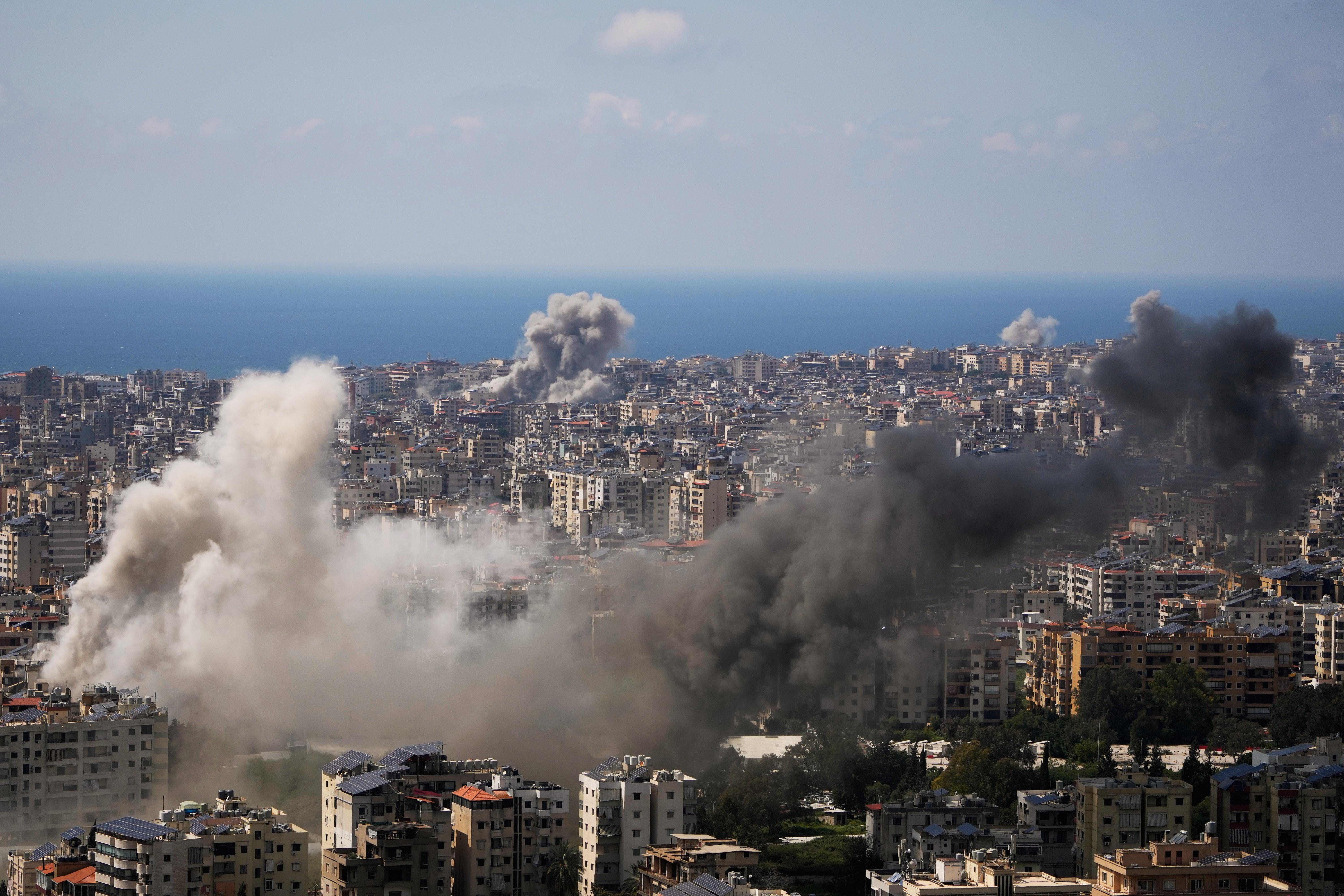
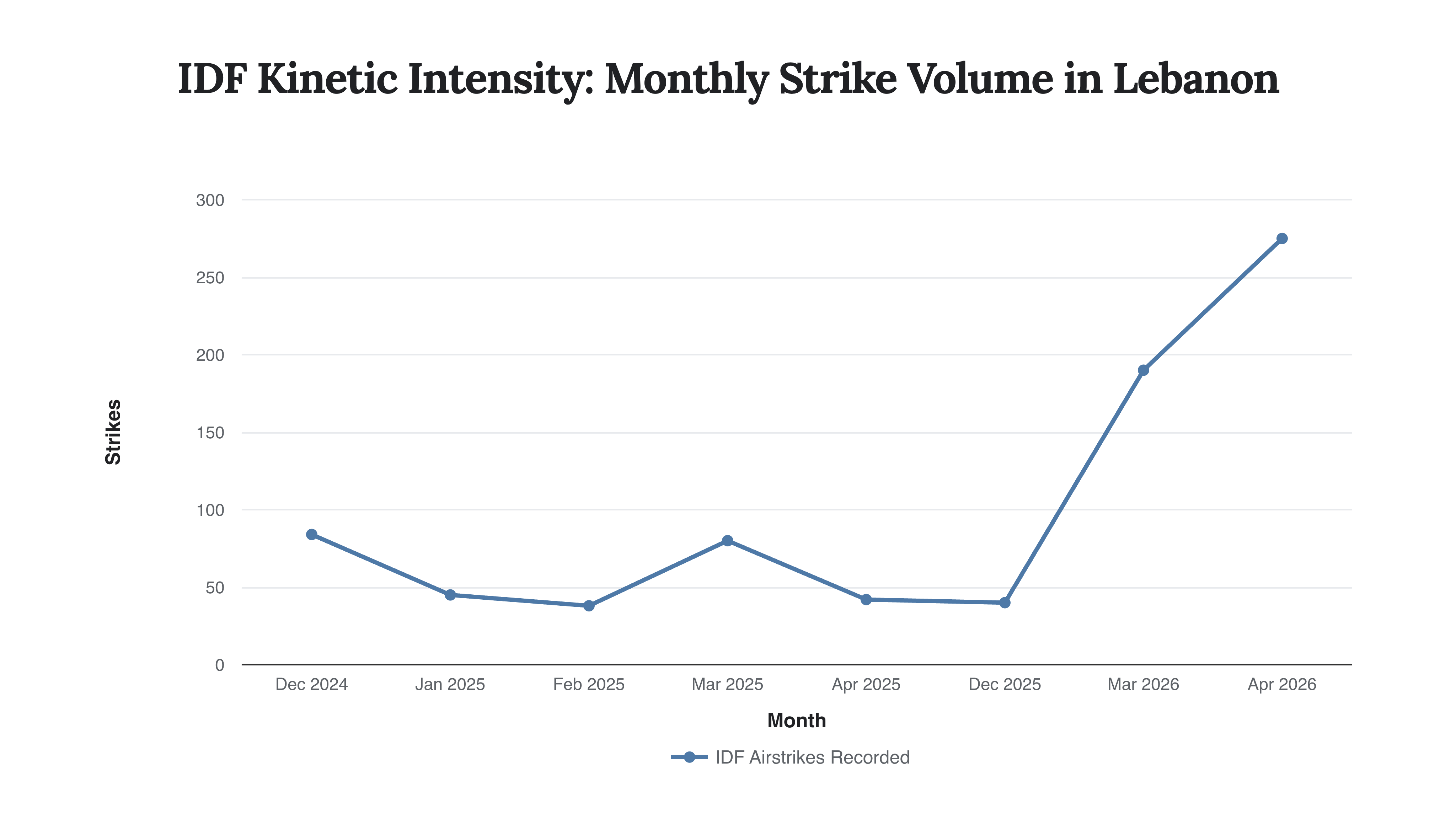
The resumption of hostilities on March 2, 2026, marked the definitive end of the fragile, US-brokered November 2024 ceasefire. Transitioning from defensive posturing and sporadic enforcement strikes, the Israel Defense Forces (IDF) launched a major offensive, pushing deeper into Lebanese territory to establish a permanent security buffer. The intensity of the air campaign peaked in April 2026 during a series of highly coordinated waves of airstrikes, representing the largest offensive maneuvers in Lebanon to date.
These operations saw IDF fighter jets striking hundreds of targets across southern Lebanon, Beirut’s southern suburbs, and the Beqaa Valley. Structurally, the campaign aims to dismantle Hezbollah’s regional assets systematically. Israel’s ultimate strategic objective is no longer containment or deterrence, but the absolute physical erasure of Hezbollah’s infrastructure south of the Litani River. This spatial restructuring seeks to enforce UN Security Council Resolution 1701 through unilateral kinetic action rather than relying on international diplomatic mechanisms.
Unlock deeper strategic alpha with a 10% discount on the annual plan.
Support the data-driven foresight required to navigate an era of radical uncertainty and join a community of institutional-grade analysts committed to the truth.

Tactical Decapitation and Infrastructure Demolition
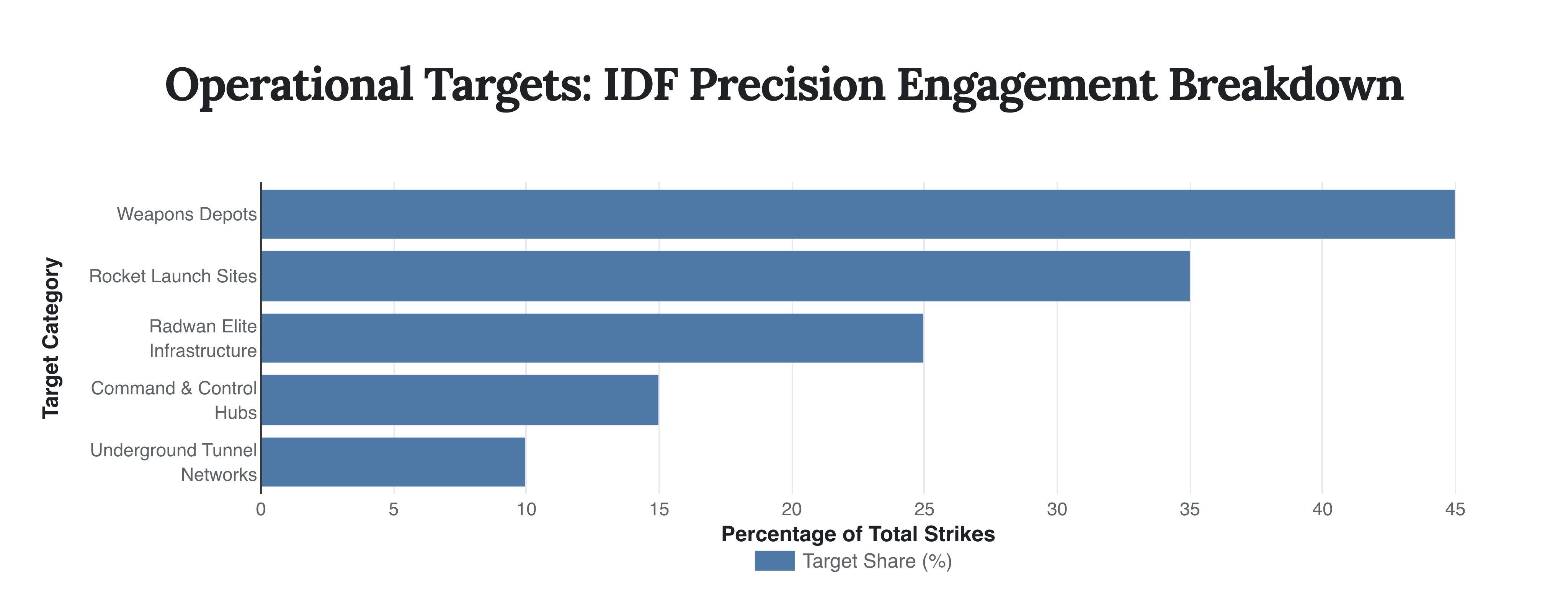
At the tactical level, the IDF’s focus has transitioned to the absolute neutralization of Hezbollah’s elite Radwan Unit and the systematic destruction of its deeply fortified logistics network. Key operations in April 2026 succeeded in eliminating over 130 Hezbollah combatants and dismantling an expansive subterranean network of tunnels designed for offensive border infiltrations. These precision operations target crucial supply nodes, severing military transfer routes from Syria and neutralizing tactical command sites. The depletion of Hezbollah’s medium-range missile stock is key to Israel’s plan of mitigating northern threats. By systematically targeting Radwan Unit command structures, the IDF is effectively stripping Hezbollah of its offensive capability to launch any future ground incursions. As a result, the militant group has been forced to shift its defensive postures further north, leaving its southern strongholds vulnerable to systematic demolition.
The Geopolitical Fallout and the Myth of Containment
The geopolitical repercussions of the 2026 Lebanon War highlight a profound shift in regional power dynamics. While Lebanese state officials condemn the strikes as a severe breach of national sovereignty, the Israeli government remains steadfast, prioritizing the secure, permanent return of over 60,000 displaced northern residents. The escalation has exposed the structural failure of prior diplomatic efforts, proving that the 2024 ceasefire only allowed Hezbollah to regenerate its forces out of reach of international monitors. The collapse of the 2024 truce proves that diplomatic frameworks are merely temporary intermissions in an existential conflict that can only be resolved through absolute military dominance. The ongoing campaign is a stark testament to Israel’s transition toward an attrition-to-annihilation doctrine, signaling that containment is dead.