



In a move that resets the competitive landscape of artificial intelligence, Google today, November 18, 2025, unveiled Gemini 3, its most advanced and capable model to date. The launch, spearheaded by the release of Gemini 3 Pro, is not merely an incremental upgrade but a strategically significant broadside against competitors, backed by a suite of benchmark scores that firmly place it at the apex of the AI hierarchy.
With a record-breaking score of 1501 on the influential LMArena leaderboard, Google has signaled a definitive end to any narrative of it lagging in the AI race. This intelligence briefing deconstructs the technological leaps underpinning Gemini 3’s performance, analyzes the strategic shift towards ‘agentic’ AI, and provides a forward-looking assessment of its implications for enterprise, development, and the future of human-computer interaction. The core thesis is clear: the battle for AI supremacy is shifting from conversational fluency to autonomous, multi-step task execution, and Google has just defined the new front line.
Deconstructing the New State-of-the-Art: A Benchmark Supremacy
The claims surrounding any new flagship AI model are only as credible as the data that backs them. With Gemini 3 Pro, Google has presented a compelling, data-rich case for its leadership. The model demonstrates a significant performance uplift across a wide spectrum of recognized benchmarks, moving beyond its predecessors to establish a new state-of-the-art (SOTA) in reasoning, multimodal understanding, and agentic coding.
A Decisive Lead in Core Capabilities
Unlike previous releases that showed incremental gains, Gemini 3 Pro exhibits a commanding lead over Gemini 2.5 Pro and other frontier models on the most challenging evaluations. It achieves PhD-level reasoning with a top score of 91.9% on GPQA Diamond and sets a new standard in mathematics with 23.4% on MathArena Apex. Its prowess is not limited to text; it redefines multimodal reasoning with breakthrough scores of 81% on MMMU-Pro and 87.6% on Video-MMMU, showcasing its native ability to synthesize and understand information across different formats.
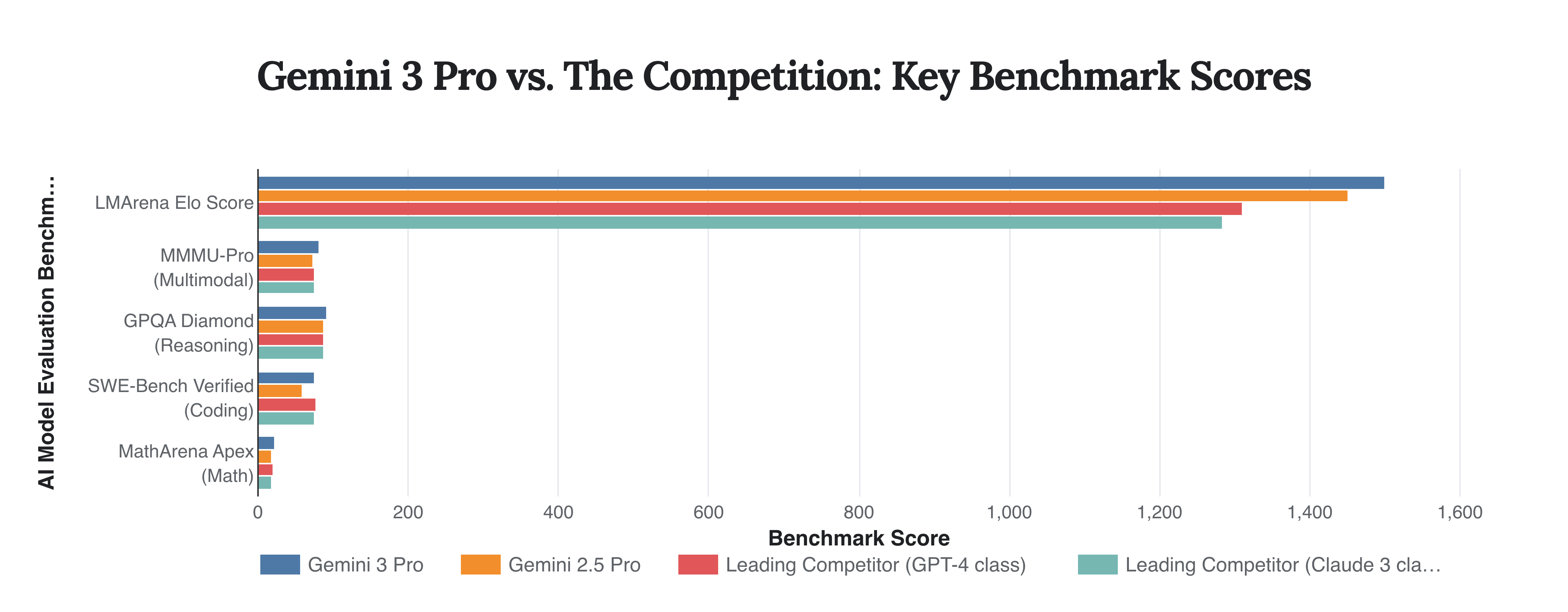
This chart visualizes Gemini 3 Pro’s dominant performance across key industry benchmarks for reasoning, multimodal understanding, and coding. Its 1501 Elo score on LMArena, in particular, establishes it as the new leader in head-to-head comparisons against other frontier models.
This leap in performance is further validated by a special ‘Deep Think’ mode, an even more powerful version of the model that pushes reasoning capabilities further, achieving an unprecedented 45.1% on the ARC-AGI benchmark, which tests a model’s ability to solve novel challenges. This tiered approach indicates a strategy to provide general high performance while reserving elite-level reasoning for the most complex problems, a likely premium offering for enterprise clients.
The Agentic Leap: Beyond Chatbots to Autonomous Systems
The most profound strategic shift embodied by the Gemini 3 launch is the explicit focus on creating AI ‘agents’—systems that can perform complex, multi-step tasks on a user’s behalf with a degree of autonomy. This evolution moves the paradigm from a conversational partner to a functional one. Google is no longer just building a better search box; it’s building a digital assistant that can act.
“Introducing Gemini 3. It’s the best model in the world for multimodal understanding, and our most powerful agentic + vibe coding model yet. Gemini 3 can bring any idea to life, quickly grasping context and intent so you can get what you need with less prompting.” - Sundar Pichai, CEO, Google
From Multimodality to Autonomy
Google’s product development narrative shows a clear progression. Gemini 1.0 established native multimodality and long context windows. Gemini 2.0 introduced foundational reasoning and thinking, laying the groundwork for agentic capabilities. Now, Gemini 3 combines these strengths to deliver a model designed for action. This is not just a software update; it is the culmination of a multi-year strategy to change the fundamental utility of AI.
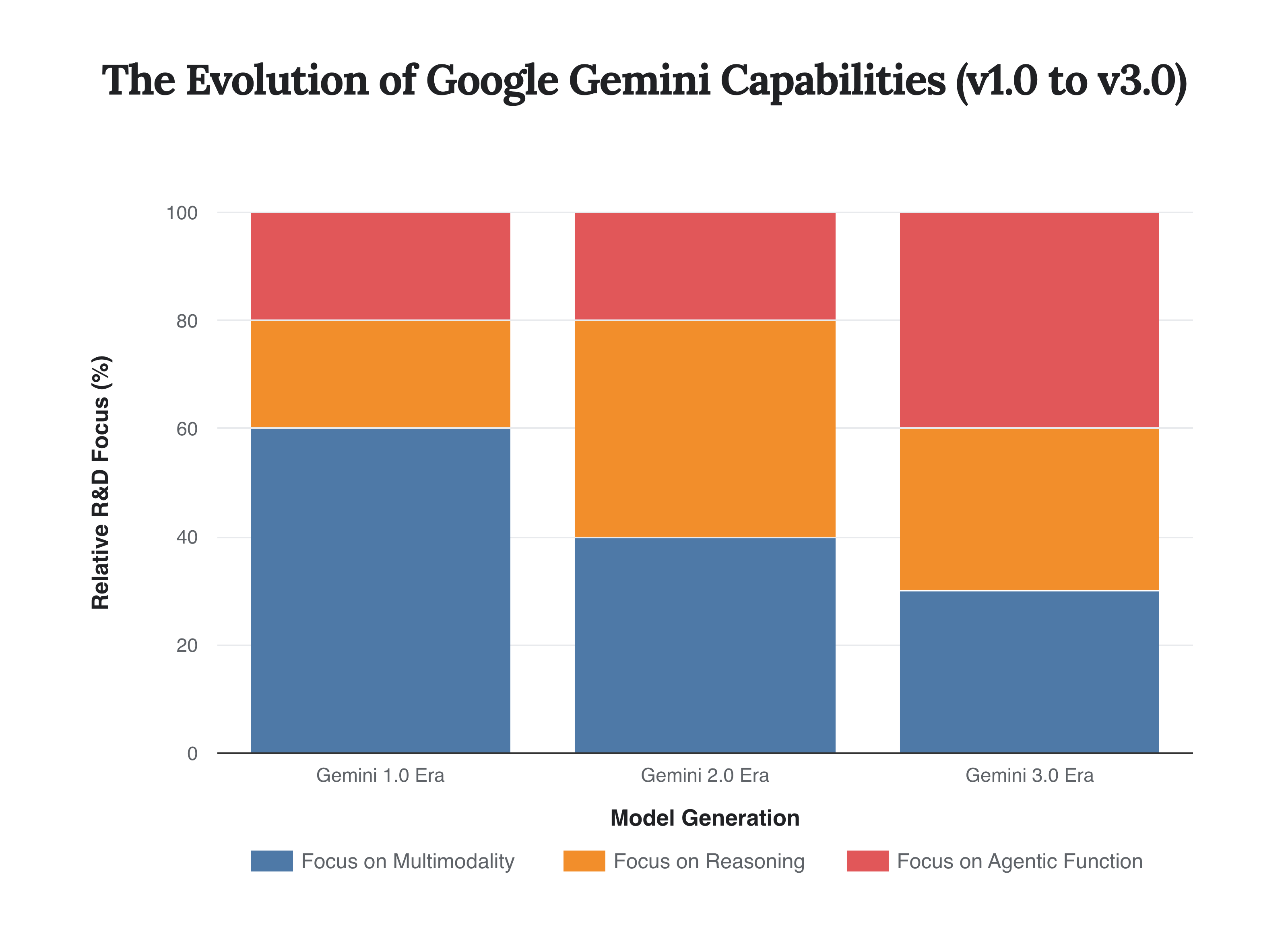
This chart illustrates the strategic shift in Google’s AI development focus. While maintaining strong multimodal and reasoning foundations, the emphasis with Gemini 3 has pivoted significantly towards building and enhancing agentic capabilities for autonomous task execution.
Google Antigravity: An Operating System for Agents
The centerpiece of this agentic strategy is the launch of Google Antigravity, a new development platform that allows developers to operate at a ‘task-oriented’ level. Instead of simply calling an API for a text or code completion, developers can now use Antigravity to build agents that can autonomously plan and execute complex software tasks, validate their own code, and orchestrate workflows across multiple services like an editor, terminal, and browser. This platform, combined with Gemini 3’s enhanced tool use, is designed to be the nexus for a new ecosystem of AI-powered applications that ‘do’ things, from booking services to managing an inbox or migrating a codebase.
The Economic Calculus: The Escalating Cost of Frontier AI
The technological arms race in AI is fueled by staggering financial investment, a reality that shapes the entire competitive dynamic. The capabilities demonstrated by Gemini 3 are not born from algorithms alone, but from a massive commitment of capital and computational resources. Understanding this economic backdrop is critical to appreciating the strategic pressures on Google, OpenAI, and others.
The Billion-Dollar Training Run
The cost to train a state-of-the-art AI model has been growing at a rate of 2.4x to 3x per year since 2020. A model that cost a few million dollars just a few years ago has been supplanted by models costing hundreds of millions. Google’s Gemini Ultra was estimated to have a training cost of $191 million, while OpenAI’s GPT-4 cost an estimated $78 million in compute resources alone. Projections show that by 2027, the largest training runs will exceed $1 billion. This exponential cost increase creates an exclusive club of competitors, limited to a handful of hyperscale tech companies and state-backed actors.
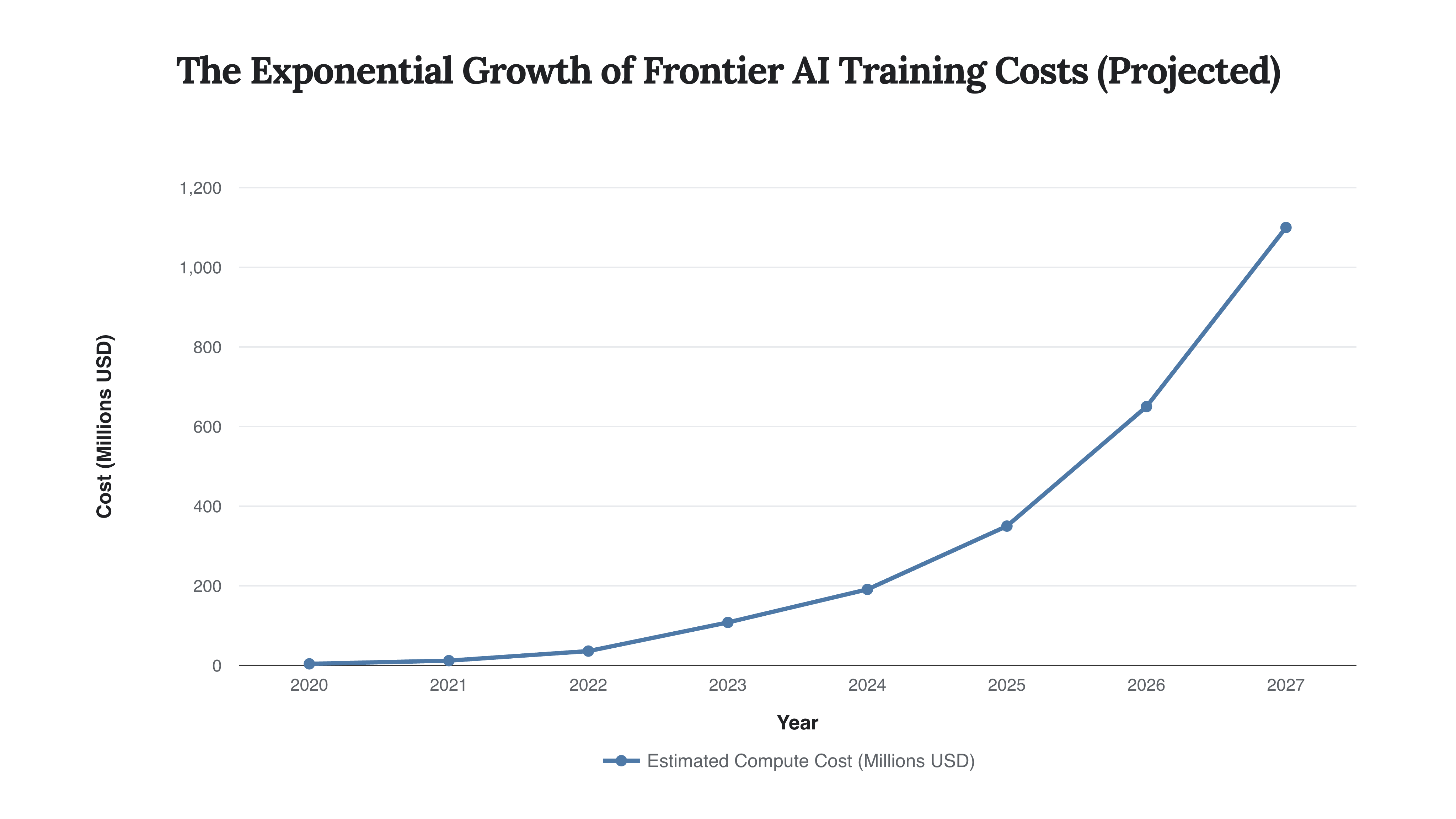
This line chart illustrates the dramatic and accelerating cost required to train a single, frontier-class AI model. The trend indicates that future models, successors to Gemini 3, will likely require investments approaching or exceeding one billion dollars.
Deconstructing the Investment
The headline cost is predominantly driven by hardware and R&D talent. Analysis of frontier models shows that amortized hardware (specialized AI accelerators like GPUs or TPUs) accounts for nearly two-thirds of the total development cost. The salaries for elite R&D personnel comprise another substantial portion, with energy consumption being a smaller but significant factor. This cost structure explains Google’s full-stack approach, from designing its own TPU chips to building the platforms like Vertex AI that can commercialize these massive investments.
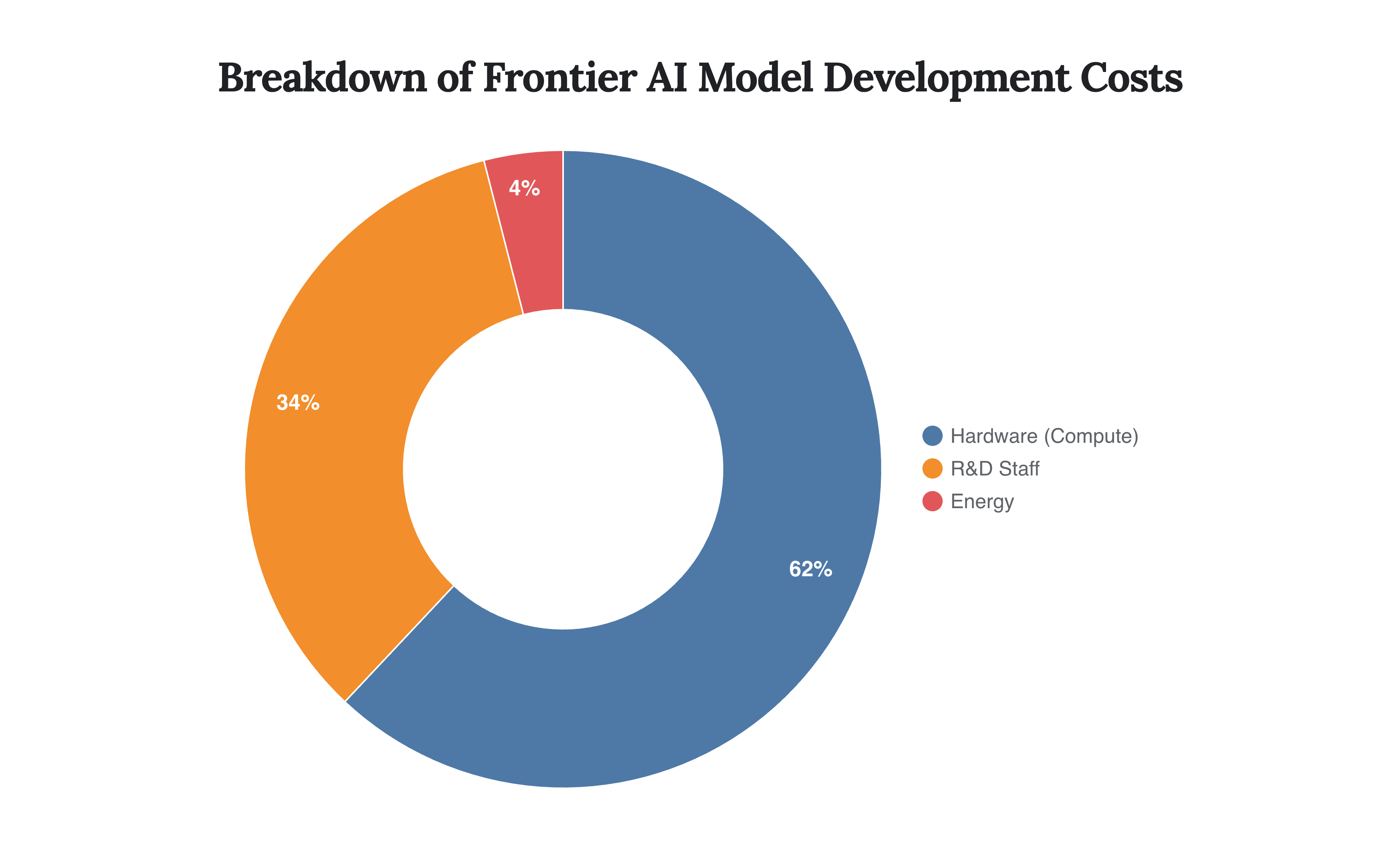
This chart breaks down the typical development costs for a flagship model like Gemini or GPT-4. The immense cost of specialized hardware underscores the strategic importance of controlling the AI supply chain.
Strategic Foresight: Winners, Losers, and Future Battlegrounds
The launch of Gemini 3 and its agentic ecosystem is a forward-looking move designed to capture the next wave of AI value. The focus on autonomous capabilities will create clear winners and losers and redefine the primary metrics of success in the AI industry.
“The new Gemini 3 Pro model advances the depth, reasoning, and reliability of AI in developer tools, showing more than a 50% improvement over Gemini 2.5 Pro in the number of solved benchmark tasks.” - Spoken statement from JetBrains, integrated partner
The Rise of the Autonomous Enterprise
The immediate beneficiaries of Gemini 3’s capabilities will be developers and enterprise users. The model’s state-of-the-art coding and tool-use benchmarks are not academic; they translate directly into productivity gains. For businesses, this means accelerating the move from concept to execution by automating complex workflows that previously required significant human intervention. The next battleground will be in creating robust, reliable agents that can be trusted with mission-critical business processes.
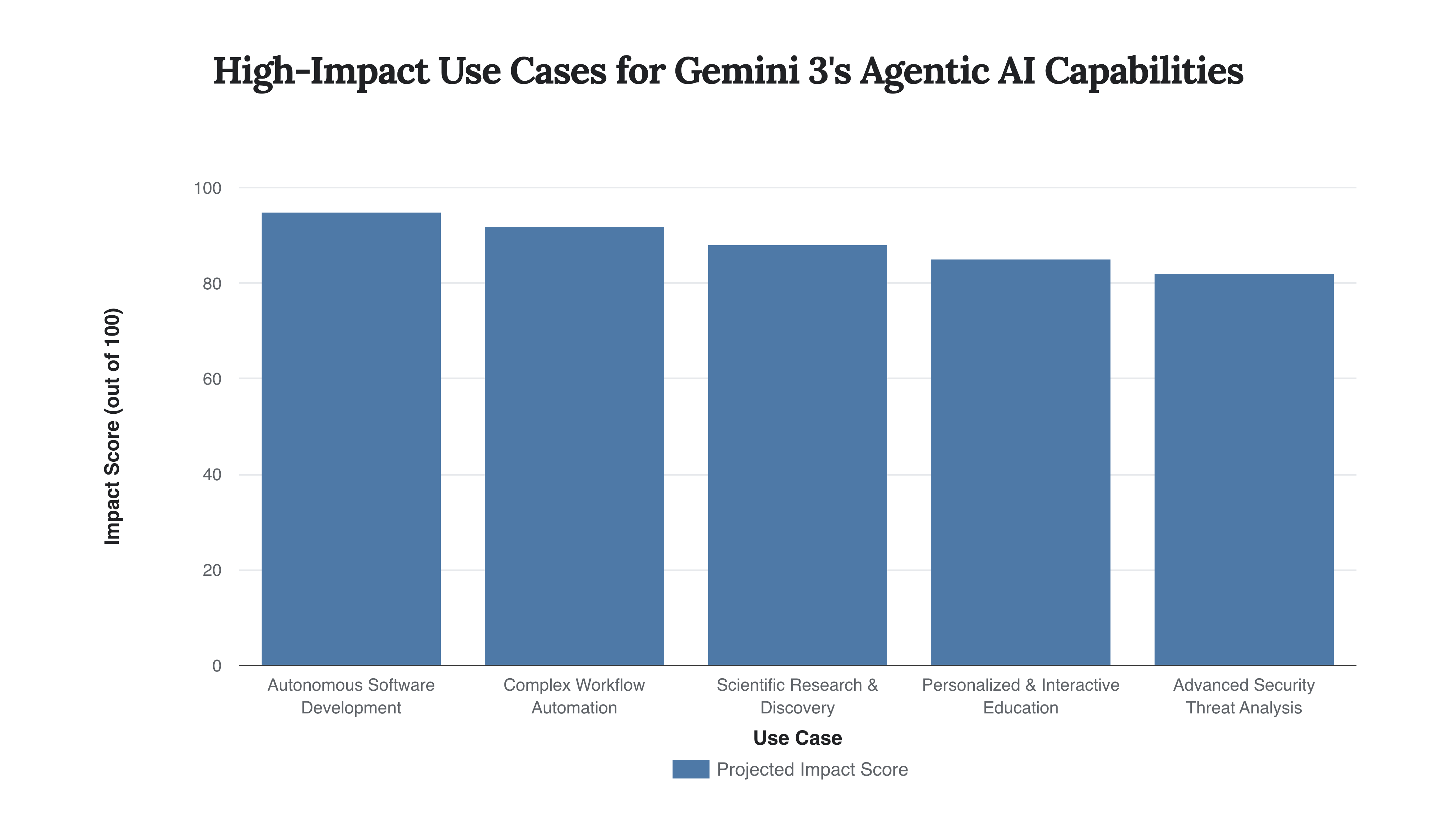
This chart highlights the key sectors and functions where the agentic capabilities of Gemini 3 are expected to deliver the most significant transformative value, shifting the focus from simple content generation to complex problem-solving.
Google’s strategy appears to be one of deep integration, making Gemini 3 available on day one across its entire ecosystem—from the consumer-facing Gemini app and Search to the developer-centric Vertex AI and the new Antigravity platform. This ubiquitous deployment aims to create a flywheel effect, where widespread use generates the data and feedback necessary to further refine the model’s agentic skills. As these systems become more capable, the key differentiator will shift from raw intelligence to trustworthiness, reliability, and security—areas where Google claims to have made significant investments with Gemini 3.
With the release of Gemini 3, Google has done more than just reclaim a top spot on the leaderboards; it has forcefully articulated its vision for the future of AI. This vision is one of autonomous agents that act as partners, not just tools. It is a capital-intensive, high-stakes gamble that aims to transform every facet of Google’s business and the digital economy at large. The 1501 Elo score is not the end of the game, but the opening move in a new, more complex and consequential one. The next frontier of AI is not about having a conversation; it’s about getting things done.