


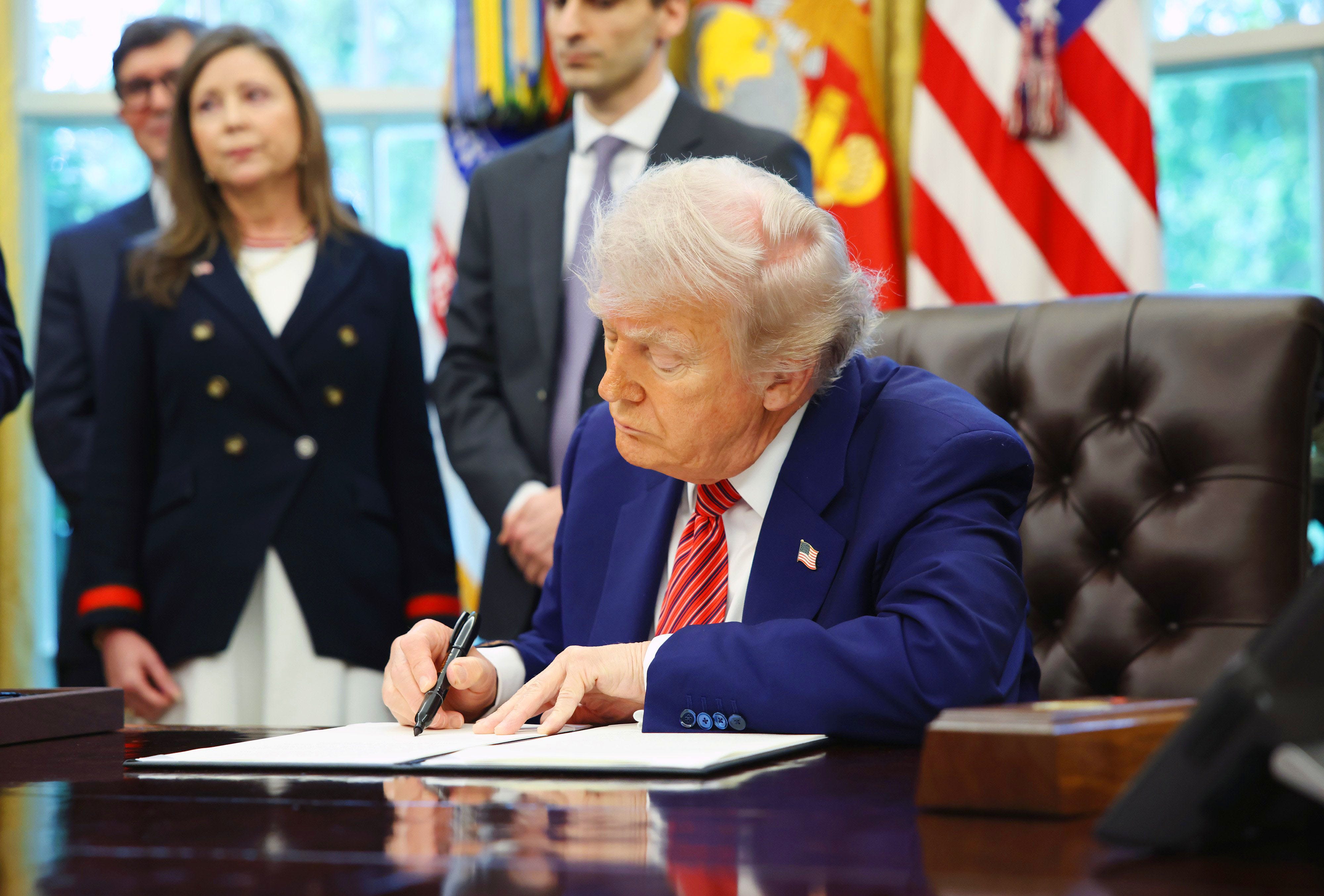
On Thursday evening, framed by the Oval Office windows and flanked by Silicon Valley allies, President Trump signed a document that effectively declared war on the American regulatory map. The Executive Order, titled Ensuring a National Policy Framework for Artificial Intelligence, does not merely suggest guidelines; it creates an “AI Litigation Task Force” designed to aggressively dismantle the growing patchwork of state-level AI safety laws. But beneath the headlines about blocking California and Colorado lies a far more significant number: $500 billion. That is the projected scale of the infrastructure mobilization—dubbed the “Genesis Mission”—that this deregulation is specifically designed to unleash.
The signing on December 11, 2025, marks the culmination of a year-long strategy to pivot the United States from a posture of “safe” AI development to one of absolute acceleration. By leveraging federal funding triggers to override state laws, the administration is betting that the only way to win the computational arms race with China is to remove every possible speed bump, regardless of the local safety concerns. As Trump stated clearly during the signing:
“There’s only going to be one winner. We have the big investment coming, but if they had to get 50 different approvals from 50 different states, you can forget it because it’s impossible to do.”
The Death of the “50-State Patchwork”
To understand the urgency of this order, one must look at the regulatory landscape it aims to flatten. Since 2023, state legislatures—frustrated by federal inaction—have rushed to fill the void. By late 2025, the number of AI-related bills introduced across state houses had skyrocketed, creating what the administration calls a “compliance nightmare” for startups and tech giants alike.
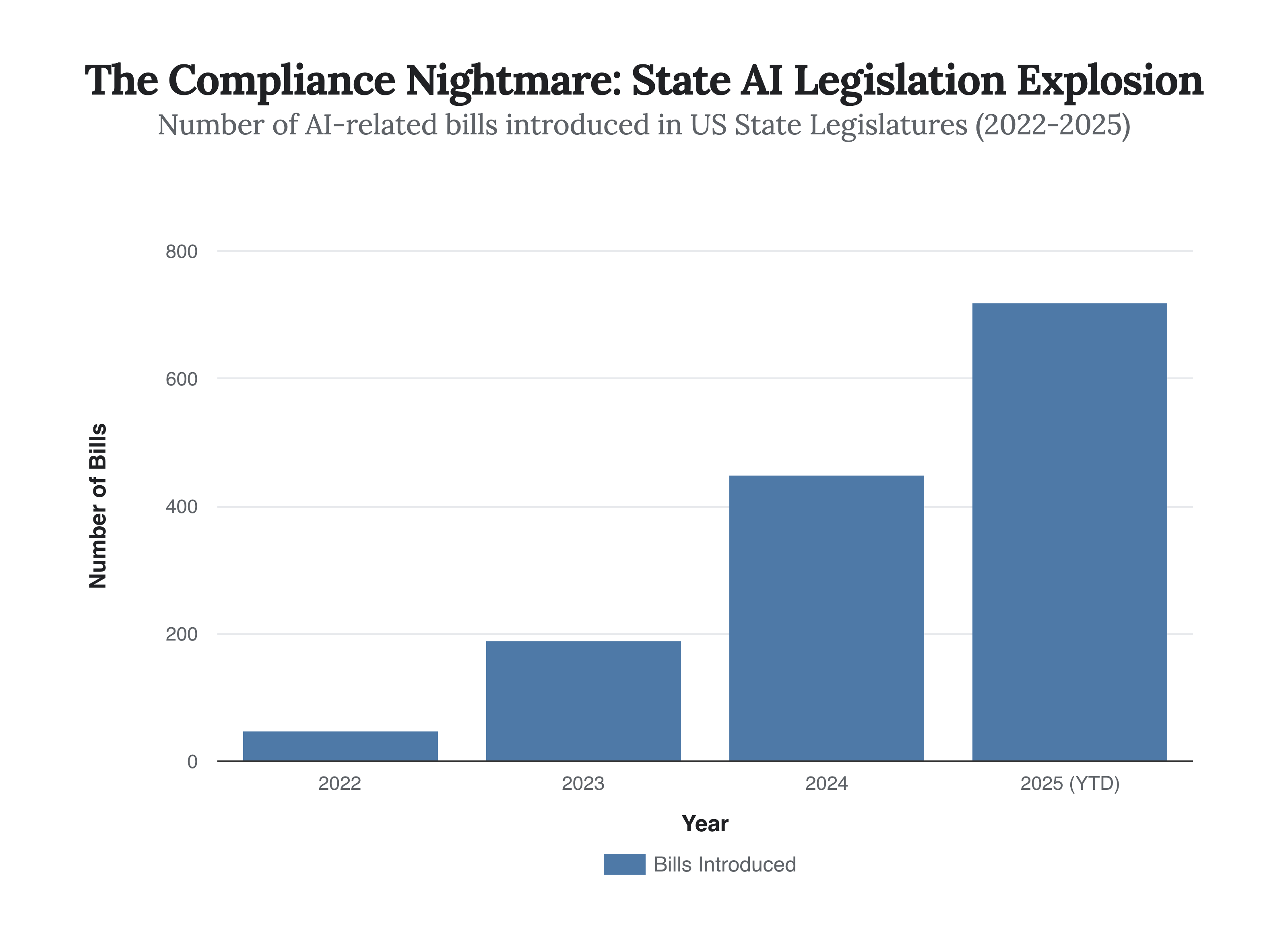
The chart above illustrates the exponential growth of state-level intervention. From fewer than 50 bills in 2022 to over 700 in 2025, states like Colorado, California, and Utah effectively built their own safety nets. The new Executive Order targets this trend directly, threatening to withhold broadband grants from states that enforce “onerous” regulations—specifically citing Colorado’s algorithmic discrimination laws as a barrier to progress.
The $500 Billion “Genesis” Gamble
The preemption of state laws is not an end in itself; it is the clearing of the brush for the “Genesis Mission.” Signed into existence just weeks earlier on November 24, Genesis is the administration’s “Manhattan Project” for AI—a consolidation of federal labs, data, and private sector partnerships aimed at achieving breakthroughs in energy, defense, and materials science. The scale of investment required to support this vision is unprecedented, with private and public capital expected to hit half a trillion dollars by 2029.
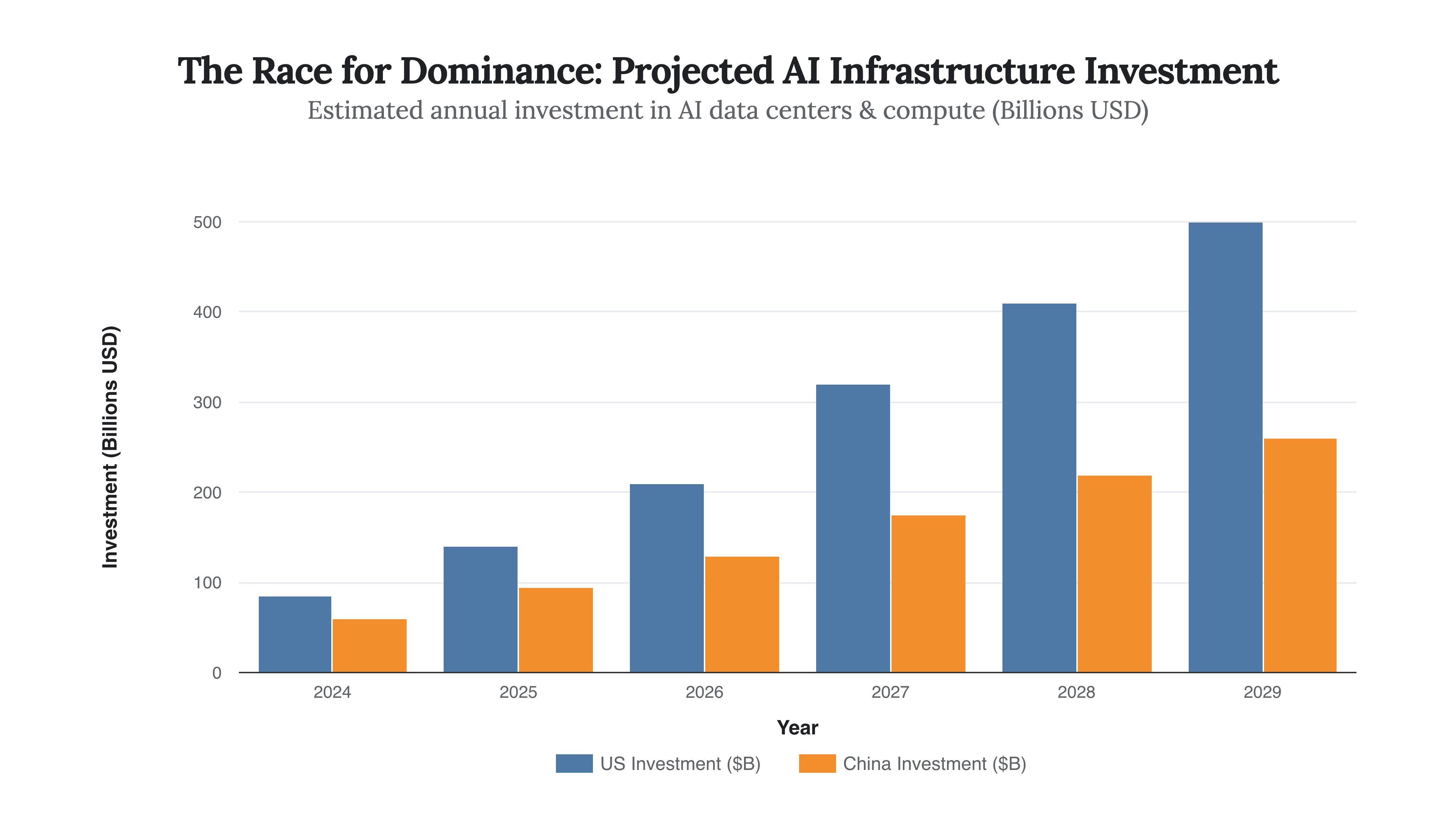
This massive capital injection is driven by the belief that AI supremacy is a binary outcome. The administration’s strategy, led by AI Czar David Sacks, posits that safety regulations are a luxury the US cannot afford while China accelerates its own sovereign AI capabilities. By targeting a $500 billion annual spend by 2029, the US aims to out-compute its rival by a factor of two-to-one.
The Energy Reality Check
However, the greatest barrier to the Genesis Mission is not legislation; it is physics. The “Build, Baby, Build” mandate included in the recent policy roadmap acknowledges a critical bottleneck: electricity. The computational demand of the next generation of AI models is projected to consume a staggering percentage of the national grid, requiring an energy buildout that state environmental reviews would likely stall.
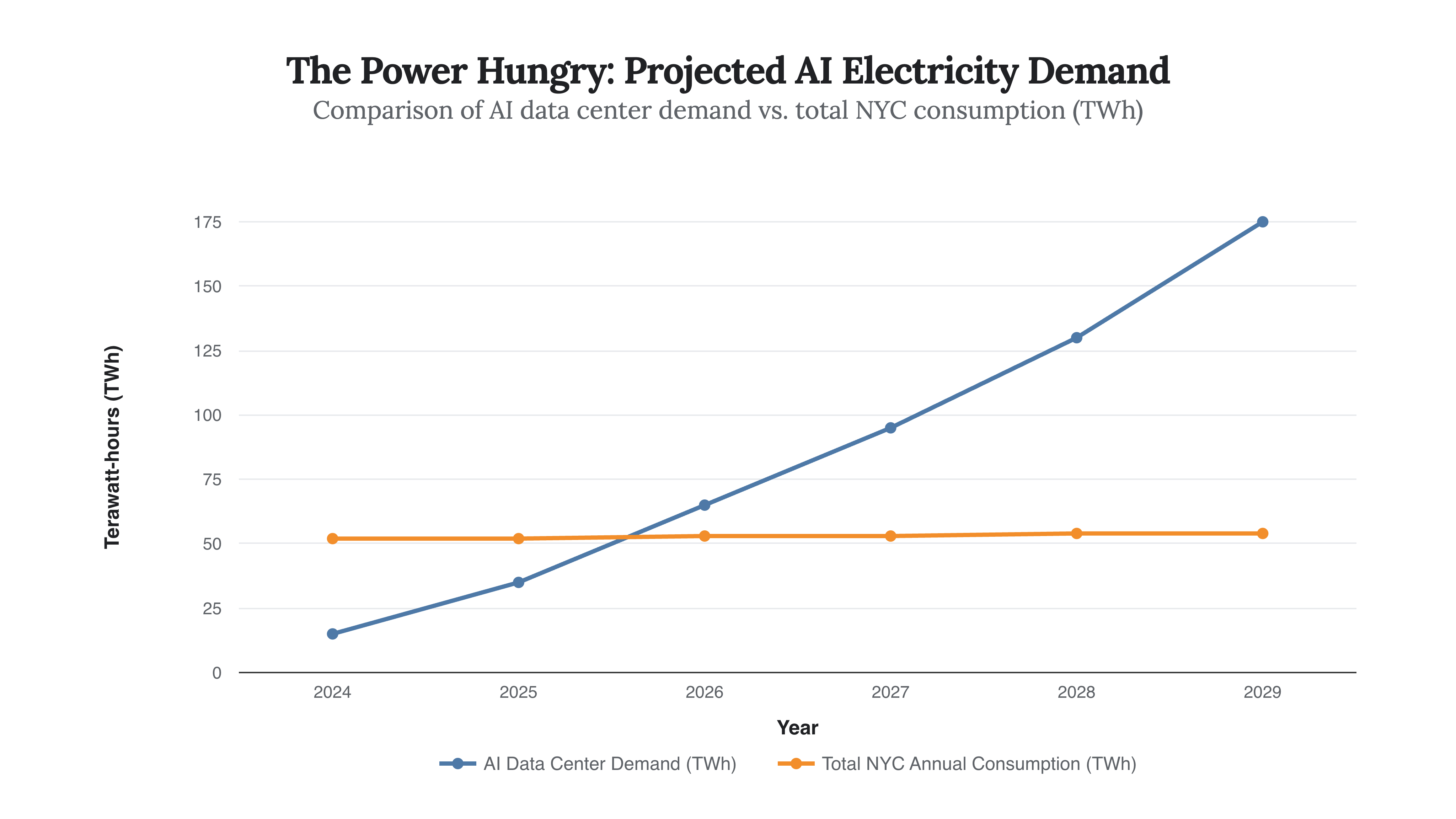
By 2029, AI data centers alone are projected to consume more than three times the annual electricity of New York City. This physical reality explains the fervor behind the December 11 order. The administration views state-level environmental and safety reviews as existential threats not just to software deployment, but to the physical construction of the nuclear and natural gas plants required to power the “Genesis” supercomputers.
Critics, including legal scholars and civil rights groups, argue that this executive overreach is unconstitutional. Shatorah Roberson of the Lawyers’ Committee for Civil Rights Under Law noted bluntly:
“This is an issue of our democracy and the president through executive order can’t just preempt state laws without going through the democratic process.”
Yet, the administration shows no sign of slowing. The creation of the AI Litigation Task Force signals that the federal government is prepared to fight every battle necessary to clear the lane. The signing of this order proves that for the current White House, the risks of unregulated AI are hypothetical, but the risks of losing the race for supremacy are non-negotiable.
We live in interesting times!