


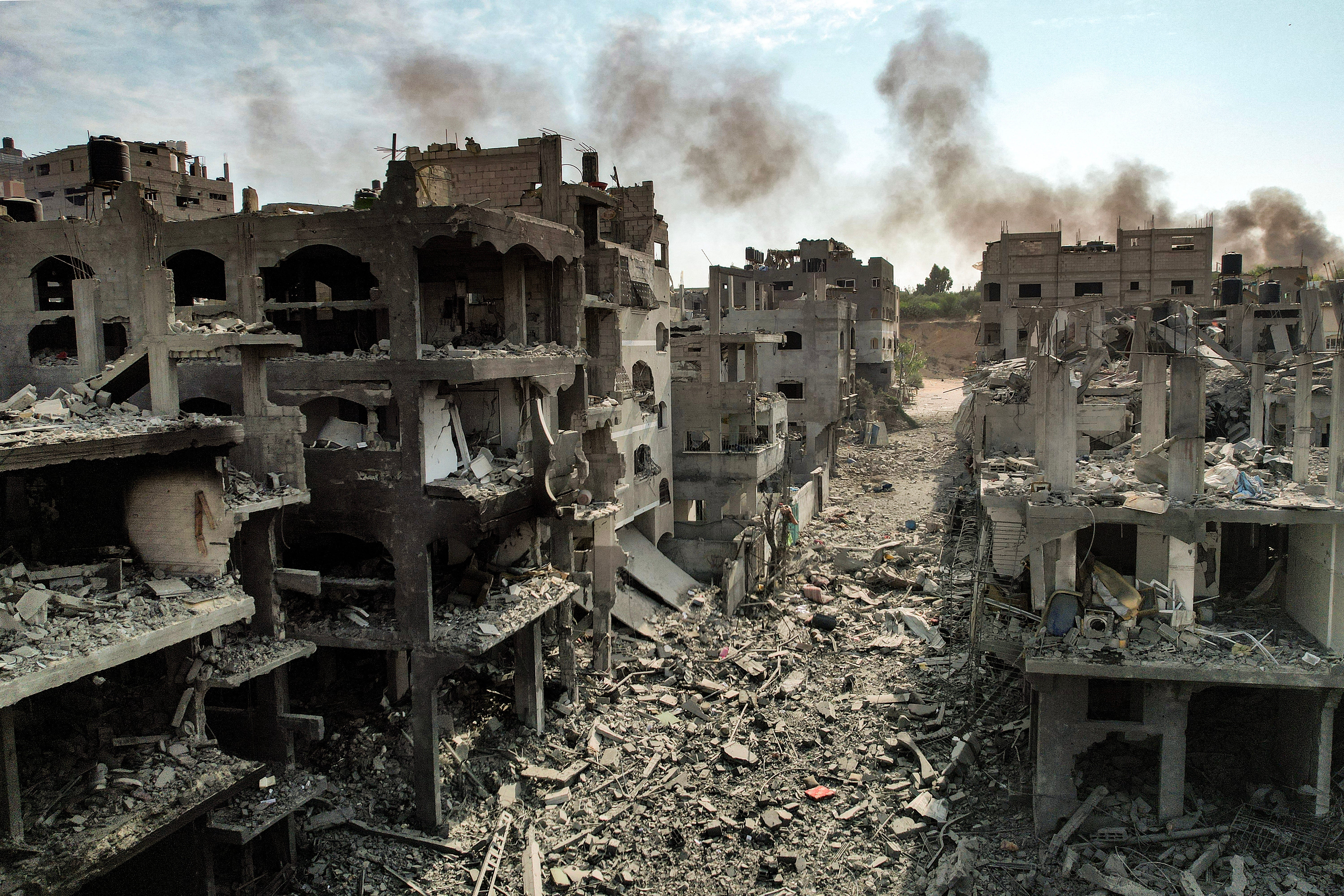
The cessation of major combat operations in the Gaza Strip does not mark an end to the crisis, but rather the beginning of a complex, multi-decade challenge of unprecedented scale. The airstrike aftermath has precipitated a catastrophic convergence of crises—humanitarian, economic, infrastructural, and geopolitical—that are deeply interlocked.
This briefing deconstructs this crisis matrix, moving beyond immediate damage assessments to analyze the second-order effects that will define the region’s stability, the future of the Palestinian economy, and the strategic calculus of international actors for years to come. The core thesis of this analysis is that Gaza is not simply facing a reconstruction challenge; it is confronting a systemic collapse where the failure of any one vector, such as public health, directly accelerates the collapse of others, creating a feedback loop of instability that threatens the entire region.
The Anatomy of Collapse: Quantifying the Unprecedented Destruction
The physical and economic devastation in Gaza has surpassed initial projections, creating a landscape of ruin that defies historical comparison. The sheer scale of destruction forms the bedrock of the cascading crises now unfolding, demanding a granular look at the data to comprehend the starting point for any recovery effort, however distant. According to a joint assessment by the World Bank, the United Nations, and the European Union, the cost of reconstruction and recovery is estimated at a staggering $53 billion. This figure, however, only scratches the surface of a deeply fractured socio-economic reality.
Infrastructural Obliteration and Economic Freefall
The damage inflicted upon Gaza’s physical structures alone is estimated at approximately $30 billion. Housing has borne the brunt, accounting for 53% of this damage, with commerce and industry representing another 20%. Satellite imagery analysis corroborates this, identifying over 174,000 damaged or destroyed structures, which corresponds to roughly 70% of the total structures in the Gaza Strip. The economic consequences have been swift and severe. Gaza’s economy is projected to have contracted by a staggering 83% in 2024. This has reduced its contribution to the overall Palestinian economy to a mere 3%, a dramatic fall for a territory that is home to 40% of the Palestinian population.
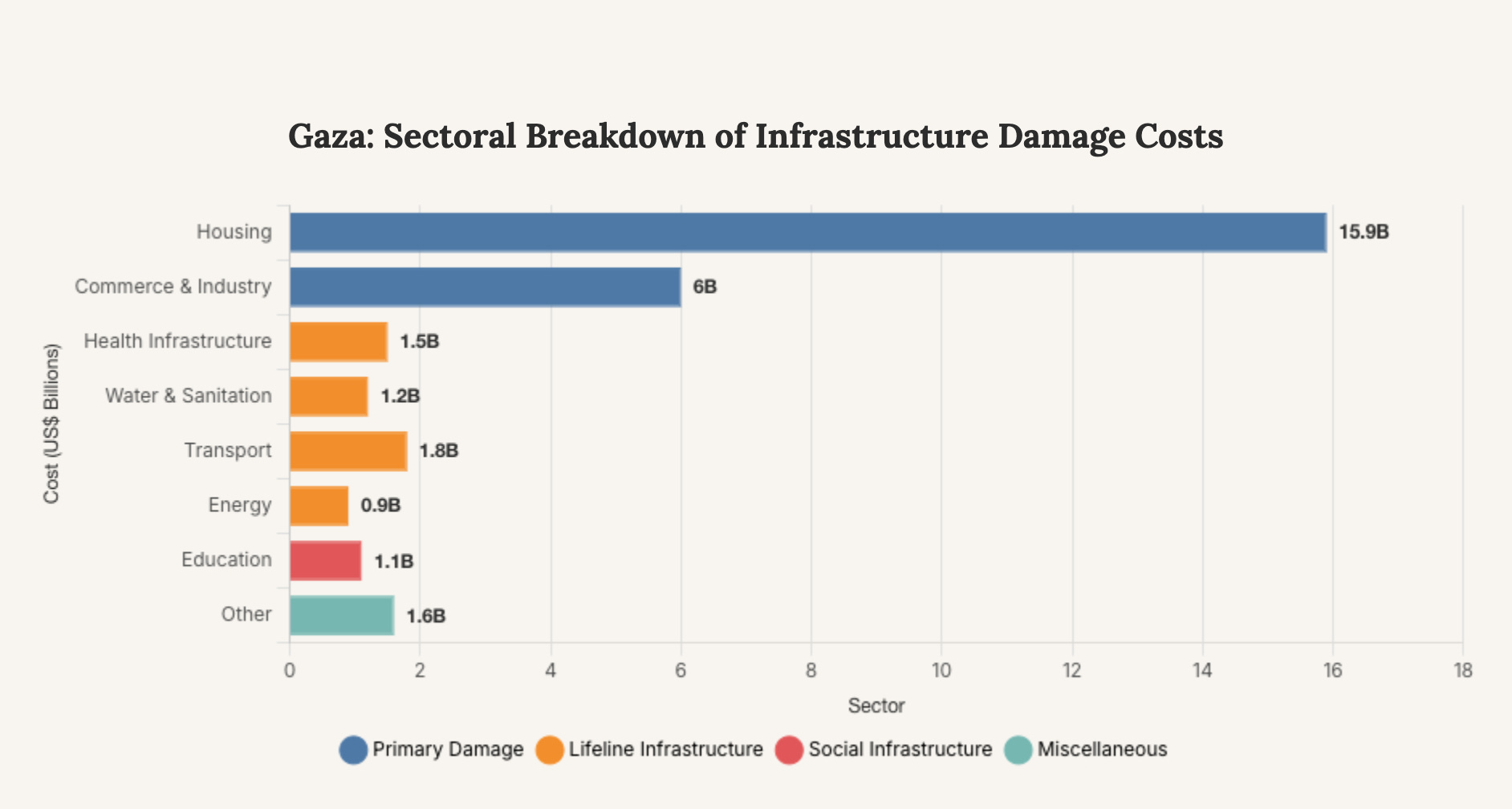
Caption: This chart illustrates the immense scale of destruction, with housing constituting the vast majority of the nearly $30 billion in direct physical damage, crippling the basic foundation for civilian life and economic activity.
The destruction of productive assets has triggered a hyperinflationary spiral. With almost all economic production halted, prices in Gaza have soared by over 300% in one year, with food prices alone skyrocketing by 450%. This economic implosion is not contained within Gaza; the West Bank’s economy is also projected to have shrunk by 16% in 2024, demonstrating the interconnectedness of the Palestinian economic space. The private sector, the engine of any potential recovery, has been decimated, with an estimated 88% of its establishments damaged or destroyed.
The Rubble Equation: A Generational Obstacle
A challenge of monumental proportions lies in the debris itself. Estimates suggest that between 41 to 61 million tons of rubble must be cleared. This is not merely a logistical hurdle; the debris is laced with unexploded ordnance, posing a lethal threat to returning civilians and reconstruction crews. The United Nations Development Programme (UNDP) has starkly warned that even under the most optimistic scenarios, where building materials are allowed to enter Gaza at a rate five times higher than before the conflict, rebuilding the destroyed housing units alone would take until at least 2040. More pessimistic, and perhaps realistic, assessments project a reconstruction timeline stretching up to 80 years if current restrictions on materials and equipment persist.
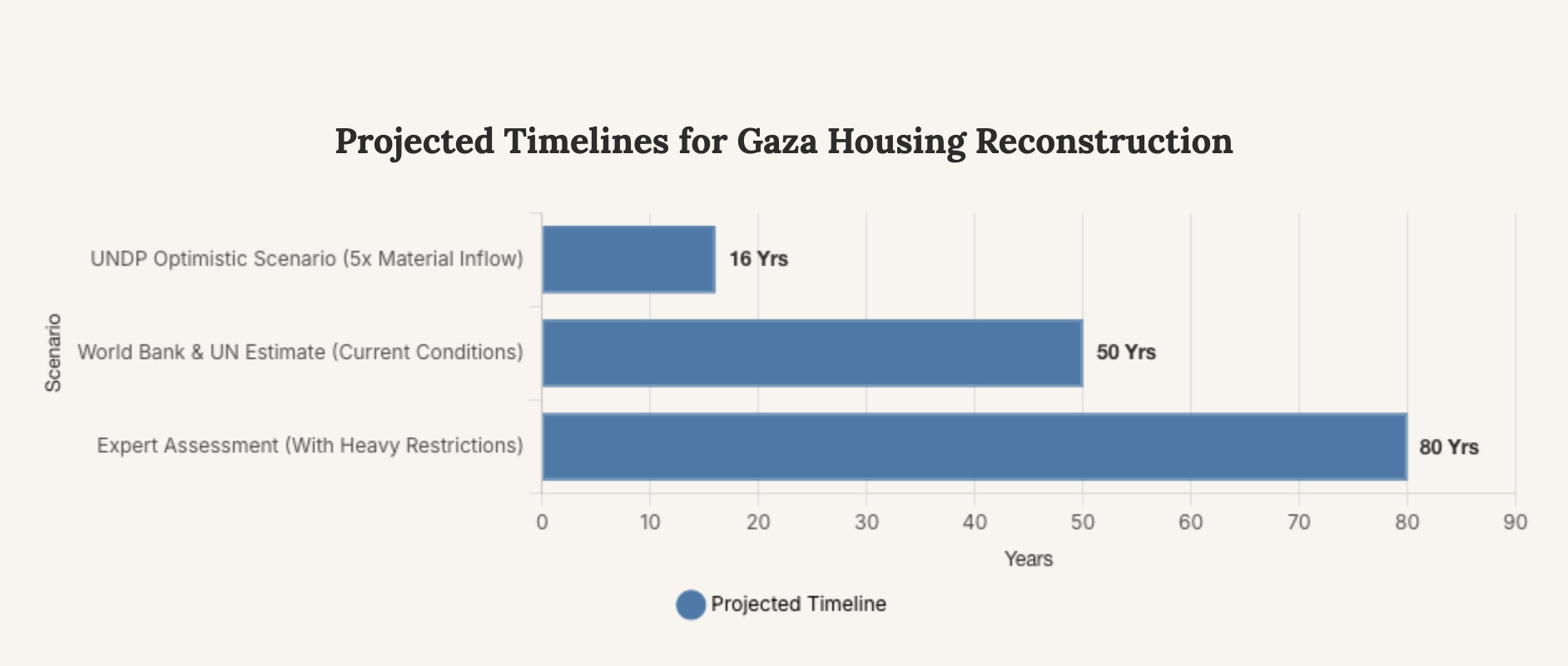
Caption: This chart visualizes the daunting, multi-generational challenge of reconstruction. Even the most optimistic scenarios extend well into the next decade, highlighting the long-term nature of the crisis.
The Public Health Catastrophe: A Vicious Cycle of Disease and Despair
The systematic dismantling of Gaza’s healthcare and sanitation infrastructure has unleashed a secondary crisis of infectious diseases and profound psychosocial trauma. The collapse of the health system is not a standalone issue; it is a threat multiplier that exacerbates the humanitarian crisis, undermines the potential for recovery, and ensures that the scars of this conflict will be felt for generations.
System Collapse and the Rise of Epidemics
The World Health Organization (WHO) has stated that Gaza’s healthcare system has “totally collapsed”. Attacks on healthcare facilities have been widespread, and by January 2024, the WHO reported 304 such attacks since the conflict’s escalation. The destruction of water and sanitation networks has forced a desperate population to consume contaminated water, leading to a massive surge in waterborne illnesses. Since mid-October of the previous year, over 33,551 cases of diarrhea have been reported, with more than half affecting children under five—a dramatic increase from the pre-war monthly average of around 2,000 cases. Cases of upper respiratory infections have surpassed 54,000, alongside thousands of cases of scabies and chickenpox.
“The scale and speed of the unfolding humanitarian crisis is bone-chilling.”
- Philippe Lazzarini, UNRWA Commissioner-General
Overcrowding in shelters, where up to 70 people are sometimes crammed into a single room, creates a perfect breeding ground for disease. Compounding this is the emergence of multidrug-resistant bacteria, a worrying development reported in *The Lancet Infectious Diseases*, which presents a new challenge for a beleaguered and under-resourced medical community.
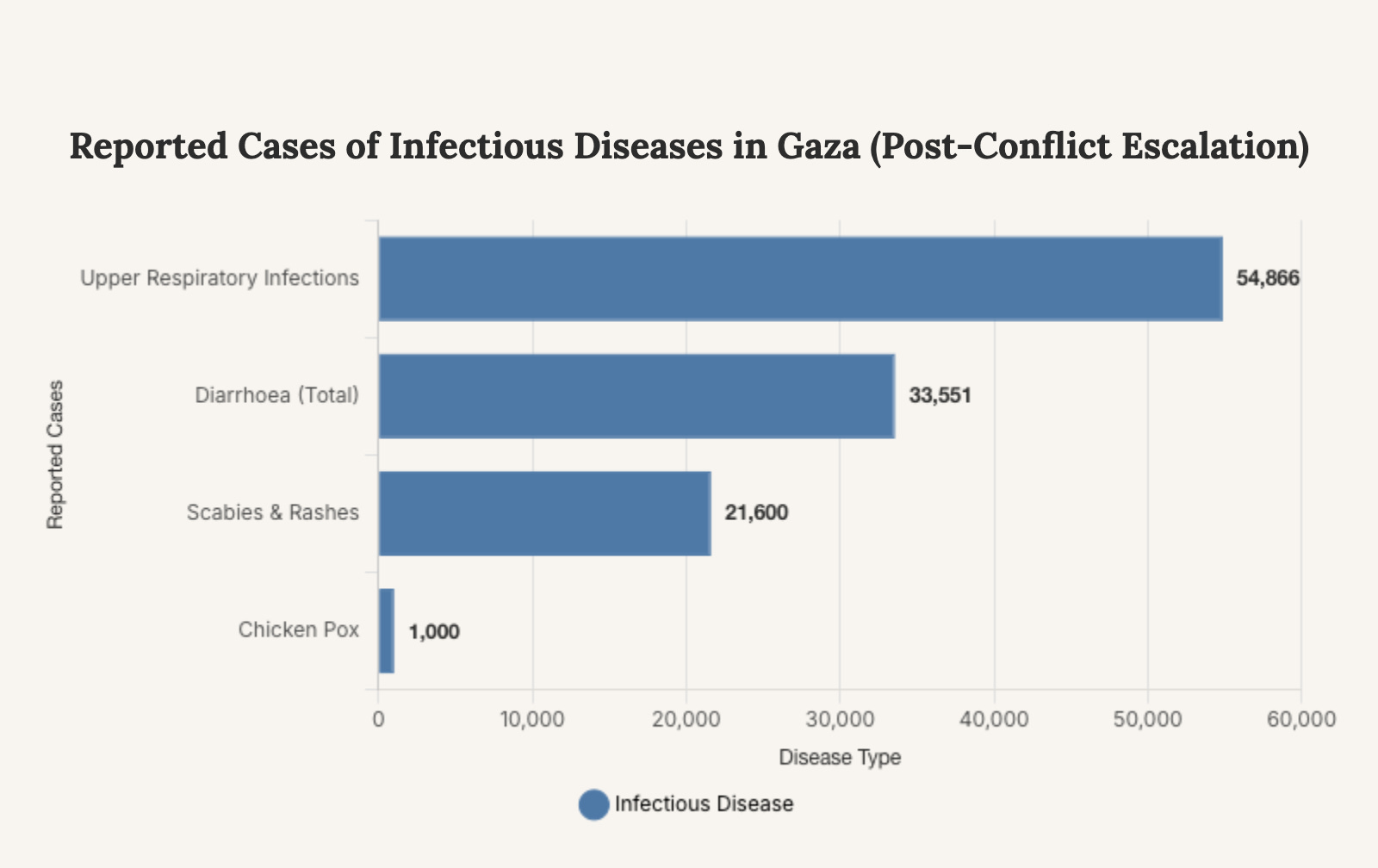
Caption: This chart displays the alarming surge in infectious diseases following the collapse of sanitation and healthcare systems, with respiratory infections and diarrheal diseases being the most prevalent.
The Invisible Wounds: A Generational Mental Health Crisis
Beyond the physical ailments, the conflict has inflicted a deep and lasting psychological toll, particularly on Gaza’s youth. The WHO estimates that the need for mental health care has more than doubled, now affecting over one million people. UNICEF has estimated that one in four children in Gaza—approximately 225,000—still require psychosocial support. The trauma of displacement, loss, and constant exposure to violence manifests in behavioral changes such as bedwetting, aggression, and unusual crying. This widespread trauma represents a significant barrier to long-term societal recovery, affecting educational attainment, social cohesion, and future productivity.
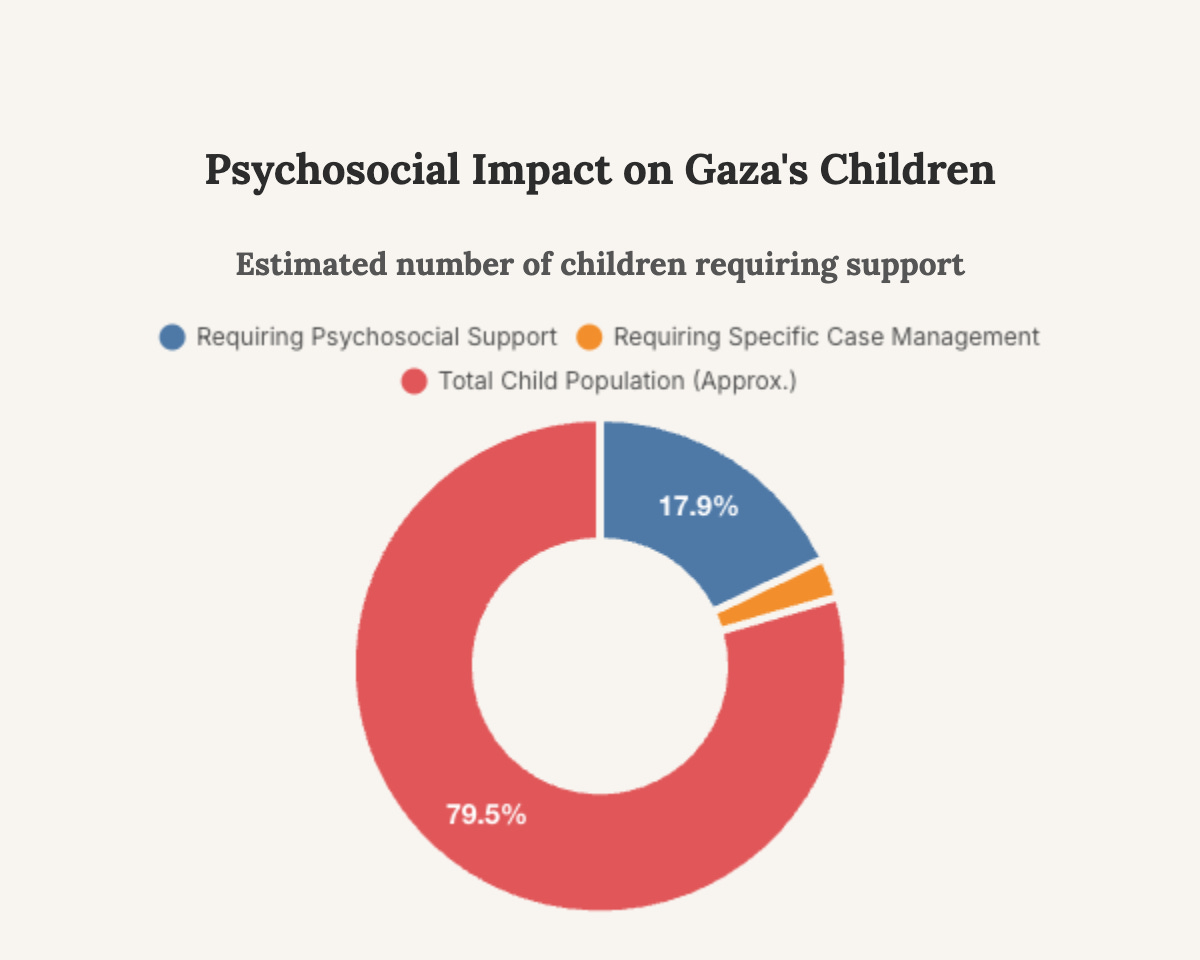
Caption: This chart highlights the scale of the mental health crisis among Gaza’s children, with a significant portion of the youth population in need of some form of psychosocial intervention.
Geopolitical Shockwaves: Regional Realignment and Donor Fatigue
The Gaza conflict has not occurred in a vacuum. It has acted as an accelerant for geopolitical shifts, testing regional alliances and straining the international aid architecture. The aftermath is characterized by a complex diplomatic landscape where the urgent need for reconstruction capital collides with political conditionality and a growing sense of donor fatigue.
Fractured Alliances and Strategic Recalibration
The conflict has significantly undermined the U.S.-backed momentum toward normalizing relations between Israel and key Arab nations. Saudi Arabia, for instance, paused its diplomatic efforts early in the conflict. Long-standing peace treaties have also been strained, with Jordan’s King Abdullah II labeling Israel’s military campaign a ‘war crime’ and Egypt criticizing it as ‘collective punishment’. This rhetoric reflects deep-seated popular anger across the region, creating a wedge between political elites and their citizens. This polarization is exploited by actors like Russia and China, who seek to amplify the narrative of Western double standards when comparing the international response to Gaza with that of Ukraine.
“The gap between different realities of the current world order is widening. In the Global South, there is a widespread perception that the liberal world order only benefits the West.”
- Karin Aggestam, Director of the Centre for Advanced Middle Eastern Studies
The Reconstruction Dilemma: Funding and Political Will
Securing the estimated $50-70 billion needed for reconstruction is a monumental task fraught with political and logistical hurdles. Donor nations are hesitant, fearing a repeat of previous cycles where infrastructure they funded was subsequently destroyed in later conflicts. International financial support is now increasingly conditional on the establishment of a stable, internationally accepted governing body in Gaza and guarantees that aid will not be diverted. This creates a classic chicken-and-egg problem: stability is required to unlock funding, but funding is essential to create the conditions for stability. The sheer volume of aid required also tests the limits of the global humanitarian system. From 2014 to 2020, U.N. agencies spent nearly $4.5 billion in Gaza; the current needs dwarf that figure exponentially.
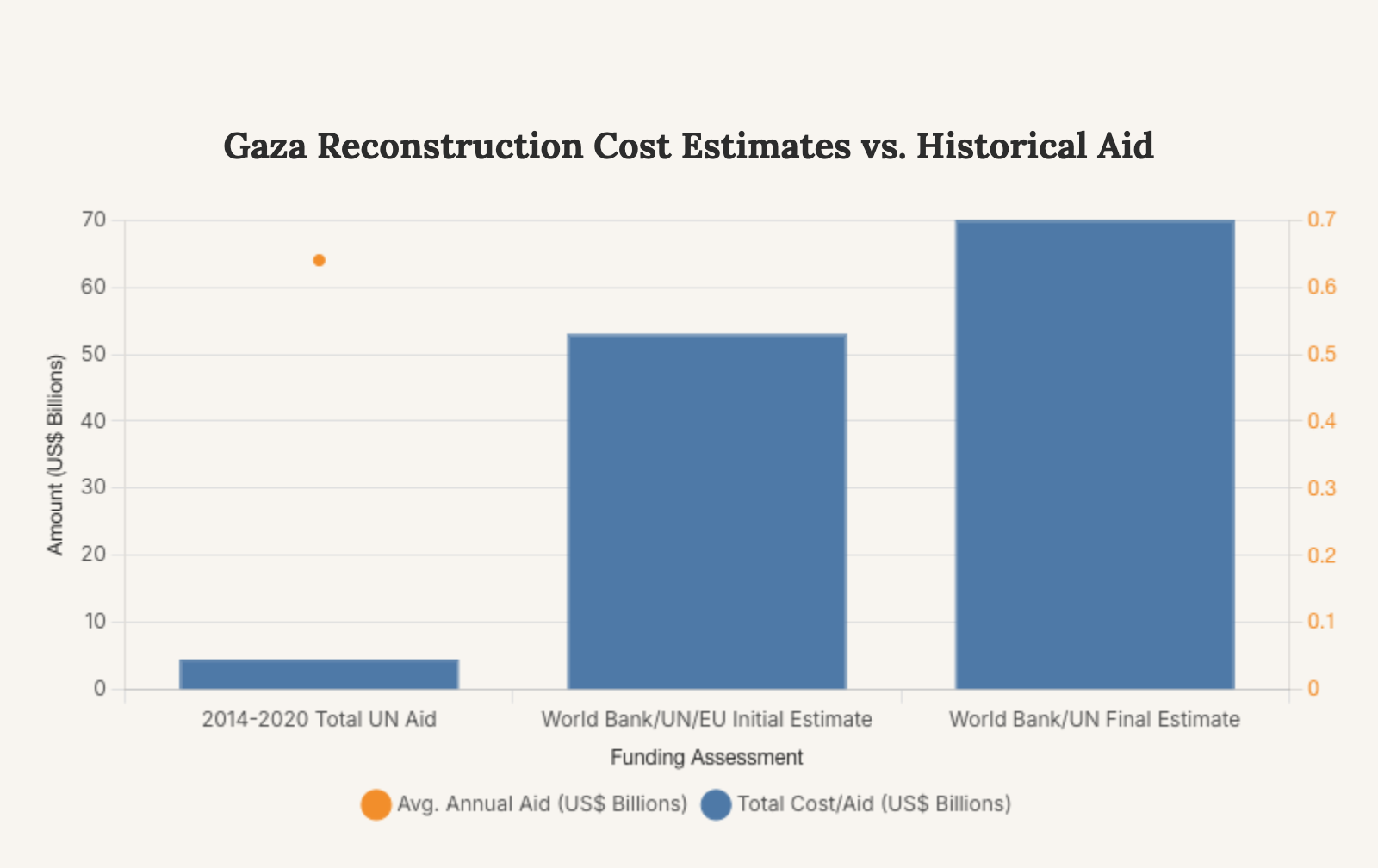
Caption: This chart starkly contrasts the colossal estimated costs of reconstruction with the total UN aid provided over a six-year period, illustrating the unprecedented financial challenge ahead.
Strategic Foresight: Navigating the Path Forward
The trajectory of Gaza’s aftermath is not preordained but will be shaped by critical decisions made in the coming months. Several plausible scenarios emerge, each with distinct implications for regional stability and the well-being of the Gazan population.
Scenario 1: The ‘Muddle Through’ Quagmire
This is the most likely near-term scenario, characterized by a fragile, often-violated ceasefire. Humanitarian aid trickles in, limited by logistical bottlenecks and political restrictions, doing just enough to prevent mass famine but not enough to foster genuine recovery. Reconstruction remains stalled due to political deadlock over governance and security. This environment allows for the festering of grievances, the resurgence of extremist groups, and the continuation of a low-level health crisis. Winners in this scenario are limited; regional powers may avoid a wider war, but the seeds of future conflict are sown. The primary losers are the people of Gaza, who remain trapped in a state of suspended misery.
Scenario 2: The Internationalized ‘Marshall Plan’
A less likely but more hopeful scenario involves a major diplomatic breakthrough, leading to a robust, internationally administered reconstruction effort. This would require a new security arrangement for Gaza, significant financial commitments from a consortium of global and regional powers, and Israel’s full cooperation in allowing the unrestricted flow of materials. This path could lead to a revitalized Gazan economy and a more stable political horizon. Winners would include international construction and engineering firms, regional states like Egypt and Jordan who would benefit from stability, and potentially a new, technocratic Palestinian leadership. Losers would be extremist factions who thrive on chaos.
Key Signposts to Monitor
Investors, policymakers, and industry leaders should closely watch the following indicators to assess which scenario is unfolding:
Border Crossing Throughput: The volume and type of goods (especially dual-use construction materials) permitted to enter Gaza via Kerem Shalom and Rafah.
Governance Framework: Any progress toward establishing a new, unified administrative body for Gaza that is acceptable to key stakeholders (Israel, the PA, Egypt, and major donors).
Donor Conference Pledges: The outcome of any future reconstruction conference, specifically the ratio of pledged funds to actual disbursements and the political conditions attached.
Public Health Metrics: Trends in waterborne diseases and malnutrition rates as tracked by the WHO and UNICEF will be a key barometer of the efficacy of the humanitarian response.
The aftermath of the Gaza airstrikes has created a self-perpetuating cycle of devastation. The destruction of infrastructure fuels a health crisis, which in turn cripples human capital and prevents economic recovery. This systemic collapse, without a paradigm-shifting intervention, will generate instability that radiates far beyond Gaza’s borders, impacting regional security and international relations for decades. The challenge is not merely to rebuild structures, but to reconstruct a functioning society from the ground up against overwhelming odds.
The single most critical strategic insight is that viewing the Gaza aftermath as a series of separate humanitarian, economic, or political problems is a strategic error; it is a single, deeply interconnected systemic collapse that requires an integrated, multi-domain, and generational response to avert a perpetual cycle of conflict.