



Europe is in the midst of a profound recalibration of its approach to immigration. After years of crisis-driven responses, a new, more restrictive paradigm is taking shape, marked by a complex interplay of falling irregular crossings, shifting migration routes, and a hardening political climate. While headlines in 2025 trumpet a significant drop in irregular entries—down 22% in the first nine months—the underlying dynamics reveal a continent grappling with deep-seated economic needs, fractured public opinion, and the rise of far-right politics.
This briefing deconstructs the new European migration landscape, moving beyond the surface-level data to analyze the strategic implications for policymakers, investors, and industry leaders. We will dissect the impact of the EU’s landmark Pact on Migration and Asylum, assess the critical role of non-EU labor in staving off demographic decline, and forecast the key flashpoints that will define Europe’s migration policy for the remainder of the decade.
The Shifting Tides: A Data-Driven Look at Current Migration Flows
The narrative of an unabated flood of migrants at Europe’s borders is increasingly misaligned with the latest intelligence. Data from Frontex, the European Border and Coast Guard Agency, indicates a notable decrease in irregular border crossings in 2025. In the first seven months of the year, crossings fell by 18% to just over 95,000. This trend is not uniform, however, revealing a complex and adaptive smuggling landscape.
Deconstructing the Routes: From the Balkans to the Mediterranean
The most significant decreases have been observed on the Western Balkans, Eastern Land Borders, and Western African routes. Conversely, the Central Mediterranean route remains the most active, accounting for nearly four in every ten irregular arrivals and seeing a 9% increase compared to the same period in 2024. A key tactical shift has been the emergence of a new corridor from Libya to Crete, which has seen arrivals quadruple from the previous year, demonstrating the agility of smuggling networks in adapting to enhanced surveillance and enforcement on traditional paths. While overall numbers are down, the human cost remains high, with the International Organization for Migration estimating 947 deaths in the Mediterranean in the first half of 2025.
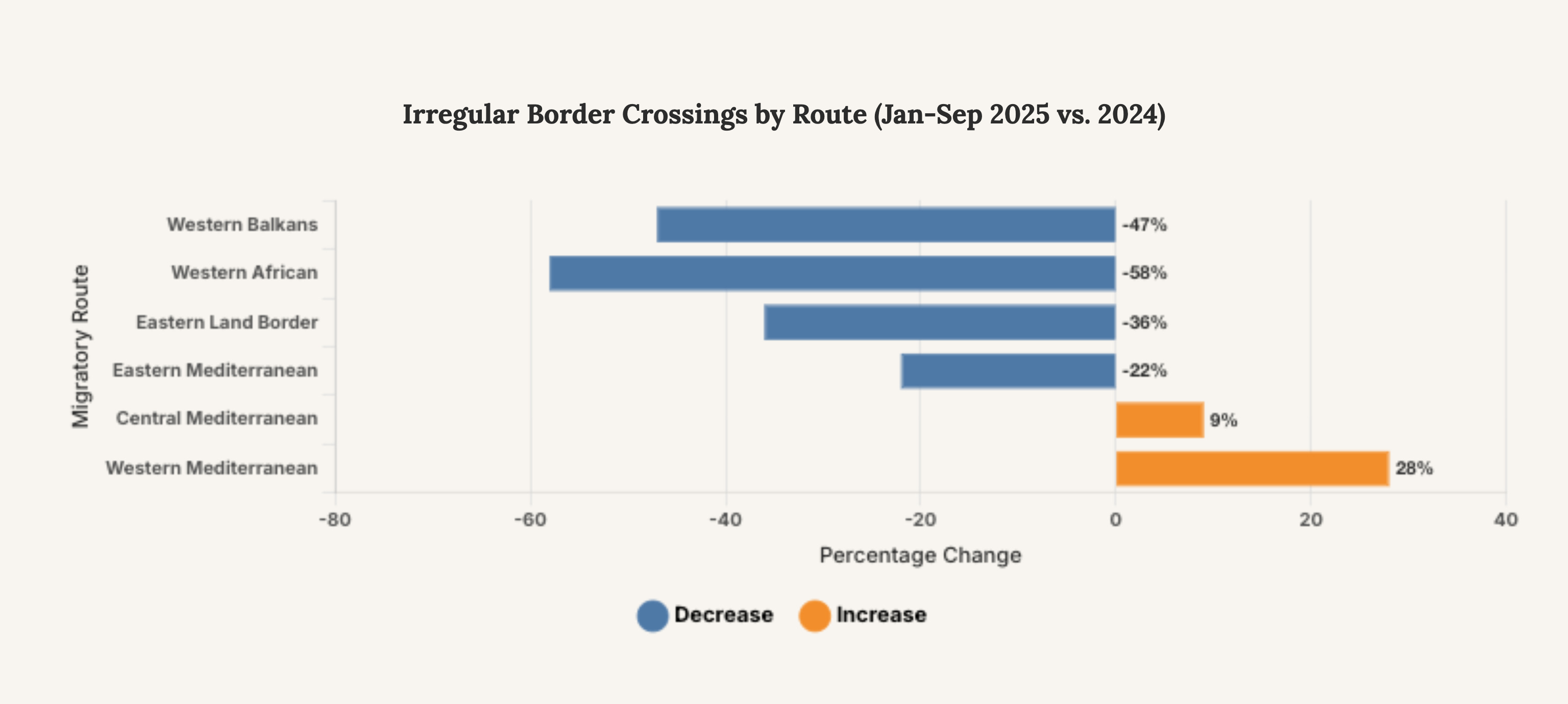
This chart illustrates the dramatic shifts in migratory pressures across Europe. While coordinated efforts have led to significant declines on several key routes, the increase in traffic on the Central and Western Mediterranean routes highlights the persistent and adaptive nature of migration flows.
Asylum Applications: A New Landscape Emerges
The downturn in irregular crossings is mirrored by a 23% drop in asylum applications in the first half of 2025. A primary driver of this has been a dramatic two-thirds fall in applications from Syrians following the collapse of the Assad regime in late 2024. This has reshuffled the primary destinations for asylum seekers, with France (78,000) and Spain (77,000) now receiving more applications than Germany (70,000), a long-time primary recipient. In May 2025, Venezuelans were the largest group of asylum applicants, followed by Afghans and Bangladeshis.
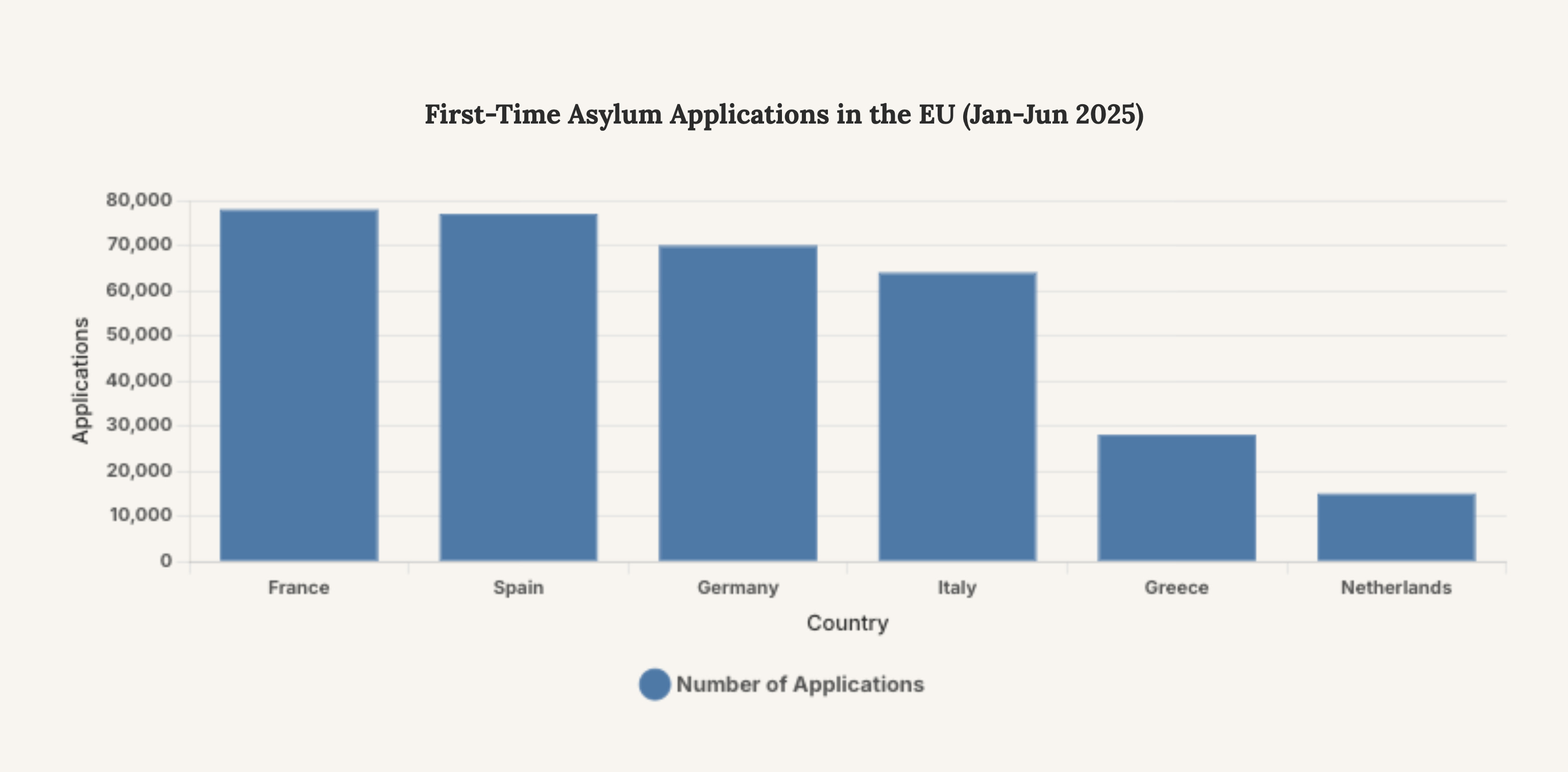
This data reveals the shifting destinations for asylum seekers. The significant drop in Syrian applications has rebalanced the distribution across the EU, placing greater pressure on countries like France and Spain.
The New Policy Fortress: The EU’s Pact and the Rise of Restrictionism
Europe’s response to immigration is undergoing a seismic legislative and ideological shift. The centerpiece of this transformation is the EU’s Pact on Migration and Asylum, a sweeping overhaul set to take effect from June 2026. This new framework is designed to create a more harmonized and significantly more restrictive system for managing migration.
Core Pillars of the New Pact
The Pact introduces several key reforms aimed at hardening border procedures and accelerating deportations. These include mandatory screenings at external borders, accelerated asylum procedures for applicants with low success prospects, and a new ‘mandatory solidarity’ mechanism. This mechanism replaces the old Dublin rules, requiring member states to either accept a quota of relocated asylum seekers or provide financial or operational contributions instead. The explicit goal, as stated by EU officials, is to regain control and create a fairer, more efficient system that relieves pressure on frontline states like Italy and Greece.
“We must give people in Europe the feeling that we are in control again.” - EU Migration Commissioner Brunner
The implementation of this pact is a massive undertaking, requiring significant legal and operational adjustments by all member states. However, support is not uniform, and the politicized nature of the migration debate poses significant challenges to its smooth rollout.
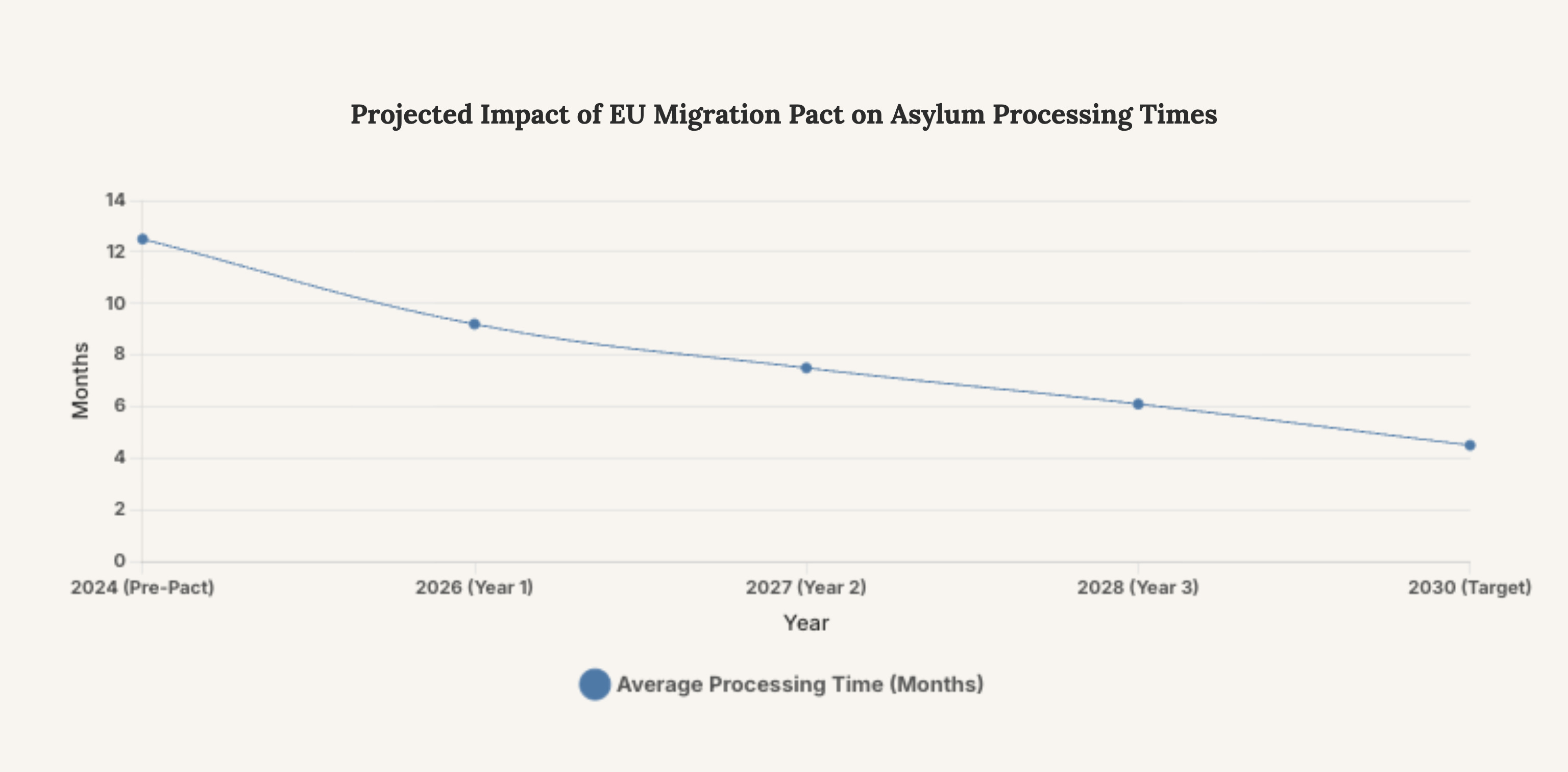
This chart projects a significant reduction in the average time to process asylum claims under the new Pact, a core objective aimed at speeding up decisions and subsequent returns for those whose claims are rejected.
The Political Climate: A Hardening Stance
The legislative tightening is occurring alongside a significant rightward shift in public and political opinion on immigration. A February 2025 YouGov poll found that majorities in Germany (81%), Spain (80%), Sweden (73%), the UK, and Italy (both 71%) believe immigration over the past decade has been too high. This sentiment is fueling the rise of far-right parties across the continent, which are increasingly setting the agenda. Mainstream conservative parties are frequently adopting more hardline stances to compete, normalizing what were once fringe positions. This political dynamic creates a powerful feedback loop, where public anxiety pushes policy in a more restrictive direction, even as the data shows irregular migration is decreasing.
The Economic Imperative: Demographics, Labor Markets, and the Non-EU Workforce
Beneath the politically charged surface of asylum and border control lies a less discussed but strategically vital reality: Europe’s profound economic dependence on immigrant labor. With an aging population and low birth rates, non-EU workers have become the primary engine of labor force growth.
Immigrants as a Demographic and Economic Lifeline
Between 2019 and 2024, over half of the new jobs created in the EU were filled by workers from outside the bloc. This influx has been crucial in mitigating the effects of population aging, particularly in countries with high activity rates like Germany. The EU’s overall population is projected to peak in 2026 and then enter a long-term decline, falling by over 27 million people by 2100. In this context, migration is not a crisis to be solved but a structural necessity for economic survival.
“Since the pandemic, the EU labour market has shown remarkable buoyancy, with employment growth largely driven by non-EU immigration and increased labour participation.” - CaixaBank Research
Despite their critical role, non-EU citizens face significant barriers in the labor market. Their unemployment rate in 2024 stood at 12.3%, nearly two and a half times higher than that of nationals (5.1%). This points to persistent challenges in integration, including structural barriers, discrimination, and difficulties in skills recognition.
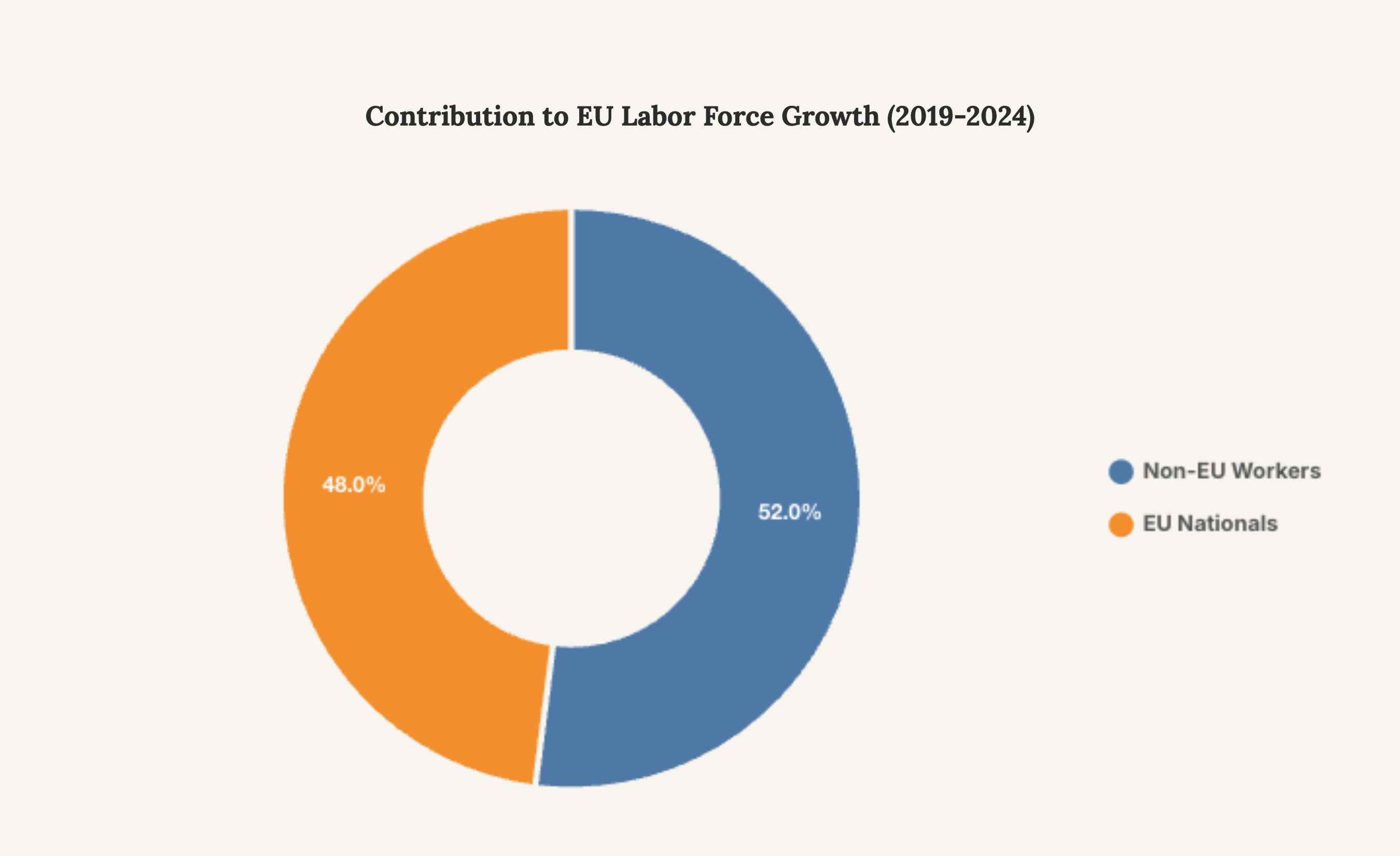
This chart starkly illustrates the dependency of the European labor market on foreign workers. Over half of all new job creation has been sustained by individuals from outside the European Union.
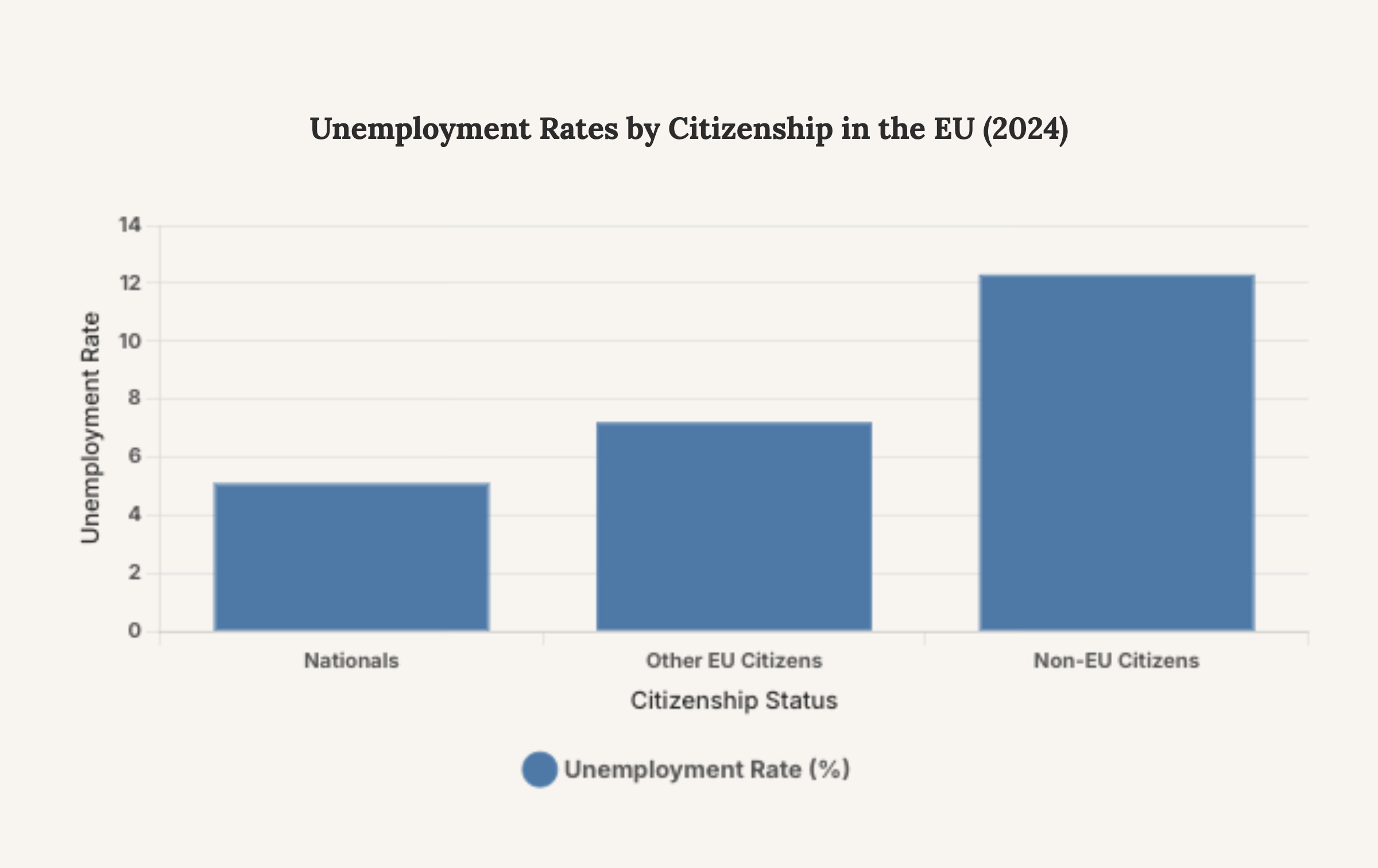
This comparison reveals the significant integration gap. Despite being crucial to the economy, non-EU citizens face much higher rates of unemployment, indicating a failure to fully harness their potential.
Strategic Foresight: Flashpoints and Future Scenarios to 2030
As Europe implements its new migration framework, several key flashpoints and trends will shape the continent’s strategic landscape. The tension between the political drive for restriction and the economic need for labor will intensify, creating a volatile and unpredictable policy environment.
The Unintended Consequences of Fortress Europe
The primary strategic risk of the EU’s new hardline approach is not that it will fail, but that it will succeed in drastically reducing all forms of migration, both regular and irregular. This could exacerbate labor shortages in critical sectors like technology, healthcare, and construction, acting as a drag on economic growth. As some European governments quietly introduce measures to limit labor market competition from immigrants, they risk undermining their own economies. The UK’s experience, where sharp falls in net migration are projected to increase the budget deficit by about £20 billion, serves as a cautionary tale.
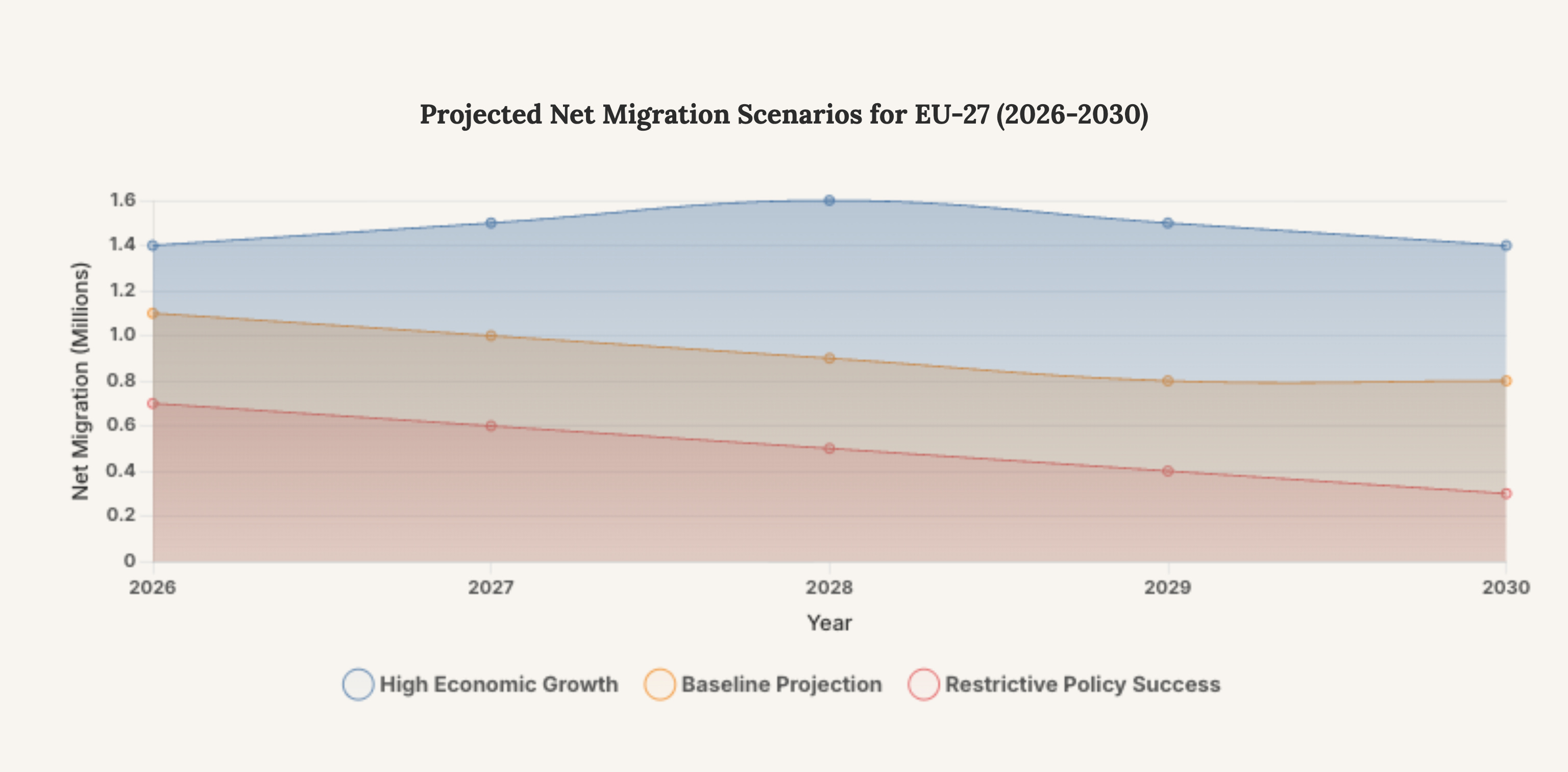
This chart models three potential futures for net migration into the EU. The ‘Restrictive Policy Success’ scenario, while achieving political goals, would likely lead to severe labor shortages and slower GDP growth compared to the baseline or high-growth scenarios.
Geopolitical Volatility and External Pressures
Europe’s migration flows remain highly sensitive to external shocks. The stabilization of Syrian asylum claims demonstrates how quickly the landscape can change. Future instability in the Sahel, developments in Afghanistan, or the trajectory of the war in Ukraine could all trigger new, large-scale movements of people. The EU’s strategy increasingly relies on deals with third countries like Libya, Tunisia, and Egypt to control departures, but these agreements are often fragile and carry significant human rights costs. The emergence of new smuggling routes highlights the limits of this externalization strategy.
The Integration Imperative
Ultimately, the long-term success of Europe’s migration strategy will hinge on its ability to effectively integrate the migrants who are already on its soil and those who will inevitably arrive. The significant gap in employment outcomes between nationals and non-EU citizens represents a massive loss of potential economic and social value. Policies that focus solely on border control while neglecting integration are doomed to fail. Investing in language training, skills recognition, and anti-discrimination measures is not a social cost but a strategic economic necessity. A JRC simulation found that the long-run GDP effect of successful refugee integration could be up to 1.4% above baseline growth annually.
Europe stands at a crossroads. The current trend is toward building a more fortified continent, driven by political anxieties that are, in some cases, disconnected from the data on the ground. This path risks choking off a vital source of economic vitality and demographic renewal. The alternative requires a more nuanced and courageous approach: one that combines secure and orderly border management with a robust, well-resourced strategy for labor market integration. The choices made in the next two years, as the Migration Pact is rolled out, will have profound consequences for Europe’s economic competitiveness and social cohesion for decades to come.
The central challenge for European leaders is to reconcile the political imperative of control with the economic reality of dependence.