


In 2004, Barry Schwartz warned us that too many jams on a supermarket shelf would lead to anxiety. Two decades later, that quaint observation has metastasized into a systemic economic failure. We have not just reached the limits of human cognitive load; we have breached them.
As of February 2026, the data suggests we have entered the era of “Peak Optionality.” The promise of the digital economy was friction-free selection. The reality is a paralysis tax levied on every second of human attention. We are no longer consumers making choices; we are logistical processors drowning in a liquidity trap of infinite, low-value options.
The signal-to-noise ratio in three critical sectors—mating markets, media consumption, and enterprise software—has collapsed. The cost of choosing now exceeds the value of the choice itself.
The Mating Market Liquidity Trap
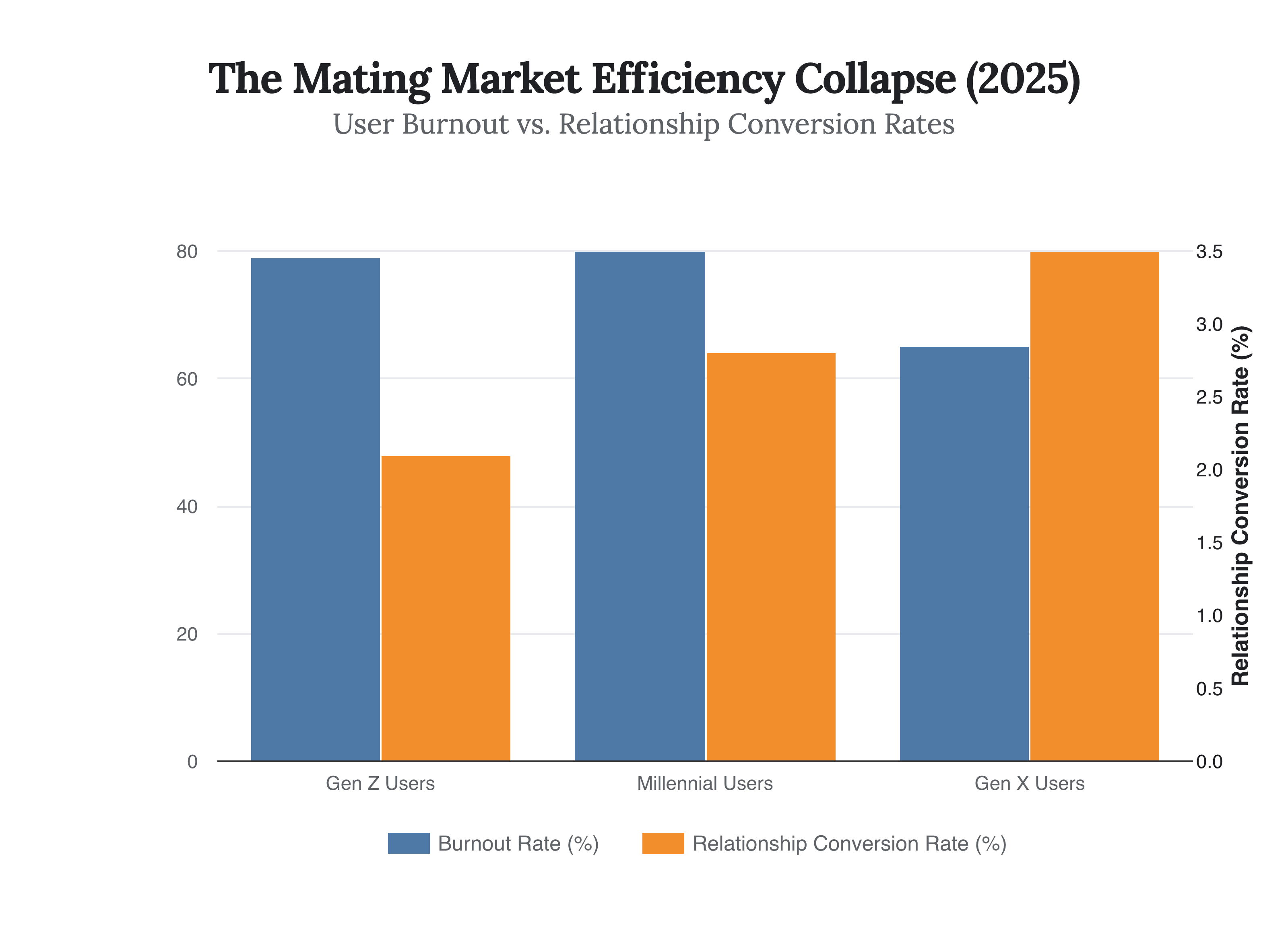
Nowhere is the failure of infinite choice more violent than in the algorithmic mating market. For a decade, the user thesis was simple: more swipes equal higher probability of a match. The 2025 data proves the inverse: more swipes equal higher probability of burnout.
The latest figures from Q4 2025 paint a picture of a broken market mechanism. While Match Group and its competitors still generate billions, the underlying utility has evaporated. We are witnessing a “Liquidity Trap” where 350 million users provide ample liquidity, but transaction velocity (actual relationships) has ground to a halt.
According to Q3 2025 data, Tinder downloads in the U.S. plummeted 14.4% year-over-year, while 78% of active users now report clinical “dating app burnout.” The efficiency gap is staggering: women experience a 30.7% match rate, while men languish at 2.63%, yet only 2.5% of these digital handshakes convert into a relationship.
This is not a user error; it is a design feature. The platforms maximize for time-in-app, not exit. However, the 2026 consumer has realized the game is rigged. The pivot to “intentionality” by apps like Hinge (which saw a 38% revenue jump in 2025) confirms that users are willing to pay a premium for less choice, provided that choice is curated.
The Attention Tax: 14 Minutes to Nowhere
In the media landscape, the paradox of choice has created a literal tax on human life. The “Golden Age of Television” has curdled into the “Era of the Scroll.”
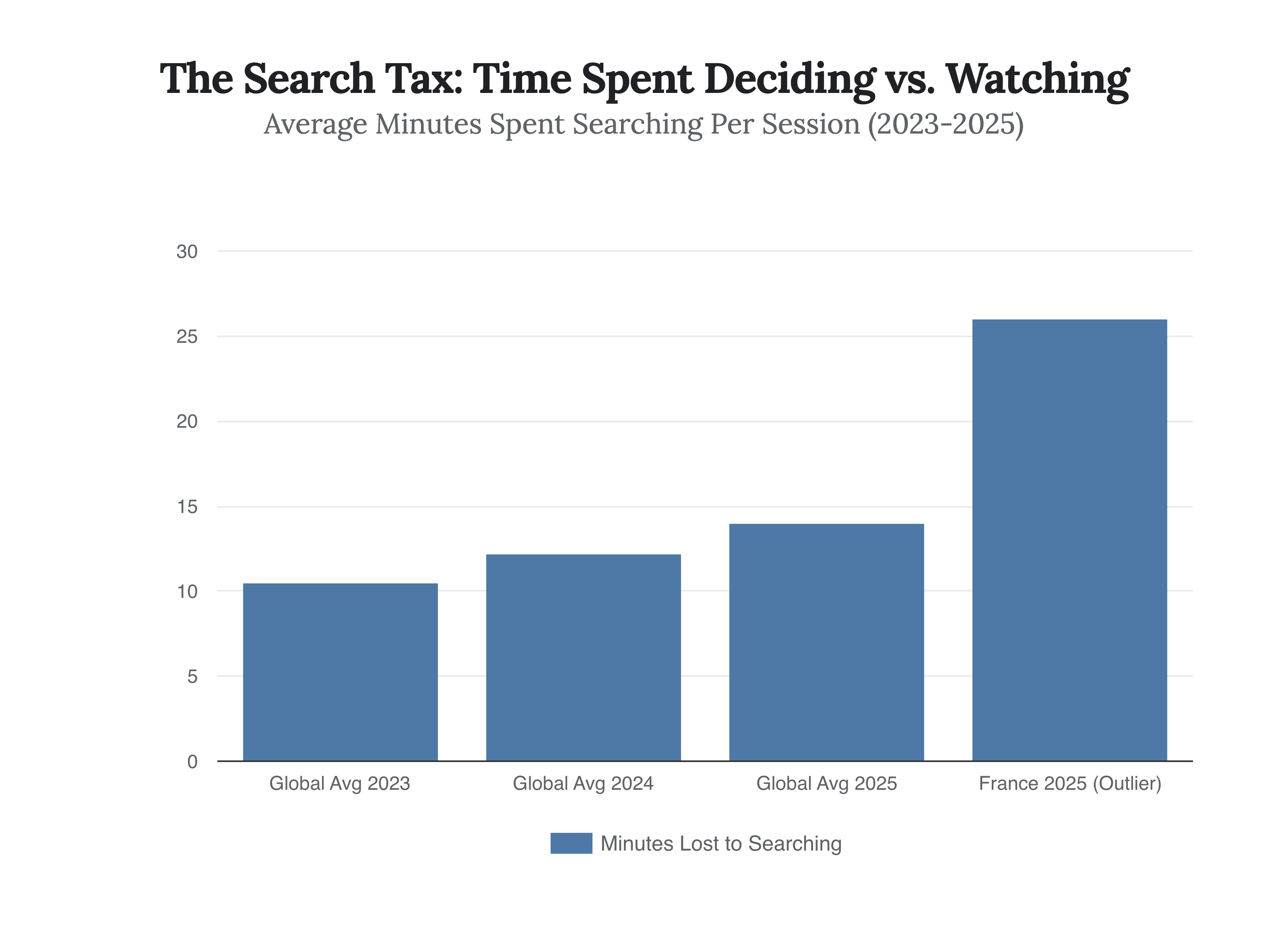
Data from Gracenote’s “2025 State of Play” report reveals a terrifying metric: the average global viewer now spends 14 minutes per session just searching for content. In France, that figure hits 26 minutes—the length of an entire sitcom episode wasted in the purgatory of selection.
This is the “Search Tax.” We are paying monthly subscriptions for the privilege of working as our own curators. With streaming capturing 44.8% of total TV usage as of May 2025 (surpassing broadcast and cable combined), this inefficiency is macro-economically significant.
Unlock deeper strategic alpha with a 10% discount on the annual plan.
Support the data-driven foresight required to navigate an era of radical uncertainty and join a community of institutional-grade analysts committed to the truth.
The friction is leading to churn. 45% of consumers canceled a subscription in the last 12 months, citing cost and “overwhelm.” The chart below visualizes the escalation of this Search Tax over the last three years.
The Enterprise Bloat Index
If consumer markets are paralyzed by choice, the enterprise sector is being bankrupted by it. The “SaaS Explosion” of the early 2020s has left corporations with a fractured, unmanageable tech stack.
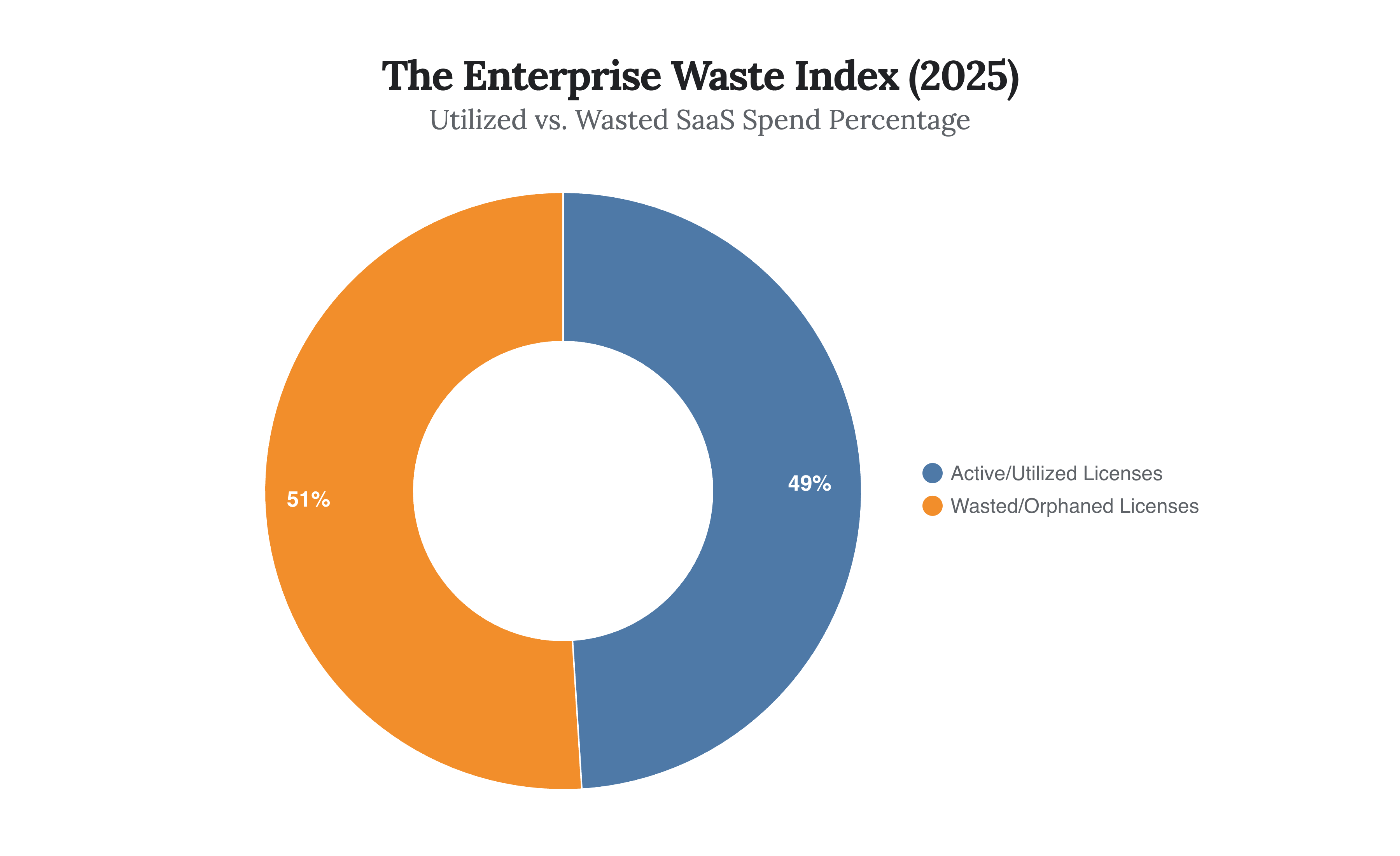
As of late 2025, the average large organization is juggling approximately 342 distinct SaaS applications. But here is the data point that matters: 51% of all enterprise SaaS licenses are paid for but never used.
This is “Shelfware 2.0.” Companies are hemorrhaging capital on tools that were purchased to solve the complexity caused by other tools. The fragmentation is so severe that “SaaS Consolidation” is no longer just an IT goal; it is a CFO mandate for 2026. We are seeing a contraction in portfolio size for the first time in a decade, dropping from a peak of 374 apps in 2024 to 342 today.
The “Paradox of Choice” has shifted from a psychological curiosity to a balance sheet liability. In 2026, the winners will not be the platforms that offer the most options. The alpha belongs to the “Constrainers”—the algorithms, agents, and curators that aggressively remove choice from the table.
We are done choosing. We are ready to be told what to do.