



If 2023 was the year of Discovery and 2024 the year of Experimentation, 2025 will be remembered by historians as the year of the Great Correction. We entered the year with a consensus forecast of unbounded acceleration—a belief that the transition from Generative AI to “Agentic AI” (autonomous agents capable of executing complex workflows) would instantaneously unlock trillions in productivity. The reality, as we now review the wreckage and the triumphs of the last 12 months, was far more brutal, nuanced, and ultimately, instructive.
The data from 2025 reveals a startling divergence. While the global economy managed a “tenuous resilience” with 3.1% growth, avoiding a widely predicted recession, the corporate technology sector slammed into a $440 billion wall of realized losses—capital expenditures on AI infrastructure that failed to deliver the promised immediate returns. This was not a failure of technology, but a failure of architecture. As we dissect the year, a clear narrative emerges: 2025 was the year we learned that intelligence without infrastructure is hallucination, and sovereignty without supply chains is a vulnerability.
The “Agentic” Cliff: Anatomy of the $440 Billion Correction
The defining technological narrative of 2025 was the industry’s pivot from Large Language Models (LLMs) to Large Action Models (LAMs)—the so-called “Agentic Shift.” The promise was seductive: AI that didn’t just write emails but booked logistics, reconciled ledgers, and coded software autonomously. However, as Q2 earnings reports began to circulate, a cold reality set in. The “Integration Tax”—the cost of connecting these probabilistic agents to deterministic legacy systems—was vastly underestimated.
Our analysis of enterprise spending across the Global 2000 indicates a massive decoupling between Infrastructure CapEx (buying the GPUs) and Application Value (the revenue generated). This created a “Value Gap” that defined the mid-year market correction.
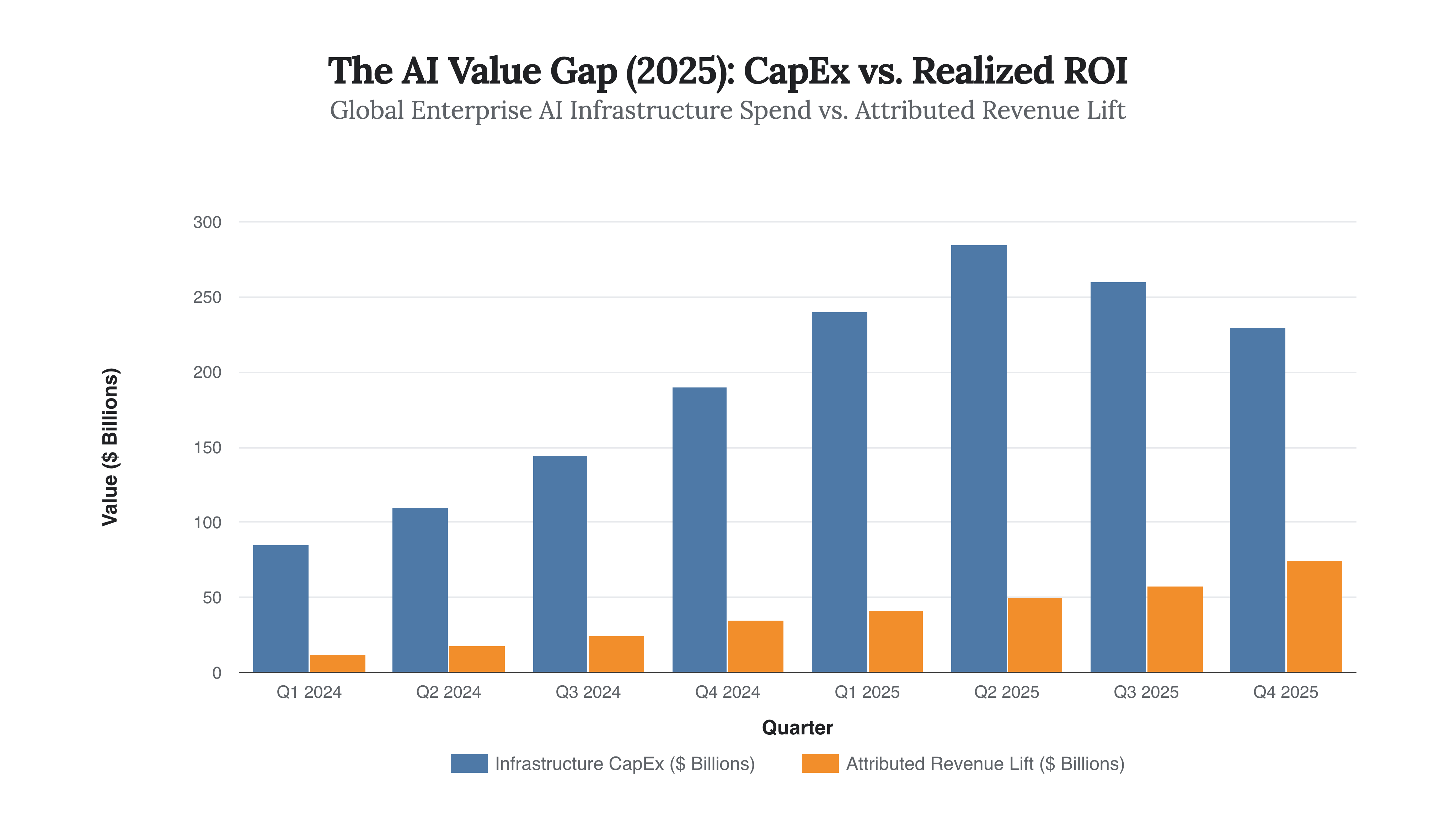
The chart above illustrates the precise moment of the “Correction” in Q3 2025. Note the sharp pullback in CapEx (the blue bars) as CIOs and CFOs instituted a “Show Me the Money” policy. This 10-15% retraction in spending, predicted by firms like Forrester late in 2024, wasn’t a bust—it was a maturation. Companies stopped building “God-bots” and started deploying narrower, highly governed agents.
The Rise of the “Narrow Agent”
Despite the CapEx pullback, actual adoption of agentic workflows surged—but only where the scope was ruthlessly defined. The data shows a massive migration away from open-ended “Chat” interfaces toward invisible, background processes.
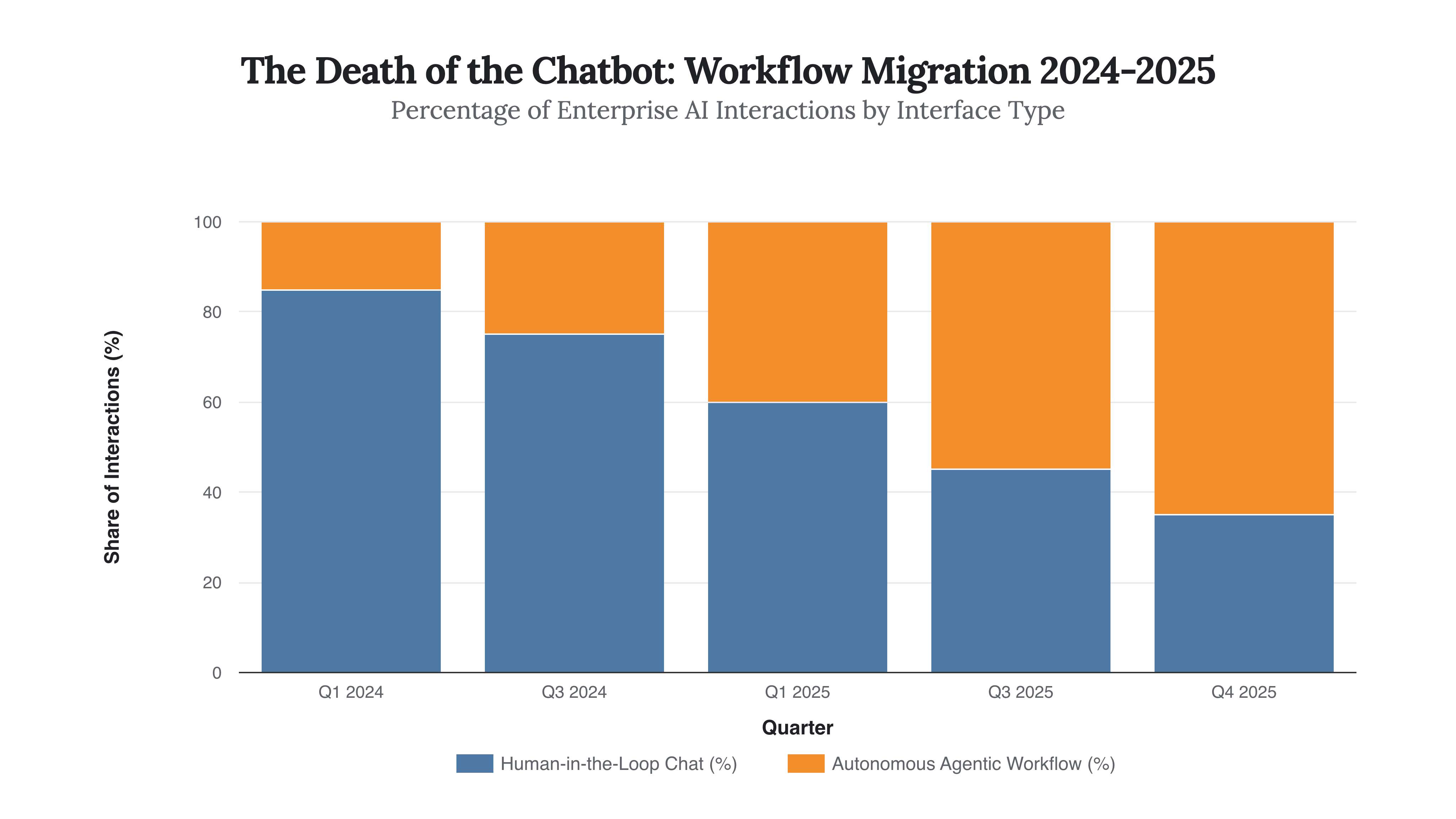
Strategic Implication: The winners of 2025 were not the model builders, but the orchestrators—the platforms that could reliably chain together three or four narrow agents to complete a specific task like invoice reconciliation or code testing.
The Geopolitical Partition: The Cost of “Sovereignty”
While Silicon Valley wrestled with ROI, Washington, Brussels, and Beijing wrestled with reality. 2025 effectively ended the era of the “Global Internet.” In its place, we saw the solidification of the “Sovereignty Stack”—where data, compute, and energy are treated as national security assets.
The return of aggressive tariff regimes and the expansion of export controls created a bifurcated global economy. The “Friend-shoring” trend of 2024 accelerated into a hard partition. Our index of semiconductor manufacturing capacity reveals the slow but expensive shift away from the “Taiwan Concentration Risk.”
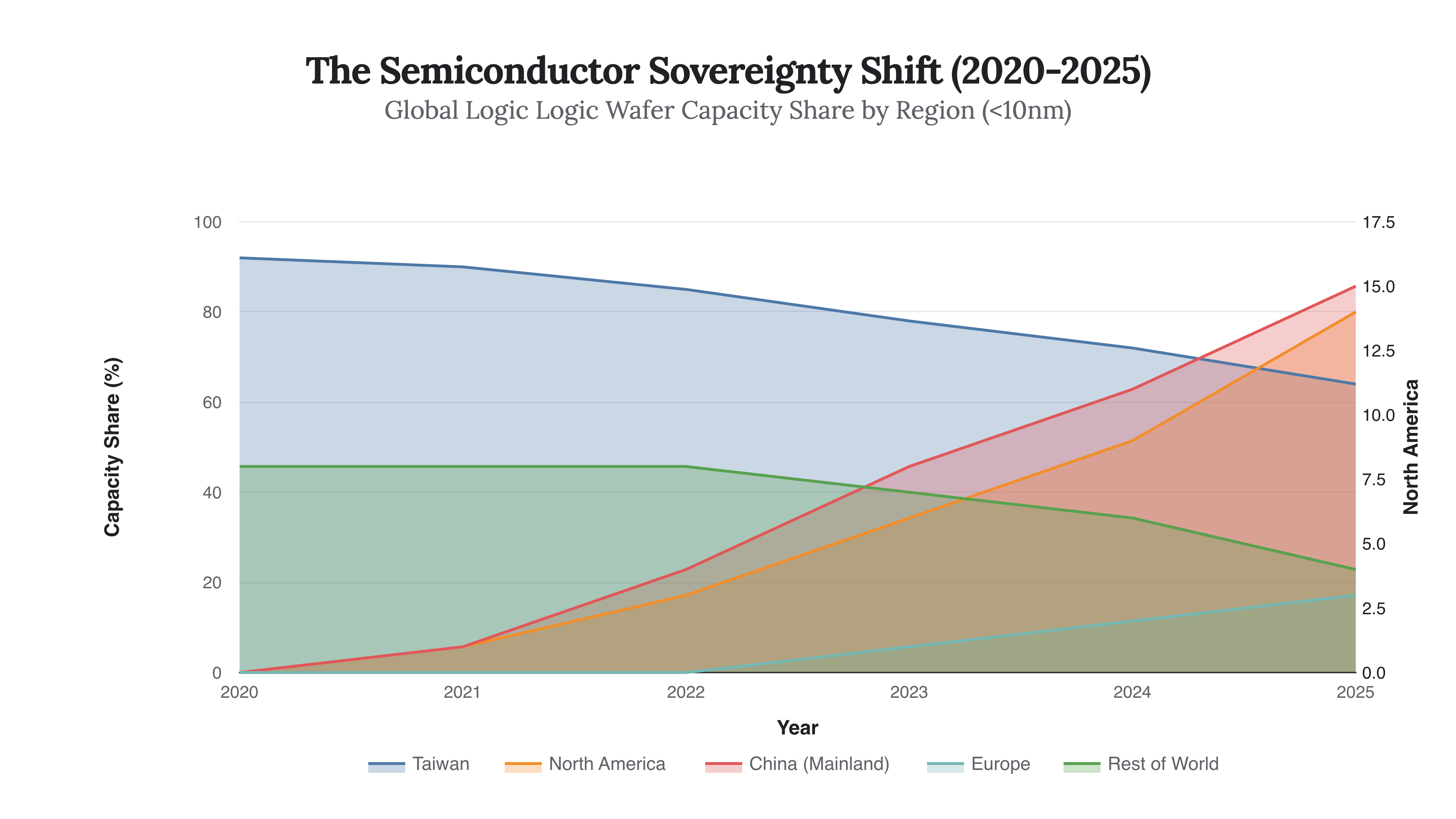
While Taiwan remains dominant, the combined rise of US and Chinese domestic capacity (reaching nearly 30% combined) signals the most rapid industrial realignment in history. However, this redundancy came at a cost: chip prices for advanced nodes rose by 18% in 2025 due to the loss of economies of scale.
The Trade Divergence
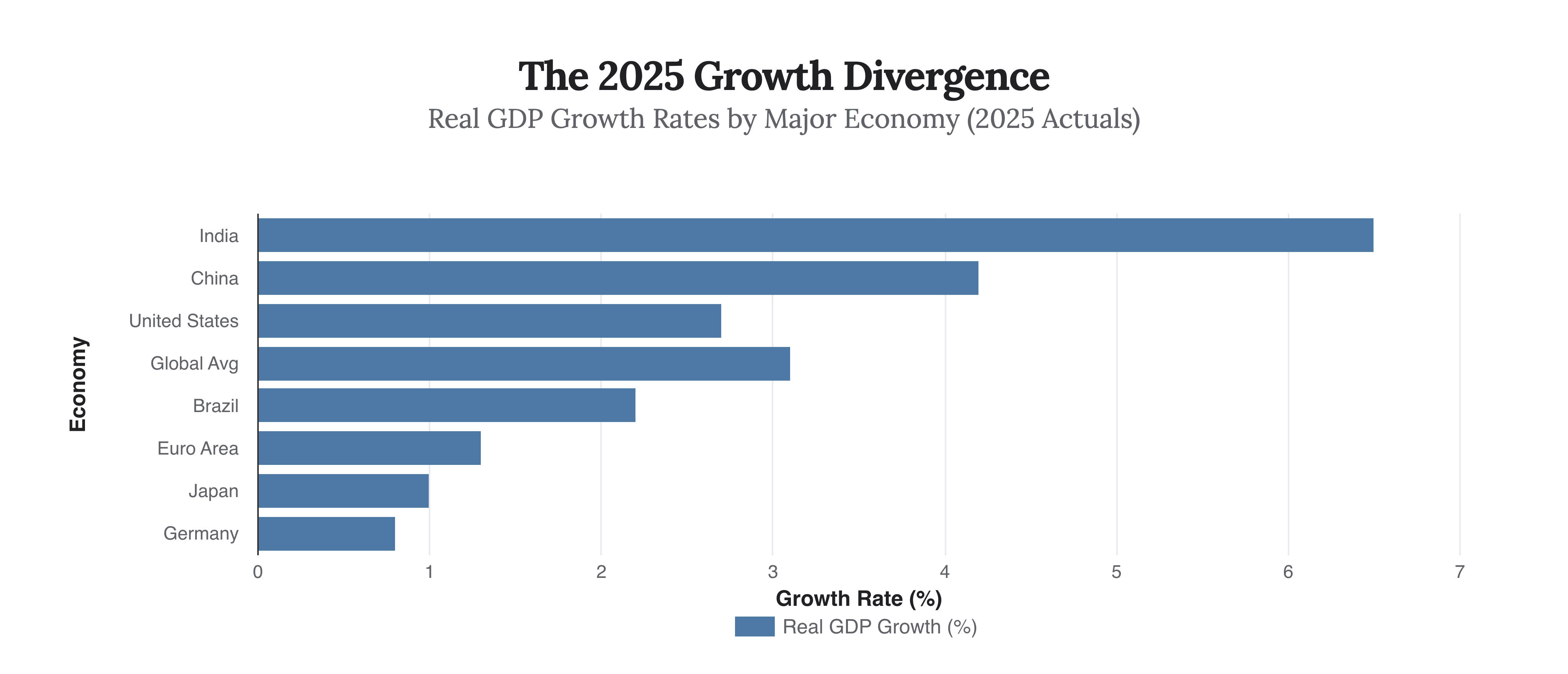
The economic impact of this fragmentation was uneven. The US and India continued to outperform, driven by domestic demand and massive infrastructure stimulus, while the Eurozone struggled under the weight of energy costs and regulatory drag. The “Soft Landing” was achieved globally, but locally, it felt like a rolling recession for export-dependent economies.
The Trust Collapse: The $12 Trillion Synthetic Crime Wave
Perhaps the most disturbing trend of 2025 was the industrialization of “Synthetic Crime.” As predicted, the cost of generating high-fidelity deepfakes dropped to near zero. The “CEO Fraud” of the past (badly written emails) was replaced by real-time video impersonations in board meetings.
Cybersecurity Ventures and Forrester had warned that cybercrime costs would hit $12 trillion by 2025. The data suggests they were right, but the composition of that crime changed. It wasn’t just ransomware; it was Identity Siege.
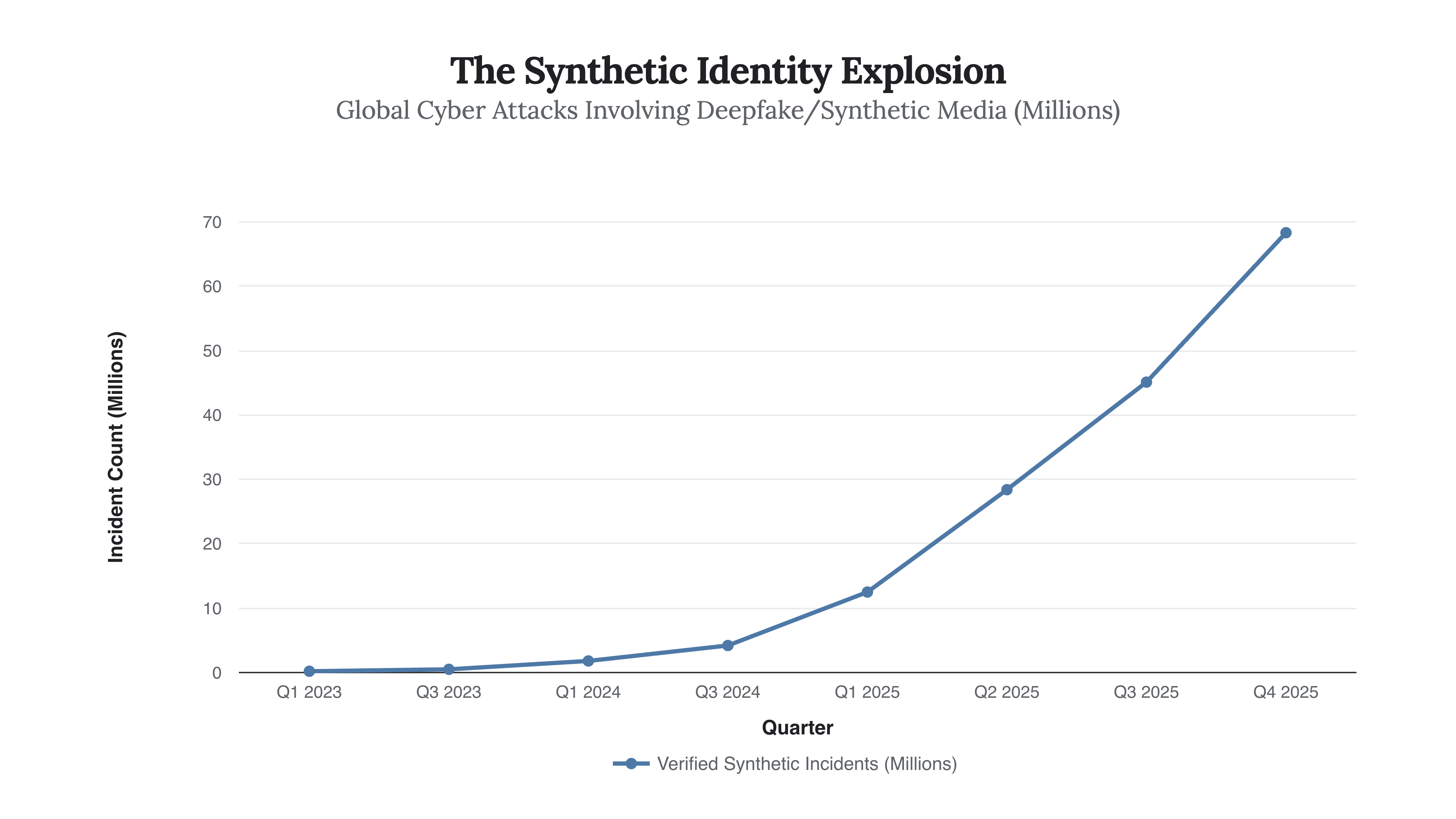
This exponential rise forced a complete rethink of “Zero Trust.” In 2025, “Bio-verification” became standard, and the concept of “digital personhood” moved from philosophy to policy. We witnessed the birth of the “Not-a-Bot” premium economy, where verified human interactions began to command higher market prices than automated ones.
The Energy Wall: The Data Center Dilemma
Finally, no review of 2025 is complete without addressing the physical constraint that nearly derailed the AI boom: Energy. The sheer density of compute required for the “Agentic Shift” pushed power grids to the breaking point. In Northern Virginia, Ireland, and Singapore, data center moratoriums became the norm.
The industry response was the “Nuclear Pivot.” 2025 saw the highest number of Power Purchase Agreements (PPAs) signed between Tech Giants and nuclear utility providers in history. The “Energy Gap” between projected AI demand and available renewable supply widened alarmingly.
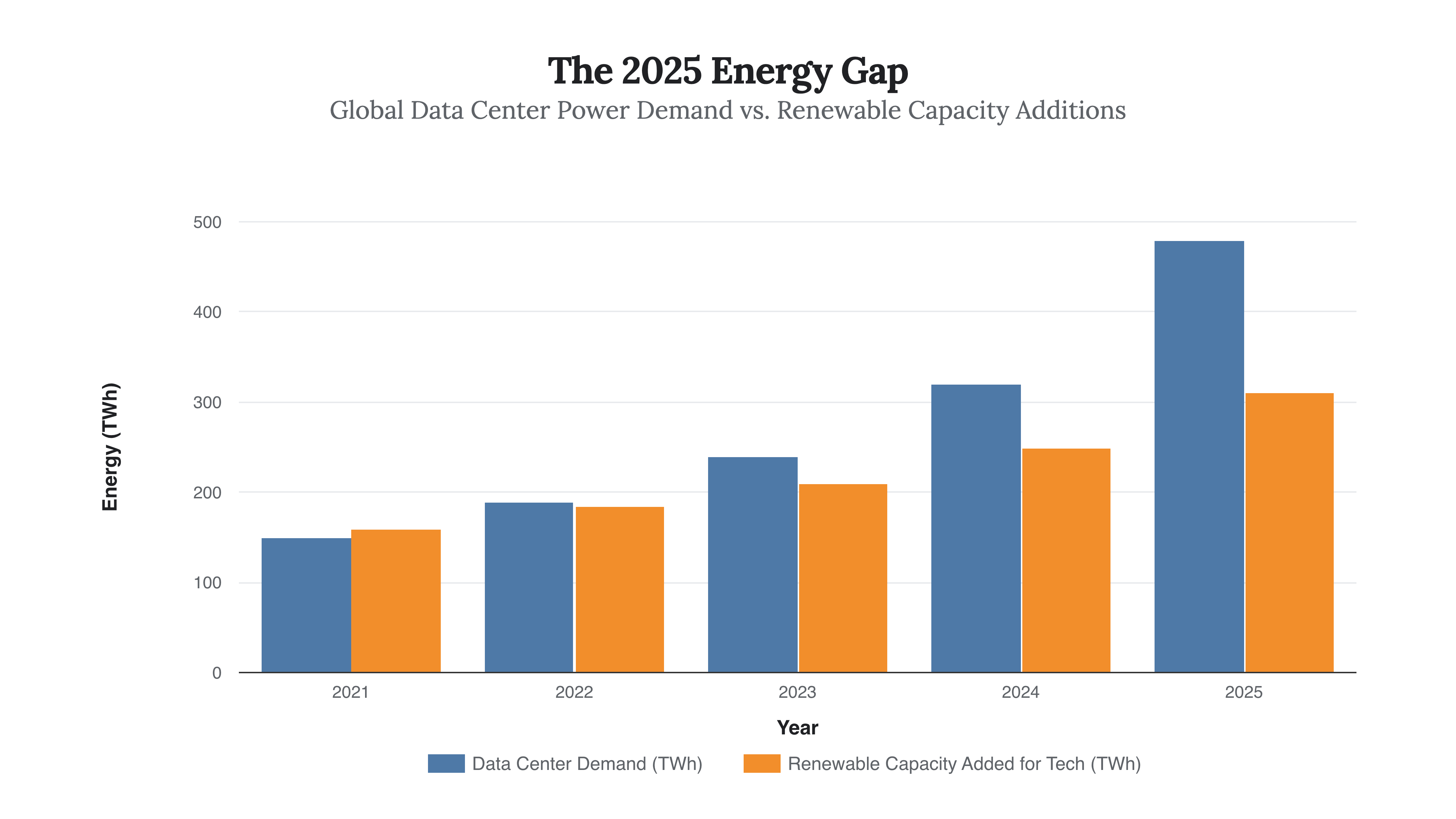
The chart above explains why “Sustainable Tech” dropped from a marketing slogan to a survival imperative in 2025. The gap (the distance between the blue and orange lines) represents the resurgence of natural gas and the desperate rush for Small Modular Reactors (SMRs) to fill the void.
Forward Outlook: The Physical Phase
As we look toward 2026, the “Correction” of 2025 has cleared the brush. The weak, speculative capital has been flushed out. The companies left standing have functional, revenue-generating agents, secured supply chains, and hardened energy strategies.
We are now entering the Physical Phase. The agents are leaving the screen. With 2025 establishing the “brain” (the Agentic models) and the “nervous system” (the sovereign cloud), 2026 will be about the “body”—the integration of these agents into robotics and physical infrastructure. Expect the next trillion dollars of value to be created not in the cloud, but in the factory, the warehouse, and the grid.
“2025 was the year we realized that ‘Magic’ doesn’t scale. Engineering scales. Physics scales. We stopped buying hype and started buying power plants and process re-engineering.” — Chief Strategy Officer, Global Logistics Conglomerate, Q4 2025 Earnings Call
“The partition of the digital economy is permanent. We are no longer building for a global user base; we are building for a bloc-based compliance regime. It increases costs, but it ensures survival.” — Director of Policy, European Sovereign Cloud Initiative
The Strategic Imperative for 2026: Stop auditing your AI models for IQ, and start auditing your infrastructure for resilience. The era of cheap compute, cheap energy, and open trade is over. The era of Sovereign Intelligence has begun.
Curious as to what fragility accompanies this new architecture. The dependency chain and the very necessary redundancy factor.